
A city open-data portal team wants multiple civic models to reuse the same curated predictors. How should they structure the pipeline?
Select an answer to reveal the explanation.
Short Explanation
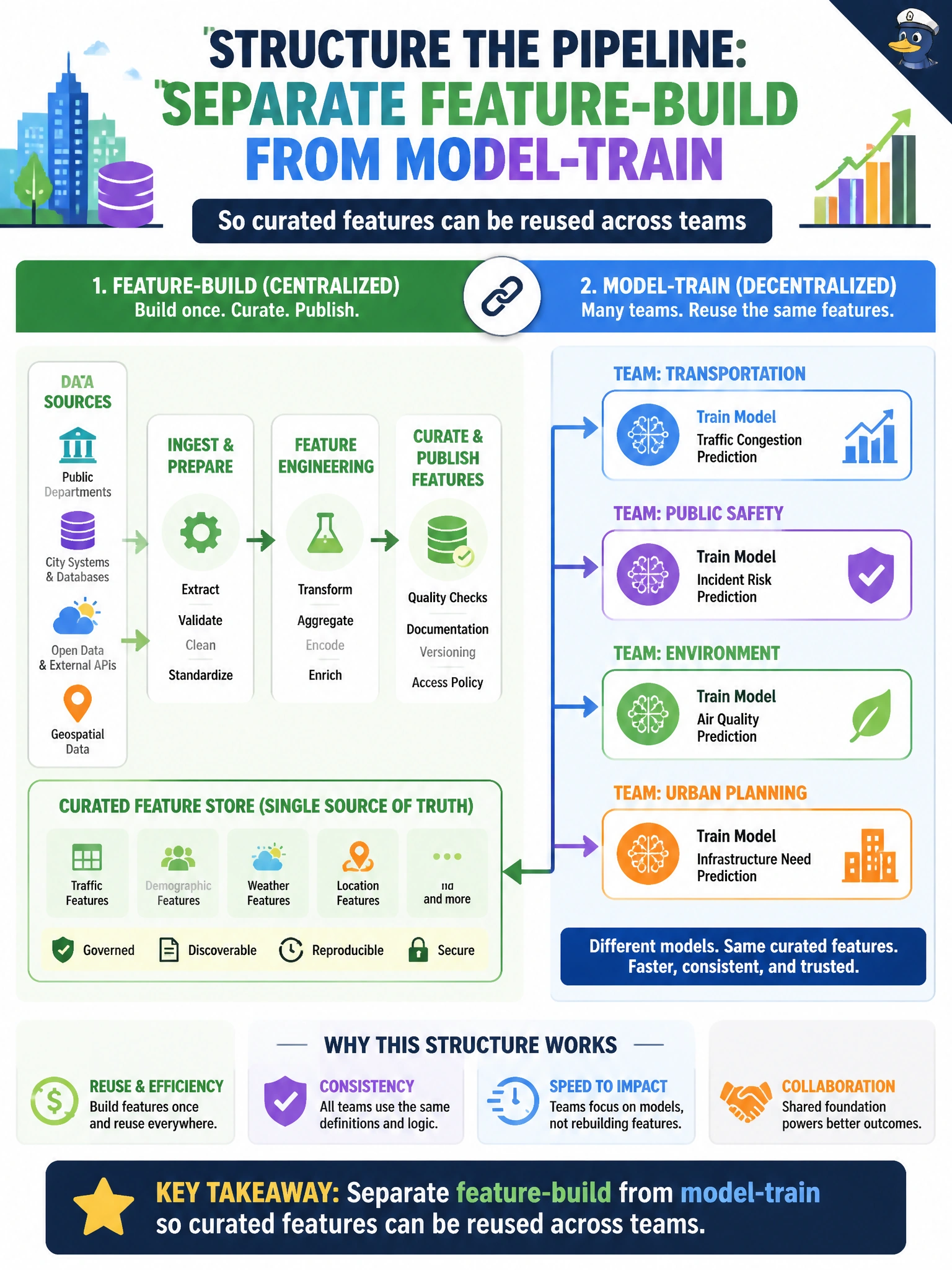
Features are like a shared city map layer—build them once in their own stage so every model can reuse the same curated streets.
Full Explanation
A city open-data portal serving multiple civic models should separate feature-build from model-train. A shared curated feature stage produces consistent predictors once, then many training jobs consume that layer—improving reuse, reducing divergent encodings, and giving auditors one place to inspect municipal predictors used across teams. Baking unique one-off features inside every training script prevents reuse: each team reinvents slightly different transforms, and portal consumers see inconsistent civic columns that complicate cross-model comparison. Hard-coding features only inside the final scoring binary couples training and serving logic and blocks other models from reusing the curated predictors the open-data team intended to share. Deleting intermediate feature tables after each single model run destroys the shared asset and forces costly rebuilds without lineage whenever another civic model needs the same predictors. Exam caveat: modular pipeline design questions reward separating feature construction from training for multi-model municipal reuse rather than per-script private feature code. Operational check: publish versioned feature tables (or a feature-store contract) on the open-data platform, document schemas and refresh cadence, and point every civic training job at that shared stage instead of private script-local feature logic.