
A public hospital district throughput desk finds that missing a bridge-access defect flag is far costlier than extra review alerts. Which metric priority fits that asymmetric cost?
Select an answer to reveal the explanation.
Short Explanation
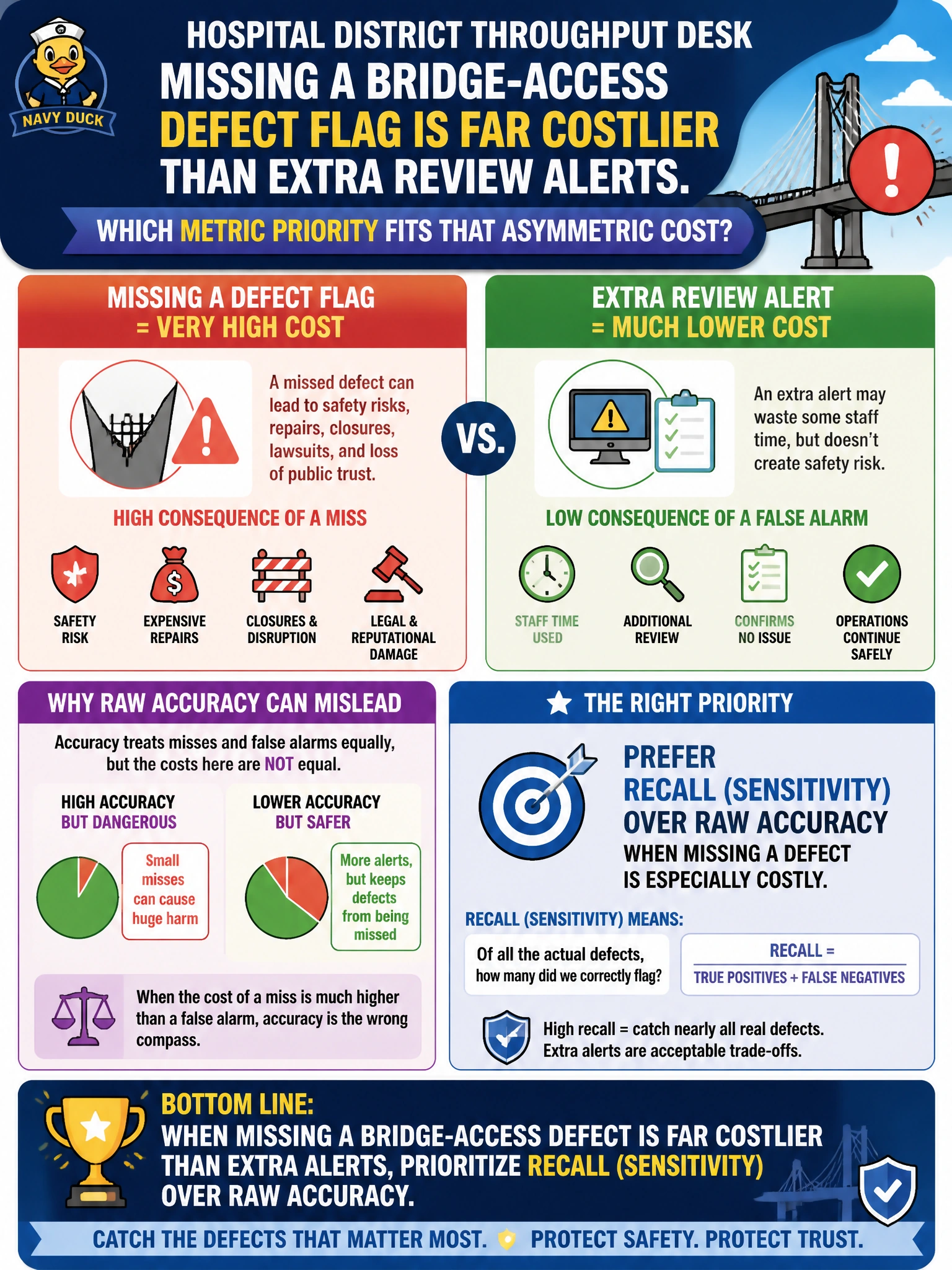
When missing a bridge defect is the nightmare, chase recall—catch the rare danger even if a few extra alerts land on the review desk.
Full Explanation
A public hospital district throughput desk that finds missing a bridge-access defect flag far costlier than extra review alerts should prefer recall (sensitivity) over raw accuracy when missing a defect is especially costly. High recall prioritizes catching true defect cases even if more alerts need human review. That metric priority matches asymmetric civic cost: a missed defect can block access or create safety incidents, while extra alerts mainly consume reviewer time.
Maximizing raw accuracy even if rare defects are almost never caught fails under imbalance—accuracy can ignore the minority defect class. Optimizing only for fewer alerts with no regard to missed defects privileges precision/alert burden while accepting dangerous misses. Reporting training loss alone and skipping class-sensitive metrics provides no operational view of defect detection.
Exam caveat: preferring recall does not mean ignoring precision forever—extreme recall with floods of false alerts can overwhelm reviewers and create alert fatigue; set a minimum precision floor or cost-weighted threshold with the hospital district. Operational check: tune the decision threshold on validation to meet a recall target for bridge-access defects, report precision and alert volume at that threshold, review FN/FP samples with facilities staff, and monitor live recall after deployment so throughput dashboards still catch costly misses.