
A permitting and inspections bureau is comparing two RAPIDS estimators with cross-validation. How do they keep the comparison fair?
Select an answer to reveal the explanation.
Short Explanation
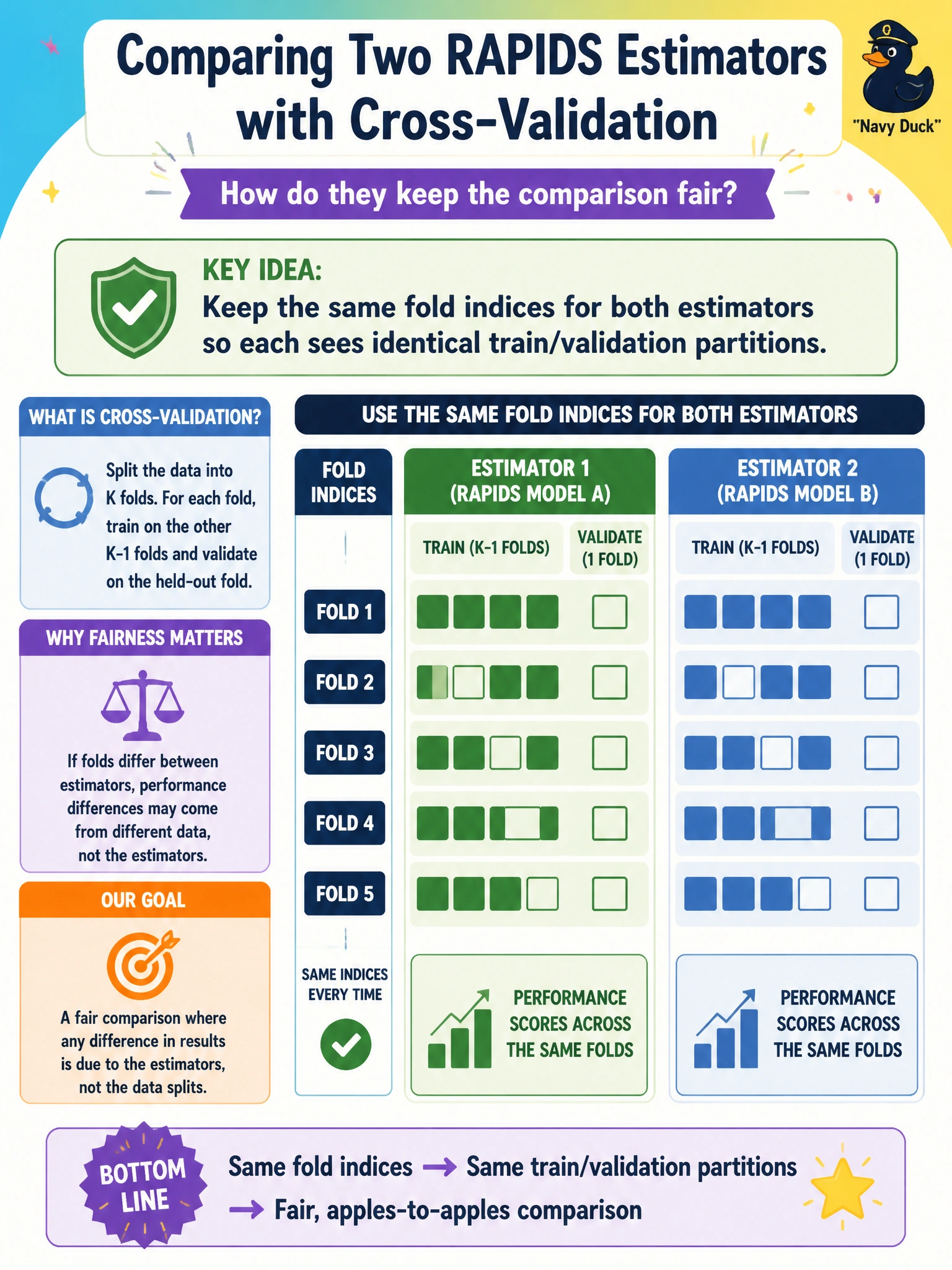
Fair horse races use the same track—lock the fold indices so both RAPIDS estimators run on identical splits.
Full Explanation
A permitting and inspections bureau comparing two RAPIDS estimators with cross-validation keeps the comparison fair by locking the same fold indices for both estimators so each sees identical train/validation partitions. Shared folds remove split luck as a confounder: metric differences then reflect estimator behavior on the same civic data slices. That is the standard fair bake-off discipline for CV-based model selection.
Redrawing unrelated random folds independently for each estimator every time fails by concept—different partitions make the comparison apples-to-oranges. Giving the favored estimator easier folds and the other harder folds deliberately biases selection. Comparing models using different label definitions per estimator changes the prediction task itself and invalidates head-to-head metrics.
Exam caveat: identical fold indices still require identical preprocessing fitted within each training fold; fitting scalers on the full dataset or only for one estimator reintroduces unfairness. Operational check: materialize fold ID assignments once, pass the same fold vector into both RAPIDS training loops, score with one metric script, store both estimators’ per-fold results beside the fold file hash, and select a winner only from that paired comparison for the permitting bureau.