
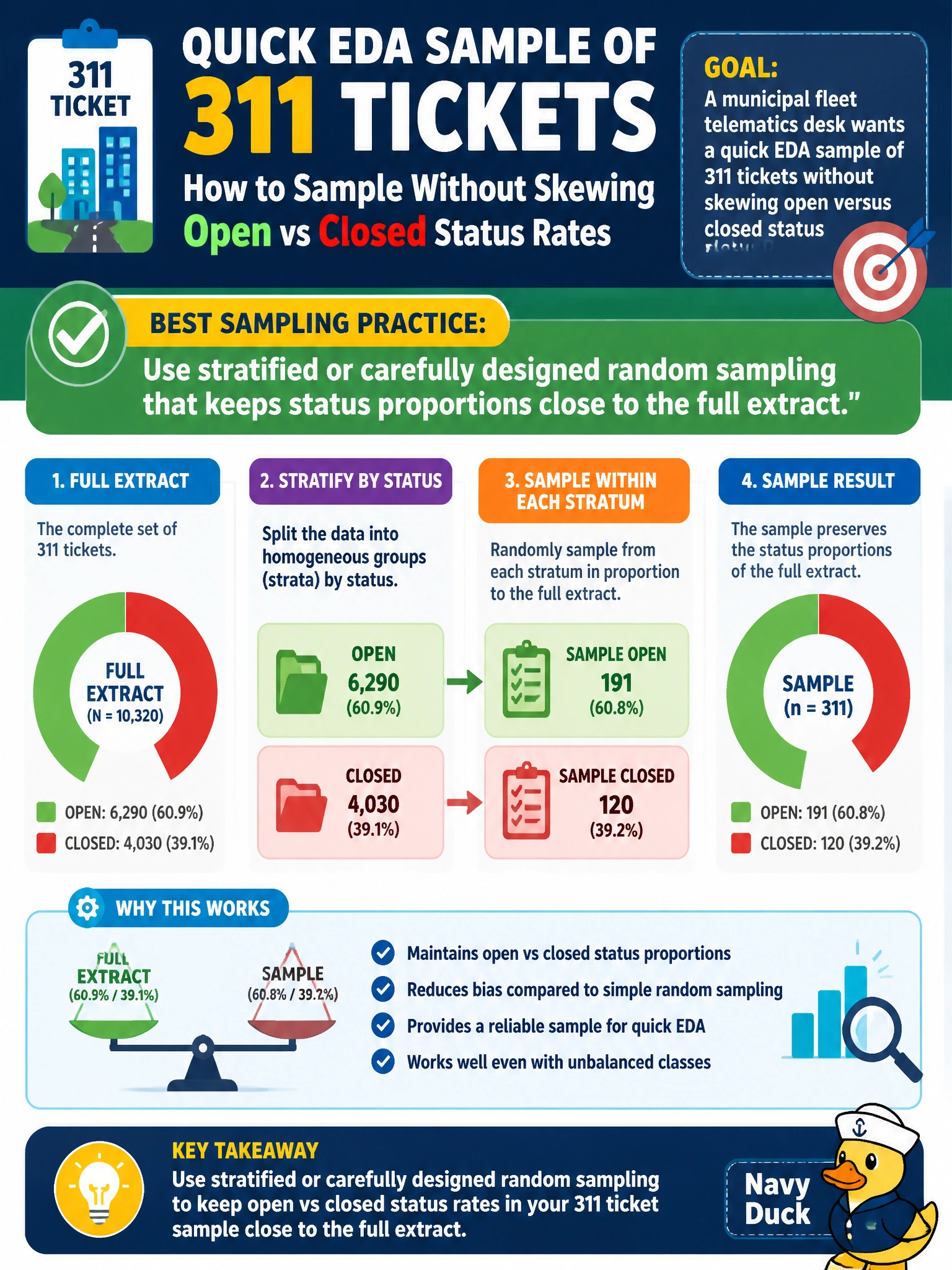
A municipal fleet telematics desk wants a quick EDA sample of 311 tickets without skewing open versus closed status rates. What sampling practice best preserves those proportions?
Select an answer to reveal the explanation.
Short Explanation
EDA samples are like tasting soup—you want a spoonful that matches the pot, not only the noodles. Sample so open and closed ticket rates stay close to the real 311 mix before you chart anything.
Full Explanation
A municipal fleet telematics desk drawing a quick EDA sample of 311 tickets should keep open versus closed status rates close to the full extract. Stratified or carefully designed random sampling that preserves those proportions yields exploratory charts and summaries that still look like production ticket mix. That prevents analysts from tuning narratives or filters on a distorted civic sample before any model work begins. Filtering to closed tickets only fails by concept: it removes open-ticket behavior that often dominates operational backlogs and skews every status-sensitive plot. Sorting by ticket ID and taking every tenth row without checking status balance fails because ID order can correlate with status transitions or system migrations, and skipping the balance check leaves silent skew. Oversampling open tickets until they equal closed tickets before EDA fails by manufacturing a 50/50 world that the real 311 stream does not show. Exam caveat: preserving status mix is necessary for honest EDA but not sufficient if geography or request type is also skewed; extend stratification when those slices drive the questions. Operational check: compute open/closed rates on the full 311 extract, draw the EDA sample with stratification or validated random sampling, recompute rates, and proceed only when sampled status proportions stay within the desk’s agreed tolerance of production.