
A permitting and inspections bureau plans SMOTE-style synthesis for rare outbreak-related inspection flags. How should they avoid leaking future information into training?
Select an answer to reveal the explanation.
Short Explanation
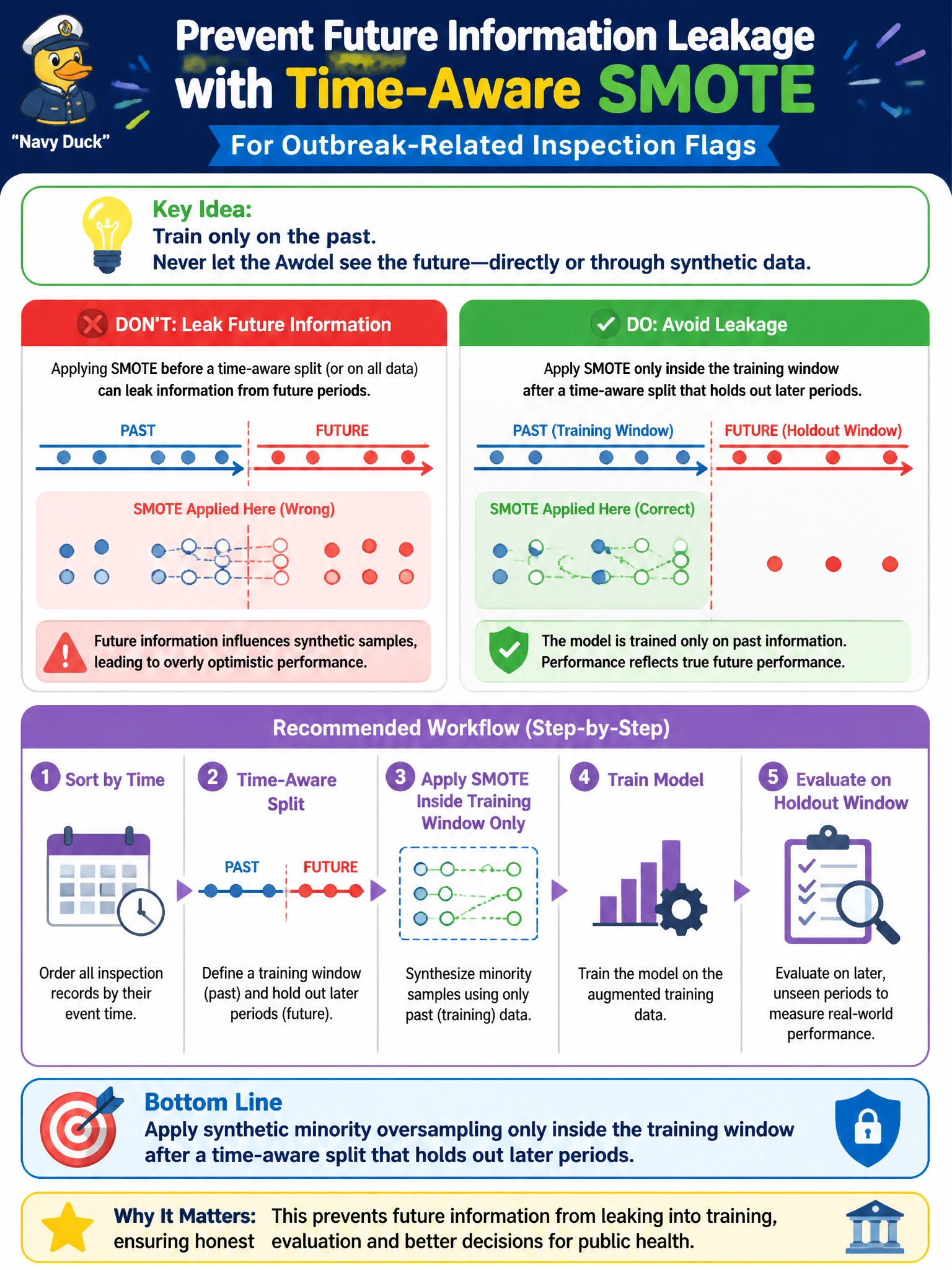
SMOTE is like remixing yesterday's rare cases into new practice examples—you should not peek at next month's inspections while you remix. Split by time first, then synthesize only inside the training window so the future stays honest.
Full Explanation
A permitting and inspections bureau planning SMOTE-style synthesis for rare outbreak-related inspection flags must prevent future information from entering training. The correct pattern is a time-aware split that holds out later periods first, then apply synthetic minority oversampling only inside the training window. That keeps synthetic neighbors built from historically available inspections so demand or outbreak models are not rehearsing on future civic states that would not have been known at train time. Synthesizing minority rows from the full chronological dataset including future weeks and then splitting randomly fails by concept: SMOTE neighbors can blend future outbreak flags into training examples and random splits hide the leak. Generating synthetic rows from the holdout period and folding them into training fails more directly by training on holdout-derived artifacts and inflating apparent recall. Ignoring time order because SMOTE supposedly guarantees leakage-free models fails: SMOTE does not create temporal hygiene; split discipline does. Exam caveat: even train-only SMOTE can leak if features themselves contain post-event fields or if near-duplicate inspections from the same future site cross the cut via identifiers. Operational check: cut the inspection timeline into train and later holdout, run SMOTE only on training minority flags, verify no holdout IDs or future weeks appear in synthetic parents, and report outbreak-flag recall on the untouched later period only.