
When designing a large-scale AI cluster for distributed deep learning, architects must align multiple infrastructure layers to prevent bottlenecks. According to standard AI cluster frameworks, how many core architectural components make up this foundation?
Select an answer to reveal the explanation.
Short Explanation and Infographic
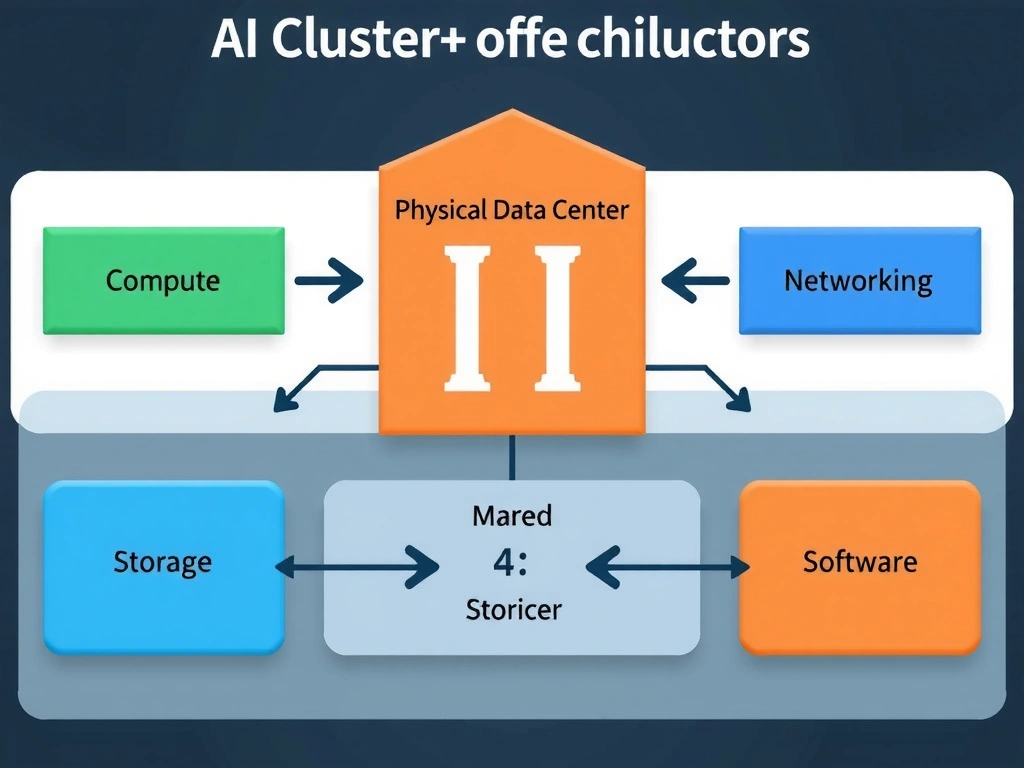
When you're building a massive AI cluster, you can't just think about the GPUs. If you do, you're going to build a very expensive bottleneck. You have to design across five foundational pillars: the physical Data Center (power and cooling), the Compute nodes (CPUs and GPUs), the high-speed Networking (InfiniBand/RoCE), the parallel Storage system, and the Orchestration Software. Miss just one of these five, and your cluster will crawl. Keep the number 5 in mind for the exam!
Full explanation below image
Full Explanation
Standard AI cluster frameworks identify five core architectural components as the essential building blocks for performance and maintainability: 1. Data Center: The physical facility, backup power, and advanced cooling infrastructure required to run high-density GPU racks. 2. Compute: The physical servers, including CPUs, GPUs, system RAM, and internal PCIe switch topologies. 3. Networking: The communication fabric, typically split into three networks: a high-speed backend compute network (like InfiniBand or RoCE) for node-to-node GPU communication, a frontend storage network, and an out-of-band management network. 4. Storage: The parallel file system (such as Lustre or GPFS) and high-speed NVMe storage arrays required to feed training data to GPUs without causing I/O wait times. 5. Software: The cluster operating systems, drivers (CUDA), container runtimes, Kubernetes orchestrators, and AI frameworks. Failing to scale any of these five components creates a bottleneck. For example, if storage cannot stream data fast enough, your expensive GPUs will sit idle.