
Your team is deciding on a container orchestration platform for managing AI microservices in production. Which platform is most commonly chosen for modern AI clusters, providing automation for deployment, scaling, and management of containerized AI workloads?
Select an answer to reveal the explanation.
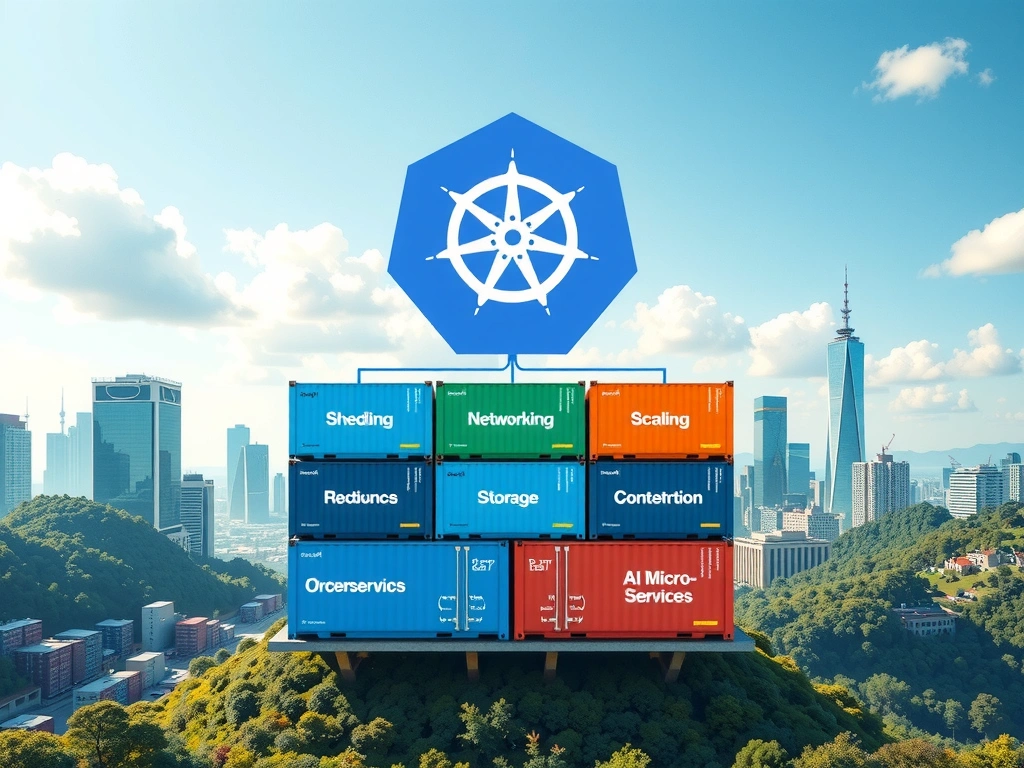
Short Explanation and Infographic
Kubernetes is the de facto standard for container orchestration in modern deployments. Apptainer is HPC-focused containerization, MLOps is a practice/methodology (not a tool), Slurm is a job scheduler for HPC but not a container orchestrator.
Full explanation below image
Full Explanation
Kubernetes has become the standard container orchestration platform across industries, including AI. It automates deployment, scaling, and management of containerized applications. For AI workloads, Kubernetes provides: GPU resource scheduling, pod scaling based on demand, service discovery and load balancing, and storage orchestration. Apptainer (formerly Singularity) is a container platform designed for HPC environments, focusing on reproducibility and security for research computing. MLOps is a practice area (how to develop, test, and deploy ML systems), not a specific tool. Slurm is a job scheduler widely used in HPC and research clusters — it competes with Kubernetes in some respects, but they have different design philosophies. Slurm is typically for batch workloads in traditional HPC; Kubernetes is for containerized workloads in cloud-native environments. The question tests whether you know which platform dominates in modern AI infrastructure.