
You're briefing a team on job scheduling in an AI cluster, and you want to convey the core purpose in one clear statement. What is the primary role of job scheduling in an AI cluster environment?
Select an answer to reveal the explanation.
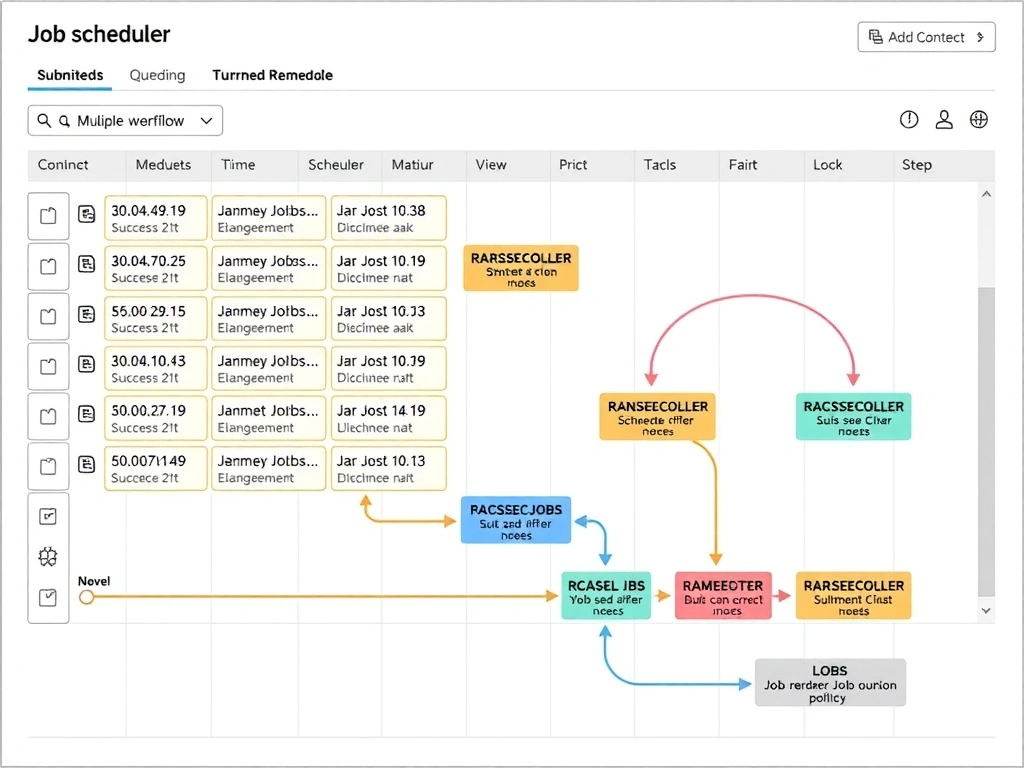
Short Explanation and Infographic
Job scheduling is about workload distribution and resource allocation. B is monitoring (DCGM's job), C is power management (not the scheduler), D is log management. A captures the core function: taking jobs and resources, and making smart allocation decisions.
Full explanation below image
Full Explanation
A job scheduler's primary function is to manage the queue of submitted jobs and allocate cluster resources (GPUs, CPUs, memory) efficiently. When multiple teams submit jobs simultaneously, the scheduler decides which job runs where, when, and with how much resources. It optimizes for: fairness (every user gets adequate resources), efficiency (avoid wasting GPU capacity), and priority (critical jobs get resources quickly). Common scheduling algorithms consider job requirements, available resources, user priorities, and fairness policies. This is fundamentally a resource allocation and workload orchestration function — not monitoring (that's monitoring tools like DCGM or Prometheus), not power management (that's separate infrastructure), and not logging (that's observability systems).