
You are managing an enterprise AI data center where several GPU nodes have experienced unexpected shutdowns and hardware degradation during prolonged 72-hour deep learning training runs. To implement a proactive alerting system and prevent hardware failure from thermal stress, which telemetry metric must you monitor and set critical thresholds for?
Select an answer to reveal the explanation.
Short Explanation
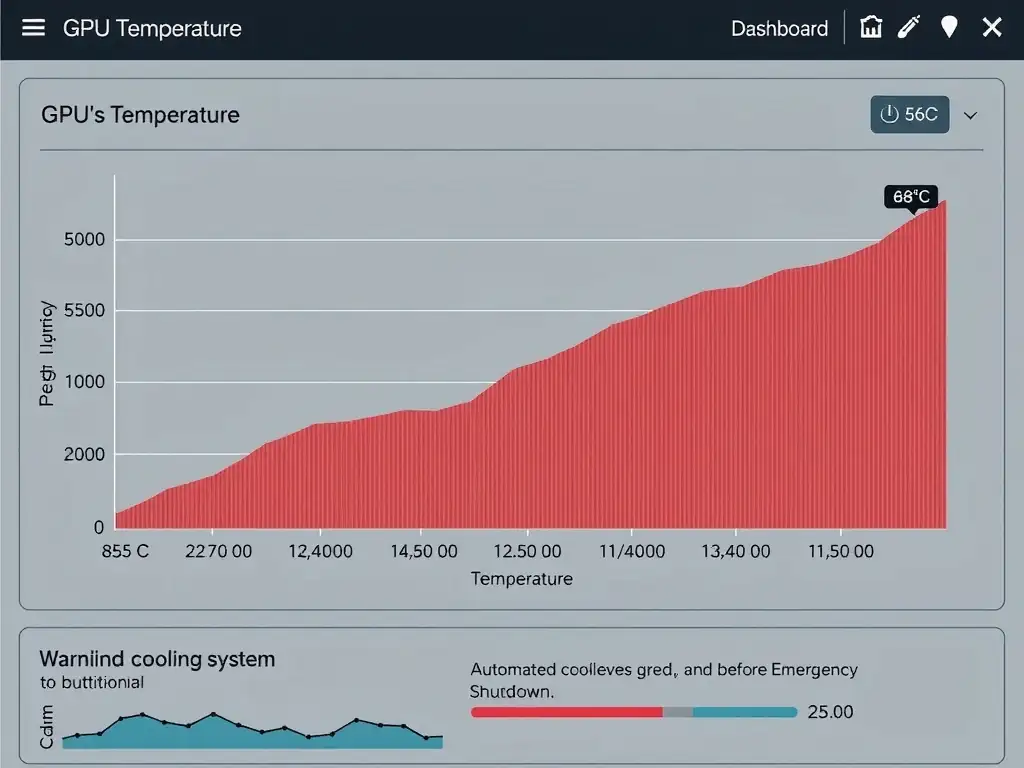
Pay close attention here, because heat bites people in production all the time. When you hammer GPUs through long training runs, watch GPU core temperature and junction thermal sensors, then alert and cool or migrate workloads before throttling or shutdown fries the hardware.
Full Explanation
During intensive deep learning training sessions, GPUs operate near their maximum thermal design power (TDP) for extended periods. This continuous power draw generates massive amounts of heat. If the cooling infrastructure—fans, liquid blocks, or airflow—fails or is insufficient, the temperature of the GPU silicon will rise rapidly.
To prevent permanent physical damage, GPUs use internal thermal sensors to trigger protective mechanisms. Thermal throttling decreases clock speed and voltage to reduce heat output, causing severe performance degradation. Thermal shutdown occurs if temperature crosses a critical safety threshold, typically between 85°C and 95°C depending on architecture, where the GPU driver or hardware triggers an emergency shutdown to prevent catastrophic silicon failure.
Monitoring GPU core temperature and junction thermal sensors lets system administrators build proactive alerting and mitigation workflows. For example, if a node's temperature exceeds a warning threshold, the cluster orchestrator can stop scheduling new tasks to that node or increase fan speeds. Setting critical thresholds for these thermal readings directly addresses unexpected shutdowns and hardware degradation from thermal stress during prolonged training runs.
The other telemetry signals don't address the failure mode described. PCIe link width and negotiation speed indicate the bandwidth of the data path between the CPU and GPU; while vital for data transfer speeds, they don't correlate with thermal stress or predict imminent hardware failures. Frame buffer (VRAM) utilization percentages tell you how much graphics memory is in use; exceeding VRAM capacity triggers 'Out of Memory' runtime software errors, but it doesn't cause hardware degradation or thermal shutdowns. Input voltage fluctuations from the power distribution unit (PDU) are a good data center practice to track, but they measure facility-level electrical delivery, whereas thermal degradation is localized to the silicon chips under heavy load.
Consequently, monitoring GPU core temperature and junction thermal sensors is the most direct and critical strategy for preventing heat-related hardware failures.