
An operator must fetch the current alert status from Prism Central programmatically for a dashboard, without opening the UI. Which action should be used?
Select an answer to reveal the explanation.
Short Explanation
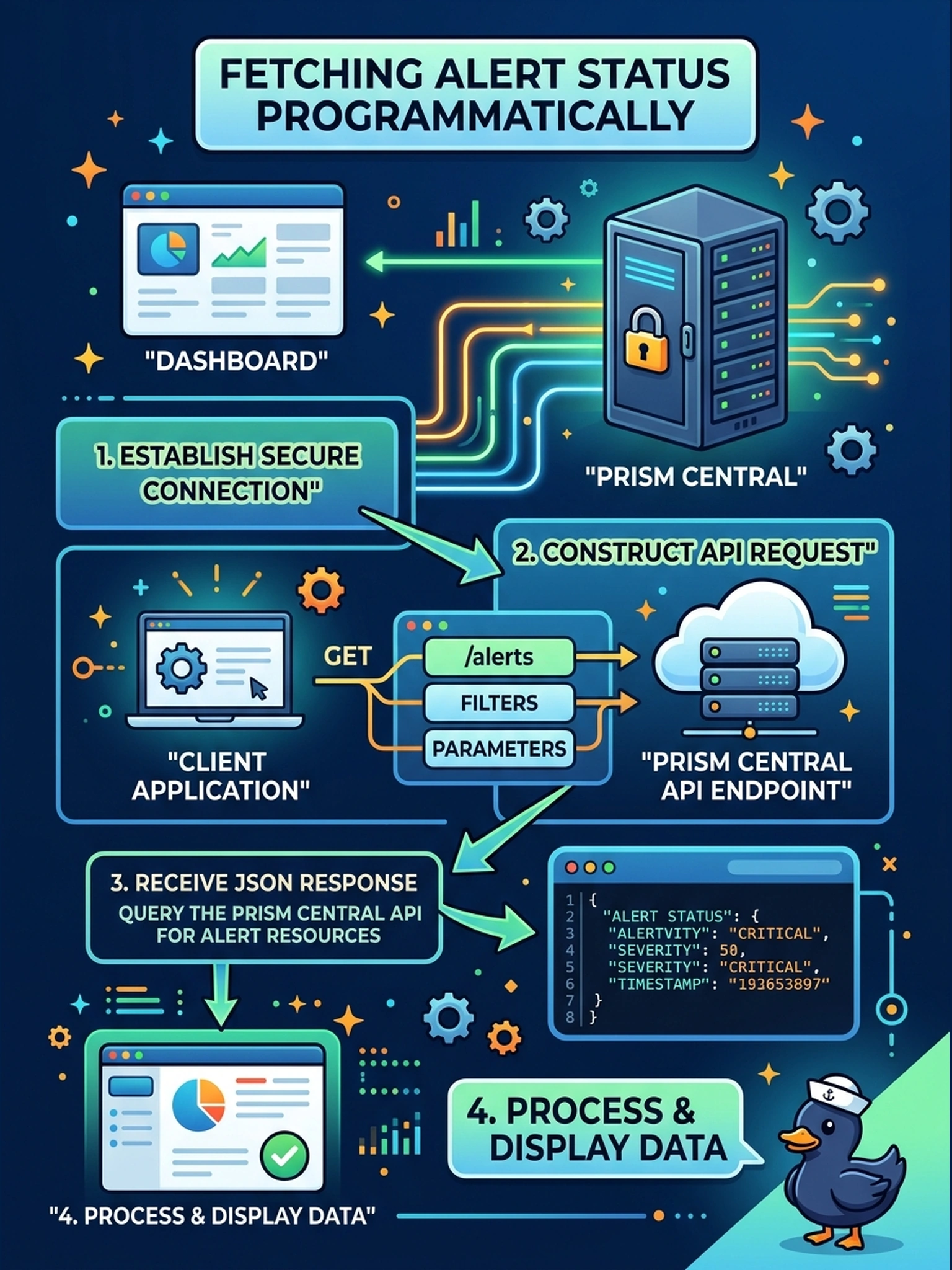
Think of the REST API like a drive-through window for alert data: you ask, it answers. The UI or emailed dashboard is for humans, not for your dashboard to parse. If you need current alert status programmatically, don't scrape screens or logs—hit the alerts endpoint.
Full Explanation
The Prism Central API exposes alert resources that can be queried with an HTTP GET request and parsed by scripts or automation platforms. Because the endpoint returns structured alert objects, a dashboard can retrieve current alert status programmatically, filter by severity or entity, and refresh without UI interaction. NCC health checks are diagnostic routines run on CVMs; they report health-check results, not the live alert status exposed by Prism Central, and parsing console output is not a supported programmatic alert source. An X-Play playbook that emails a dashboard artifact is a human notification workflow, not a machine-readable query, so it cannot feed a dashboard with current alert data. A UI CSV export is a manual snapshot intended for human review, not an automated endpoint call, and it cannot be polled for continuously updated alert status. Exam caveat: when a question asks for programmatic retrieval of monitoring data, choose an API endpoint or automation action that returns structured data rather than a human-facing report or health-check output. Operational check: from a control host, authenticate to Prism Central with API credentials and issue a GET request to the alerts API endpoint, then verify the JSON response includes alert identifiers and severity.