
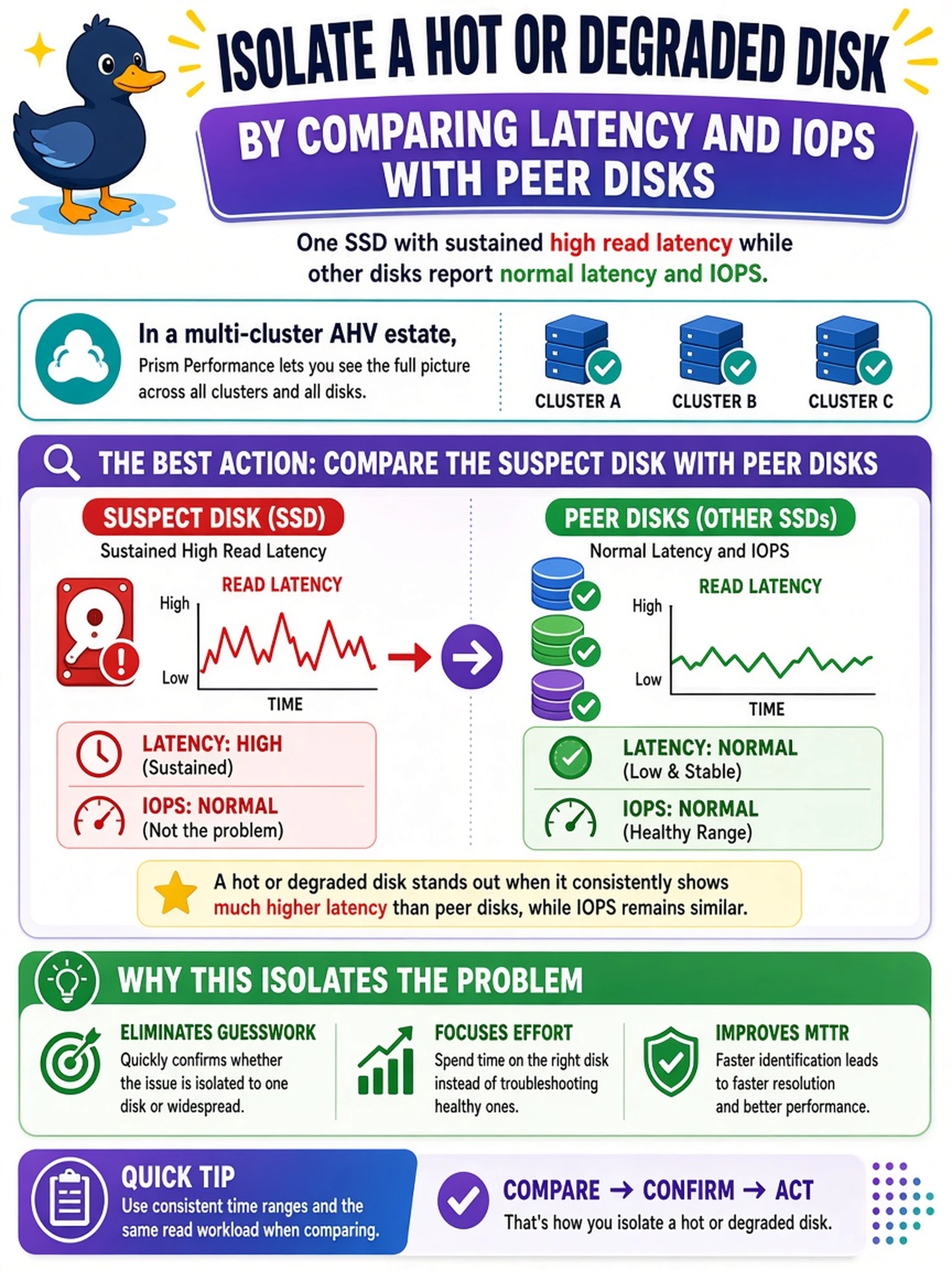
In a multi-cluster AHV estate, Prism Performance shows one SSD with sustained high read latency, while other disks report normal latency and IOPS. Which action best isolates a hot or degraded disk?
Select an answer to reveal the explanation.
Short Explanation
Think of it like checking the tires: if one wheel wobbles, don't replace the whole car. You look at the per-disk latency and IOPS first, because one outlier disk tells you where the trouble lives. Cluster-wide fixes are a shot in the dark when the other disks are quiet.
Full Explanation
Disk-level performance metrics isolate a hot or degraded disk because per-disk latency and IOPS can be compared against peer disks, so a single outlier points to that disk rather than cluster-wide contention. This also prevents chasing cluster-wide tuning knobs when the evidence points to a single physical failure domain. When only one disk reports high latency while peers remain normal, comparing its read/write latency and IOPS against neighboring disks confirms the scope and supports disk replacement or hardware investigation. Raising replication factor changes data placement and fault tolerance, not the latency of an already busy or failing disk, and may add write amplification. CVM CPU or memory pressure would usually affect multiple disks, VMs, or I/O paths rather than producing a clean single-disk outlier, so CVM resource checks are secondary. Working-set size describes how much data is actively touched and influences overall cache or tiering behavior; it does not cause one disk to absorb all random I/O in a normal cluster. Exam caveat: choose the metric that matches the observed scope: single-disk symptoms call for per-disk metrics before cluster-wide tuning. Operational check: compare the suspect disk's latency and IOPS with the same metrics for disks on the same node and container, then correlate with disk health or replacement alerts.