
An NCC health check on an AHV cluster reports Cassandra availability concerns. Prism Central shows normal VM power states, but cluster metadata operations are slow. Which component is directly affected?
Select an answer to reveal the explanation.
Short Explanation
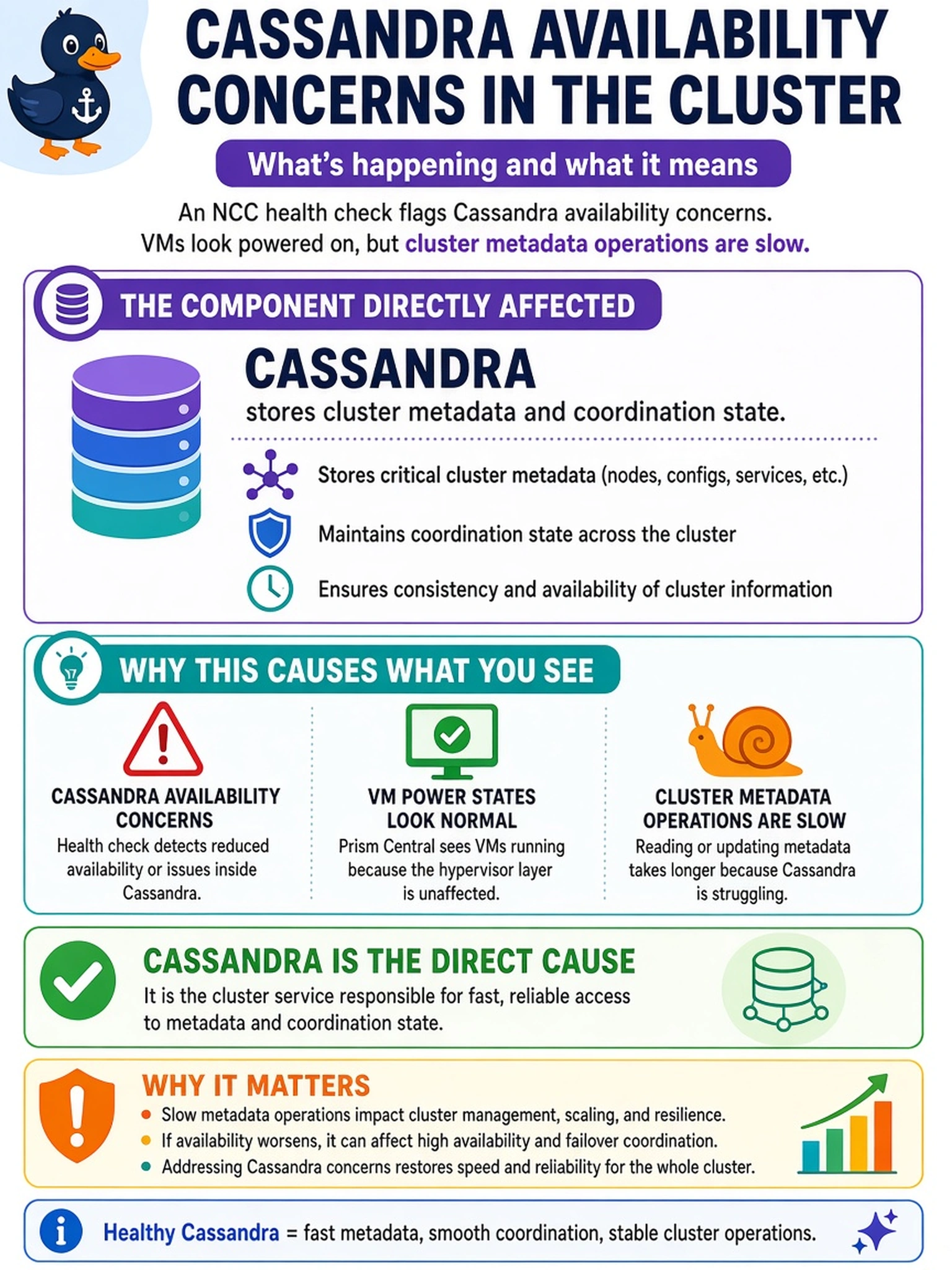
Think of Cassandra as the cluster's filing cabinet for metadata and coordination state. When NCC complains about Cassandra, your VMs may still run, but the cluster can struggle to find and update its own records. Don't chase Curator or Stargate just because they touch data — the health check is pointing at the metadata service.
Full Explanation
Cassandra is the distributed database used by Nutanix cluster services to store metadata and coordination state, so an NCC health check for Cassandra availability points directly to the service that tracks cluster objects and operational context. If Cassandra is degraded, VM I/O may continue through other data-path components, but metadata operations such as discovering cluster state or updating records can become slow or unavailable. Curator is wrong because it performs background data services such as data reduction and rebalancing, not the primary metadata store. Stargate is wrong because it handles storage I/O paths between guest VMs and storage, not cluster metadata availability. Zookeeper is wrong because it supports coordination and consensus among cluster services, but the reported health check specifically identifies Cassandra availability, making Cassandra the affected component for metadata and coordination state. Exam caveat: choose the component named by the health check and its documented role, not the component that also participates in cluster operations. Operational check: review the NCC Cassandra health-check details and cluster metadata operation latency before escalating to capacity or networking teams.