
A Nutanix cluster repeatedly generates a disk capacity alert. An administrator acknowledges the alert from Prism Central each time, but the alert returns and the disk remains low. What action is required to resolve the condition?
Select an answer to reveal the explanation.
Short Explanation
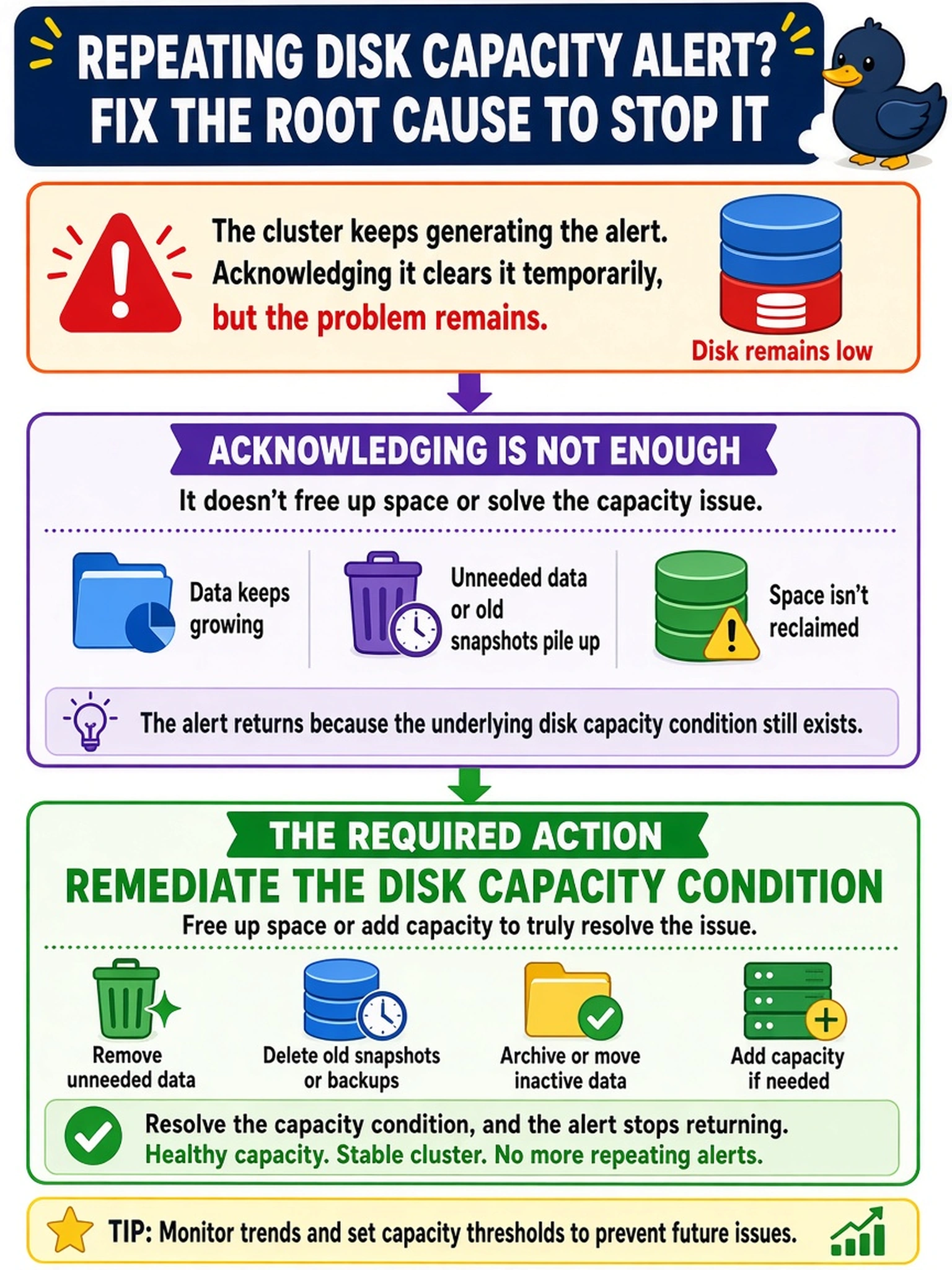
Think of acknowledging a disk alert like turning off a smoke alarm while the toast is still burning. It quiets the notification, but the smoke is still there. You have to fix the capacity condition before the alert can clear.
Full Explanation
An alert acknowledgement is an administrative action that records that someone has seen and accepted responsibility for an alert; it does not alter the monitored object or change the metric that triggered the alert. In a Nutanix cluster, a disk capacity alert remains active while the underlying storage condition persists, because Prism monitoring evaluates the current state of disks, containers, and cluster capacity. To clear the alert, the administrator must reduce usage, add capacity, remove stale data, or otherwise restore the disk or container to a healthy state, then allow the alert to clear after the condition is corrected. Acknowledging the alert again is wrong because acknowledgement only changes alert state, not disk utilization, and the next evaluation can still see the same low-capacity condition. Raising a threshold is wrong because it suppresses or reclassifies the notification without repairing the capacity shortage, which can leave the cluster exposed to performance or availability risk. Restarting a CVM is wrong because the CVM handles storage services and monitoring, but a capacity threshold breach is caused by used capacity, not by a transient alert-engine state; restarting it is disruptive and does not free disk space. Exam caveat: do not confuse alert acknowledgement with alert resolution, suppression, or maintenance mode. Operational check: review the affected disk or container capacity trend in Prism, then take a concrete remediation step such as reclaiming space, moving VMs, or expanding capacity.