
A Nutanix DR runbook must fail over a three-tier application: database VMs, application VMs, and web VMs. The app team says web servers connect to the application tier, which connects to the database. Which start order should the runbook enforce during failover?
Select an answer to reveal the explanation.
Short Explanation
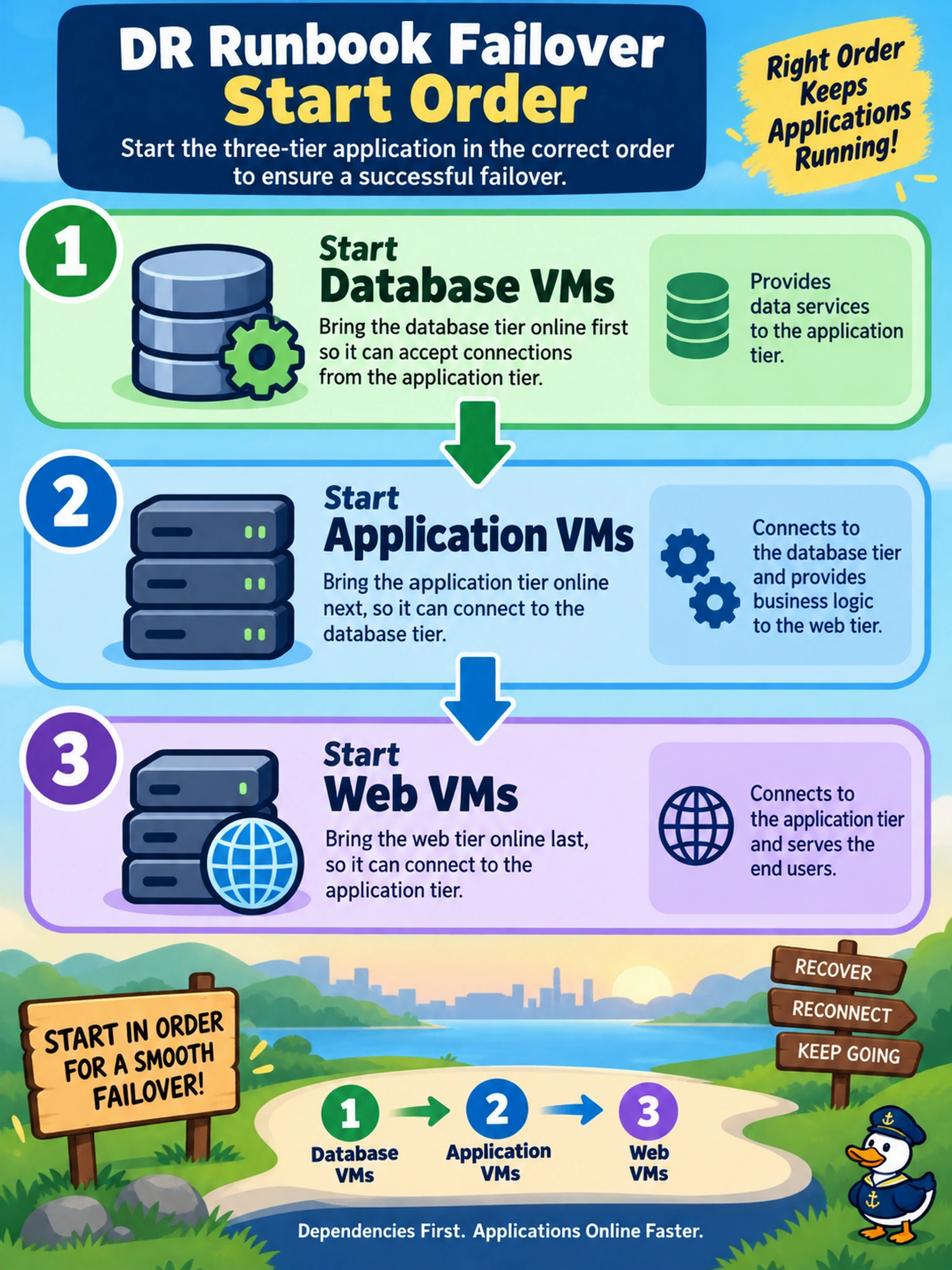
Think of failover like waking a house: you don't turn on the TV before the power comes back. Start the database first, then the app, then the web tier, because each layer depends on the one below it. The trap is chasing RTO with a random or user-facing order, which just makes every service fail and retry.
Full Explanation
Runbook failover should mirror the application's dependency graph, not the administrator's convenience. In a layered workload, the lowest tier provides identity, data, or connectivity services that higher tiers query during boot. Starting the database first gives the application tier a reachable backend, then the web tier can bind to a functioning application service. This reduces boot-time retries, connection timeouts, and false failures during recovery. A web-first order prioritizes the user-facing layer while its upstream dependencies are unavailable, so pages, health checks, or authentication requests fail until the database is ready. Starting the application tier before the database assumes retries are harmless, but many applications cache connection failures, mark services unhealthy, or require a manual restart after backend errors. Starting all tiers at once may reduce wall-clock time, but it hides dependency failures and makes recovery non-deterministic, especially when services have startup scripts, load balancers, or health probes. Exam caveat: Nutanix recovery automation is judged by whether the runbook reflects application dependencies, not by whether it starts the most visible VM first. Operational check: before testing failover, list each VM's required services and configure the runbook to wait for a dependency's health or port check before launching the next tier.