
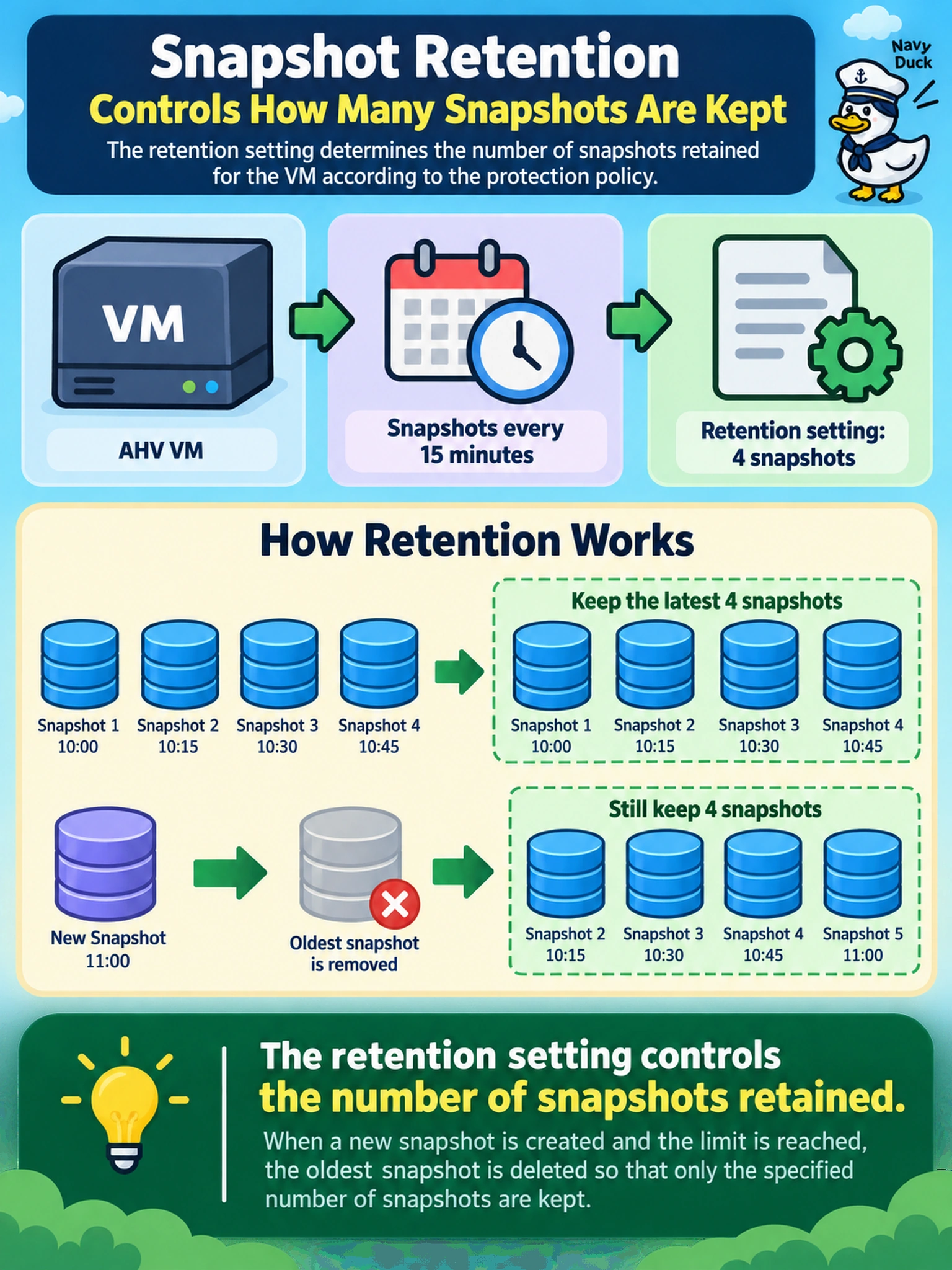
A Nutanix administrator configures a protection policy for AHV VMs. Snapshots are scheduled every 15 minutes, and the policy is set to retain four snapshots. What does the retention setting control?
Select an answer to reveal the explanation.
Short Explanation
Think of retention like keeping the last four receipts in a folder; the schedule says how often you add one, but retention says how many you keep. You can snapshot every 15 minutes and still only have four usable snapshots at any moment. That distinction is the trap here.
Full Explanation
Snapshot retention in a Nutanix protection policy defines how many snapshot instances are preserved for a protected VM or protection domain at any time. When a new snapshot is created beyond the configured retention limit, the oldest retained snapshot is removed so the count stays within the limit. This controls recovery point availability, not the cadence of snapshot creation. The interval between snapshot operations is governed by the schedule or frequency setting, so changing retention does not alter how often snapshots are generated. The amount of storage consumed by snapshots is an outcome of retention, VM change rate, and compression or deduplication, not the direct meaning of the retention value. The number of VMs included in protection is determined by the scope of the protection policy or protection domain membership, not by how many snapshots are kept. Exam caveat: on the exam, read whether the question asks about frequency, retention, storage impact, or scope before selecting the control. Operational check: review the protection policy settings and confirm the snapshot count limit is set to the required value while the schedule remains aligned with the desired recovery point objective.