
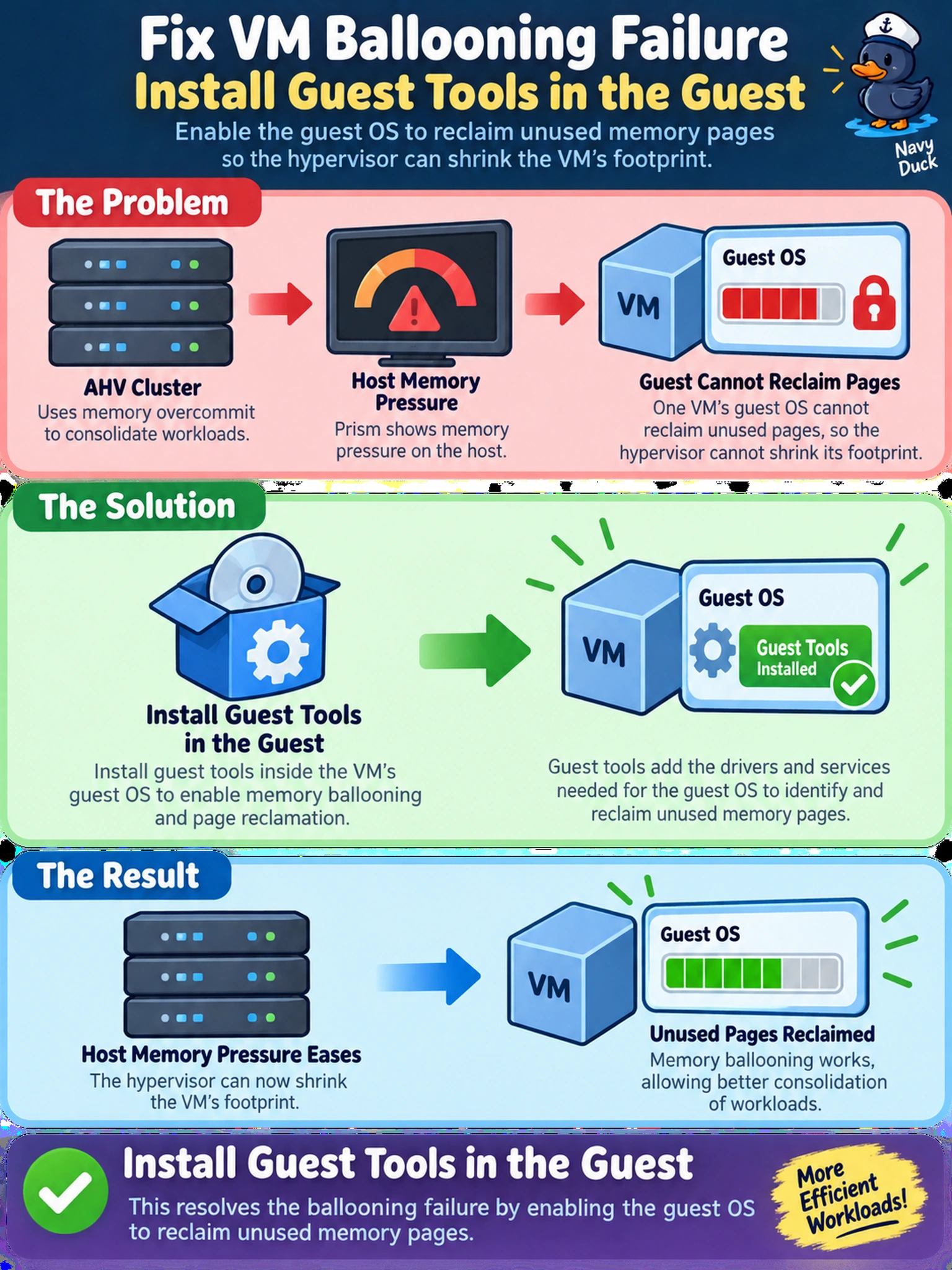
A Nutanix AHV cluster uses memory overcommit to consolidate workloads. Prism shows host memory pressure, but one VM's guest OS cannot reclaim unused pages, so the hypervisor cannot shrink its footprint. Which action resolves the ballooning failure?
Select an answer to reveal the explanation.
Short Explanation
Think of ballooning like asking the guest to lend RAM back to the cluster. If you skip the balloon driver, the guest can't cooperate, so overcommit stalls. Install Nutanix Guest Tools and let the VM return unused memory.
Full Explanation
Memory overcommit on AHV depends on the guest cooperating with the hypervisor when the cluster needs reclaimable RAM. The balloon driver, delivered through Nutanix Guest Tools, asks the guest OS to return unused pages, allowing the host to reduce the VM's physical footprint without powering it off. If the driver is absent or inactive, the hypervisor sees pressure but cannot shrink the VM's memory footprint, so installing or enabling Nutanix Guest Tools is the corrective action. Raising the memory reservation does not solve the problem; it guarantees memory to the VM, reducing consolidation headroom and leaving host pressure unchanged. Disabling memory overcommit also avoids the symptom by abandoning the feature, but it wastes capacity and does not address guest-side ballooning. Increasing CPU oversubscription is unrelated because CPU scheduling does not reclaim guest RAM and can worsen contention. Exam caveat: The question tests the dependency between overcommit and guest tools, not a cluster-wide tuning setting. Operational check: Verify Nutanix Guest Tools is installed and the balloon driver is active on the affected VM before changing memory policy.