
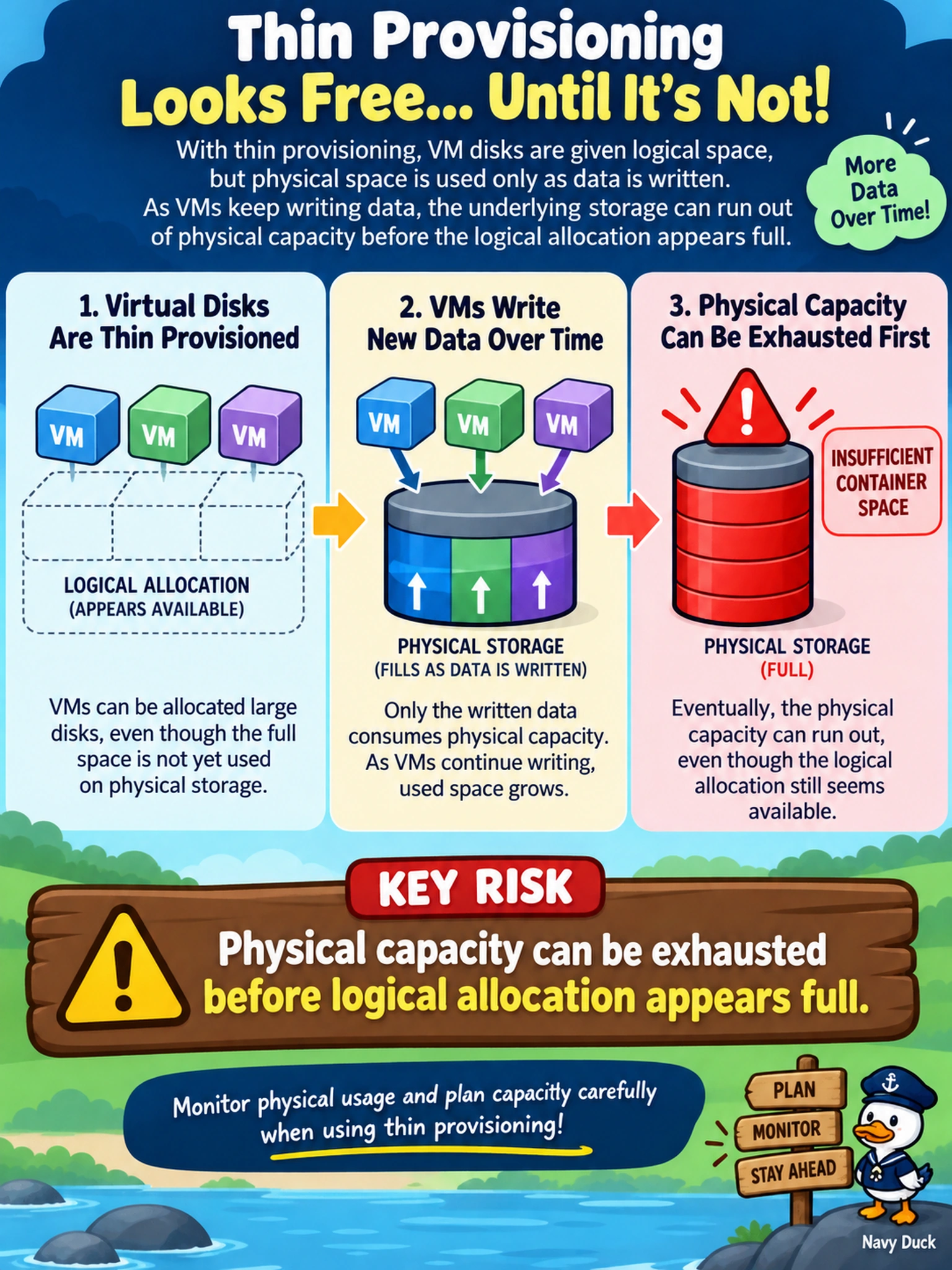
On an AHV cluster, a storage container has thin provisioning enabled for VM disks. VMs continue writing new data, and Prism Central eventually reports insufficient container space even though allocated capacity seemed available. Which risk does thin provisioning introduce?
Select an answer to reveal the explanation.
Short Explanation
Think of thin provisioning like giving out many large gift cards from one bank account: everyone can spend, but the account can still run dry. You might see plenty of allocated space until physical capacity is gone. The trap is treating logical allocation as if it were guaranteed physical capacity.
Full Explanation
Thin provisioning lets a storage container advertise more virtual disk capacity than the underlying physical capacity currently available. When a VM writes new blocks, the hypervisor and CVMs allocate physical space only as needed, so logical allocation can look healthy until the physical tier is consumed. That creates a capacity risk: many VMs may each use a small amount of their large virtual disks, but together they exhaust the container before the administrator sees a clear logical overcommit signal. Compression and deduplication are separate data reduction features and do not guarantee enough physical capacity for thin-provisioned writes. Reserving the full virtual disk size describes thick provisioning, not thin provisioning. Preventing VM disks from consuming more physical capacity than the configured logical allocation also contradicts thin provisioning, because the entire purpose is to permit overcommitment beyond physical capacity. Exam caveat: on the exam, distinguish logical allocation, physical capacity, and data reduction; thin provisioning affects allocation behavior, not automatic protection. Operational check: monitor container free space and capacity runway in Prism, and set alerts before the container reaches the space threshold used by AOS.