
In Prism Element, a storage container reports provisioned capacity far above physical usable capacity, while physical used capacity is only 30%. All attached VM disks are thin-provisioned. What should the engineer do?
Select an answer to reveal the explanation.
Short Explanation
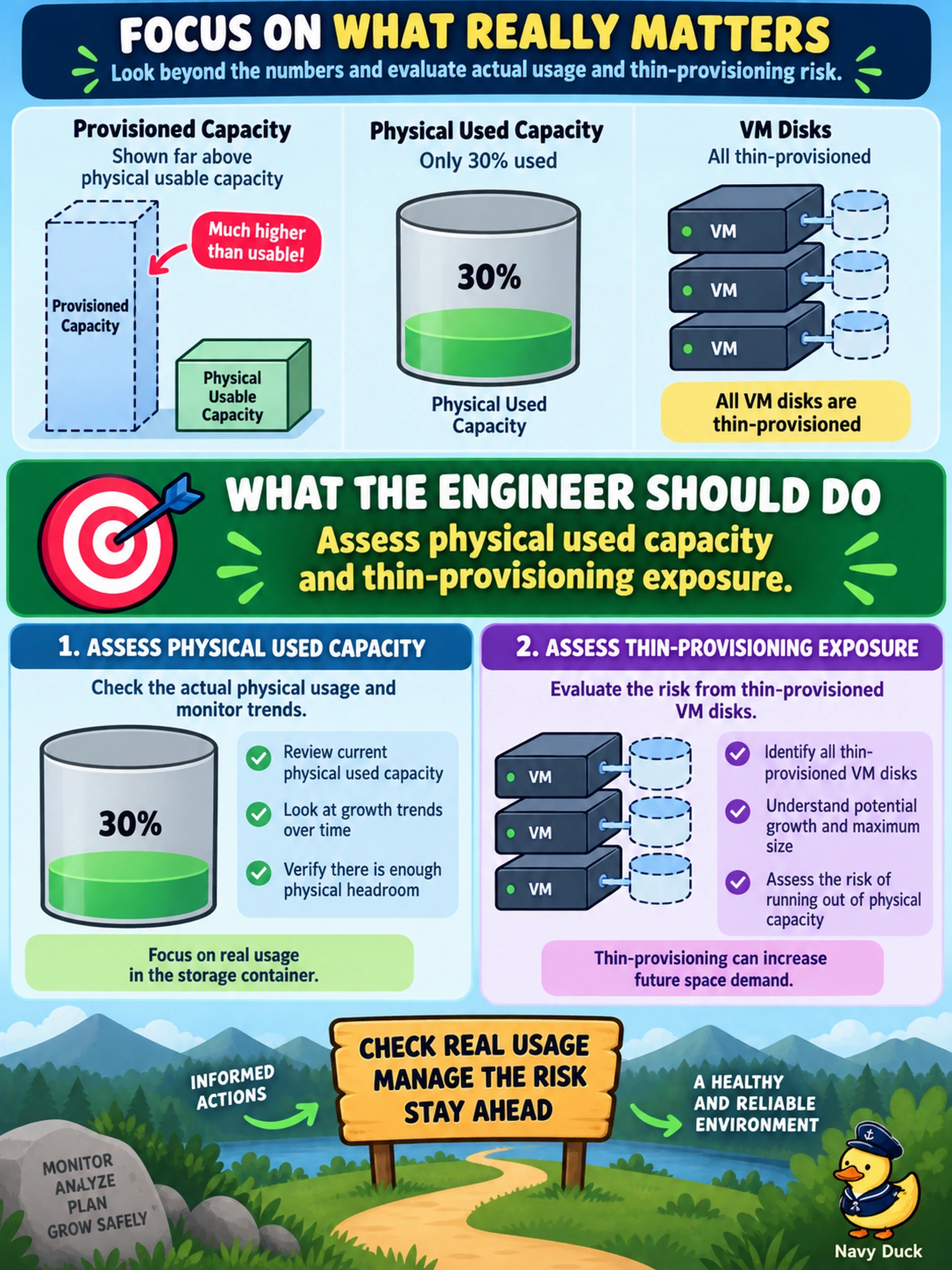
Think of thin provisioning like credit limits: you can approve more spending than you have today. Prism's provisioned number shows potential, not current physical used, so you shouldn't panic-expand; watch actual used and set alerts before guests fill disks.
Full Explanation
Provisioned capacity on a Nutanix storage container is the sum of virtual disk sizes presented to guest VMs. With thin provisioning, those disks consume physical space only as data is written, so the provisioned total can legitimately exceed physical usable capacity. Physical usable capacity, after redundancy and reserved space, is the limit that matters for availability; actual used capacity shows current consumption. Treating provisioned overcommit as a fault leads to unnecessary actions. Immediate container expansion is wrong because the cluster is not physically full; it may be appropriate only when physical used, runway, or performance indicate pressure. Enabling compression and deduplication is also wrong as a first response because those features reduce stored data footprint, not the provisioned number, and may already be enabled; they do not resolve a misunderstanding of thin provisioning. Changing redundancy factor is incorrect because RF determines fault tolerance and physical usable capacity, not how much virtual capacity has been advertised to VMs; lowering RF would weaken resilience without addressing provisioned reporting. Exam caveat: distinguish provisioned, used, and usable capacity before recommending remediation. Operational check: compare container provisioned, used, and available capacity in Prism, then validate guest filesystem free space and set utilization alerts.