
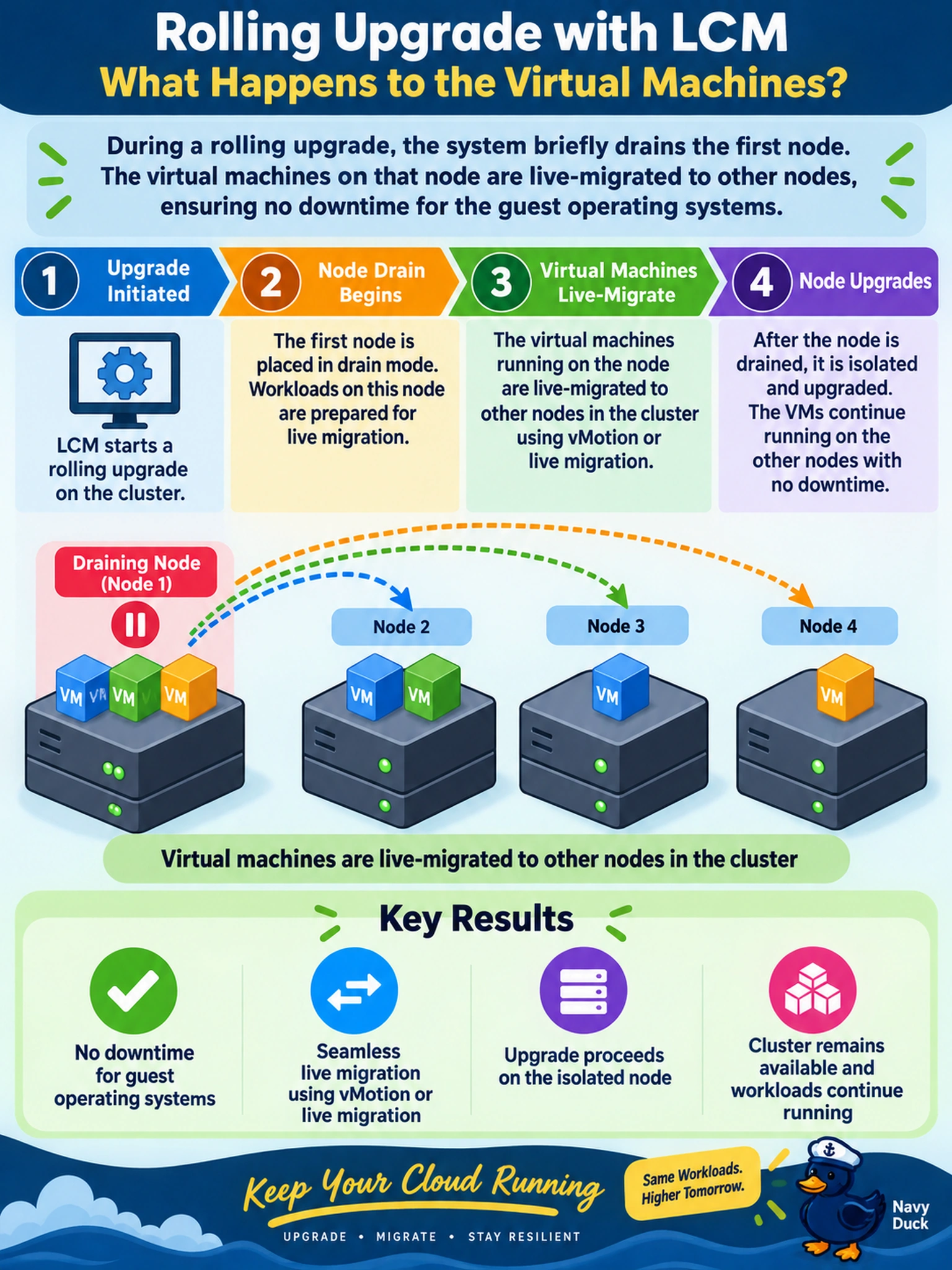
A Nutanix administrator initiates a rolling upgrade using LCM on a four-node AHV cluster. The upgrade process pauses briefly on the first node to drain workloads. What is the expected behavior for the virtual machines currently running on that specific node during this drain phase?
Select an answer to reveal the explanation.
Short Explanation
Think of a rolling upgrade like changing a tire while the car is still moving: you isolate one node, swap the software, and let live migration shift the VMs to other nodes without guest downtime. If you expect powered-off VMs or suspended connectivity, that is the trap.
Full Explanation
Nutanix Life Cycle Manager (LCM) orchestrates rolling upgrades by isolating one node at a time. Before the hypervisor and CVM software are updated, the system must ensure no workloads are actively running on the target node to prevent disruption. This is achieved through live migration (AHV Live Migration or vMotion if running ESXi), which moves the virtual machine state, memory, and disk access to another healthy node in the cluster without guest OS interruption. The other options describe incorrect behaviors: graceful shutdowns imply planned downtime, which defeats the purpose of a rolling upgrade; suspending network connectivity while leaving the VM on the node would cause application failures and is not how AHV handles node maintenance; and migrating VMs to a DR site via asynchronous replication is a disaster recovery action, not a local cluster maintenance procedure, and would introduce unacceptable latency and potential data loss for live workloads. Exam caveat: Always distinguish between rolling upgrades (zero downtime via migration) and disruptive upgrades (downtime required). Operational check: Verify in Prism Element that the 'Live Migration' status shows 'Completed' for the affected VMs before confirming the node upgrade step.