
A maintenance crew working under a Radiation Work Permit (RWP) enters a pump cubicle and measures a general work-area dose rate of 180 mrem/hr, whereas the RWP pre-job briefing specified a maximum expected area rate of 30 mrem/hr. What action should the crew take first?
Select an answer to reveal the explanation.
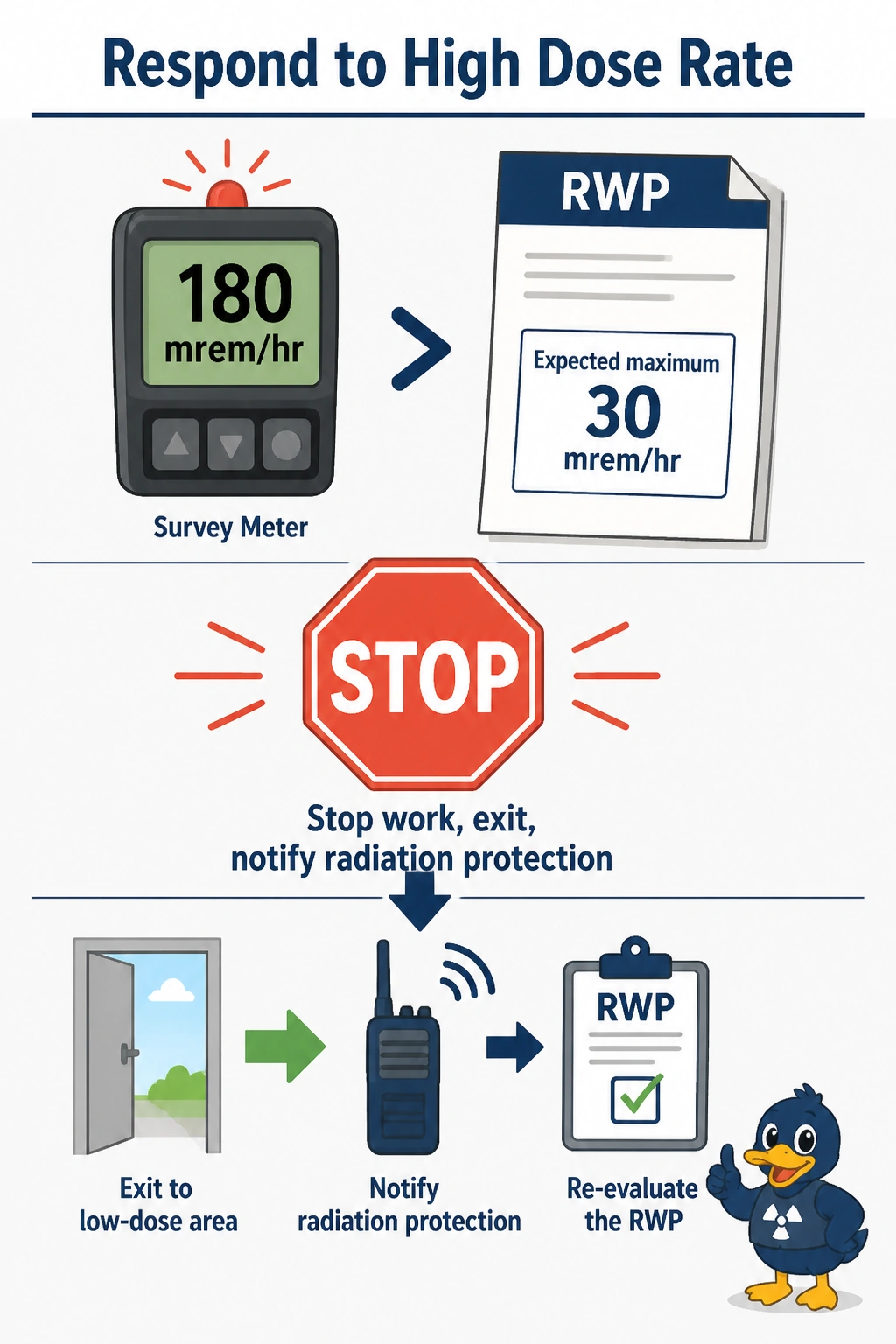
Short Explanation
Think of a Radiation Work Permit as your flight plan—when the weather suddenly turns six times worse than briefed, you do not improvise midair. The trap is trying to stay on schedule by adjusting stay times or shielding on the fly, which leaves you working without valid radiological controls. Whenever field conditions exceed RWP expectations, stop work, exit to a low-dose area, and notify radiation protection before proceeding.
Full Explanation
A Radiation Work Permit (RWP) authorizes work only within the radiological conditions and controls evaluated before entry. Because a jump from 30 mrem/hr to 180 mrem/hr invalidates the original hazard assessment, the crew must Stop work, exit to a low-dose area, and notify radiation protection to re-evaluate the RWP. Stepping back prevents unnecessary dose while radiation protection techs investigate the source term, update postings if needed, and issue revised RWP controls.
The other choices bypass formal work control. Choosing to Continue the repair while shortening each worker's stay time to match the original RWP dose budget leaves workers in an uncharacterized field that may require different dosimetry or postings. Deciding to Place temporary lead shielding over the pump casing and proceed under the existing RWP controls is unsafe because ad-hoc shielding can shift scatter or miss the root cause. Waiting to Log the elevated dose rate on the post-job survey sheet after completing the scheduled task defeats real-time ALARA protection and risks exceeding dose limits.
Caveat: even if an electronic dosimeter has not alarmed, dose rates exceeding RWP bounds require an immediate pause. Operational check: before re-entry, verify the revised RWP reflects current survey measurements, updated alarm setpoints, and a new briefing.
Prefer to study offline? Printable PDF study book + test engine ($7.50, unofficial). These questions stay free here.