
A radiation worker's hand receives an accidental acute absorbed dose of 0.25 gray (Gy) during an X-ray beam alignment error. What is this absorbed dose expressed in conventional units of rad?
Select an answer to reveal the explanation.
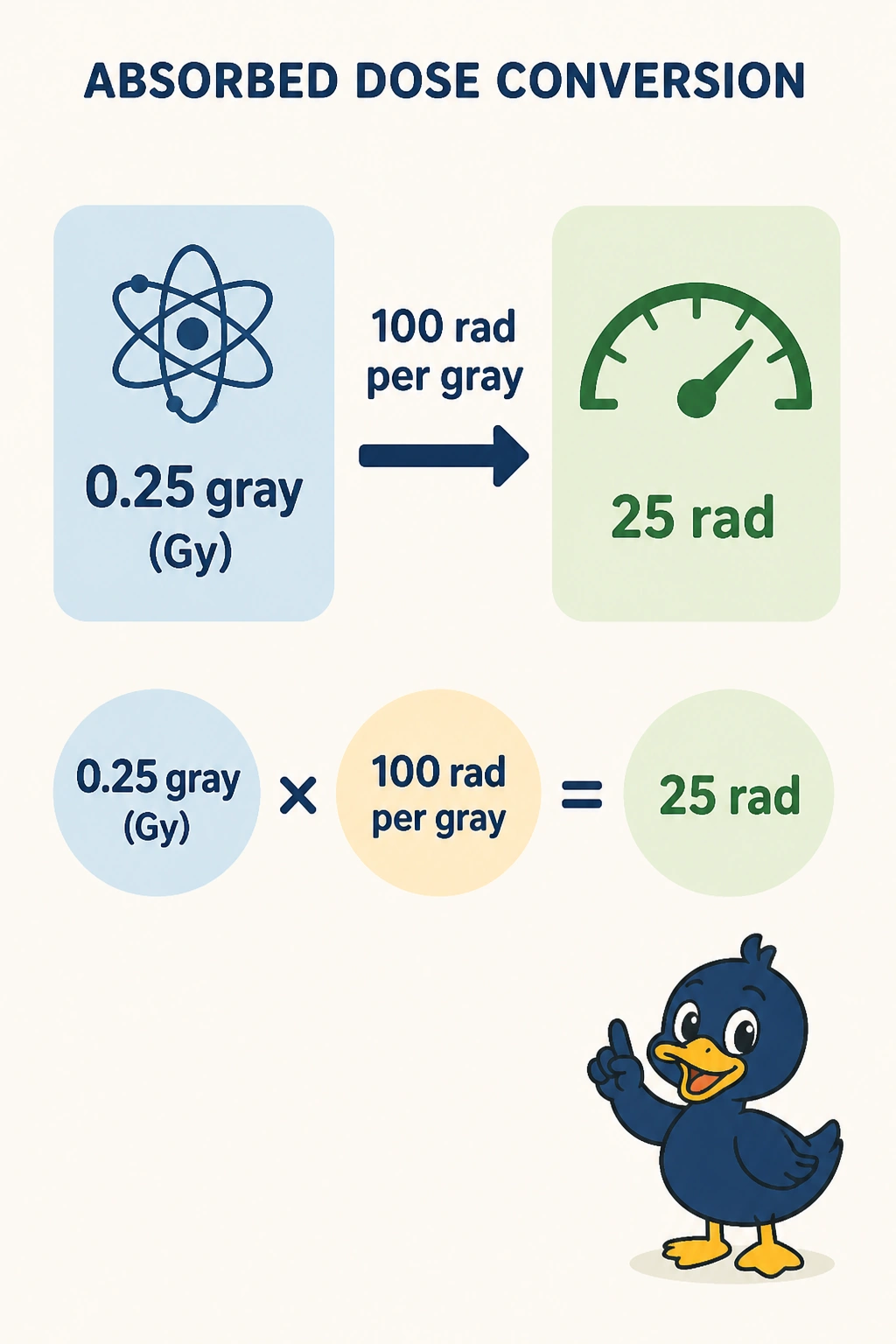
Short Explanation
Think of the gray as a dollar and the rad as a penny—there are always one hundred pennies in a dollar, so you multiply gray by 100 to get rad. The trap is mixing up the 100-to-1 factor for absorbed dose with the 1,000-to-1 metric prefixes you use for milli- and micro-units.
Full Explanation
One gray equals 1 joule of absorbed energy per kilogram of matter, while one rad equals 100 ergs per gram (0.01 joule per kilogram), so multiplying 0.25 gray by 100 yields 25 rad based on 100 rad per gray. Choosing 2.5 rad based on a 10 rad per gray factor underestimates the dose by a factor of ten, which can occur when confusing the 100 rad-per-gray ratio with a decimal shift. Selecting 250 rad based on a 1,000 rad per gray factor mistakenly applies a milli-to-base prefix multiplier instead of the SI-to-conventional absorbed dose factor. Picking 0.25 rad because gray and rad are equal confuses two distinct unit systems that differ by two orders of magnitude. As a practical caveat, absorbed dose in gray or rad measures energy deposited per unit mass and does not include radiation weighting factors used for equivalent dose in sievert or rem. Before recording an extremity dose or comparing it to regulatory limits, verify on the dosimetry report whether the laboratory reports absorbed dose in gray or equivalent dose in sievert and confirm the conversion factor on your facility's unit reference card.
Prefer to study offline? Printable PDF study book + test engine ($7.50, unofficial). These questions stay free here.