
A technologist is performing a routine six-month leak test on a sealed Cesium-137 source housed inside a shielded industrial gauge. Where should the technologist collect the wipe sample to detect potential capsule leakage safely?
Select an answer to reveal the explanation.
Short Explanation
Leak testing a shielded source is like checking a locked safe for water—you swab the seams and ports rather than cracking the door open in front of your face. The trap is thinking you must touch the bare capsule itself, which would expose you to an unshielded beam.
Full Explanation
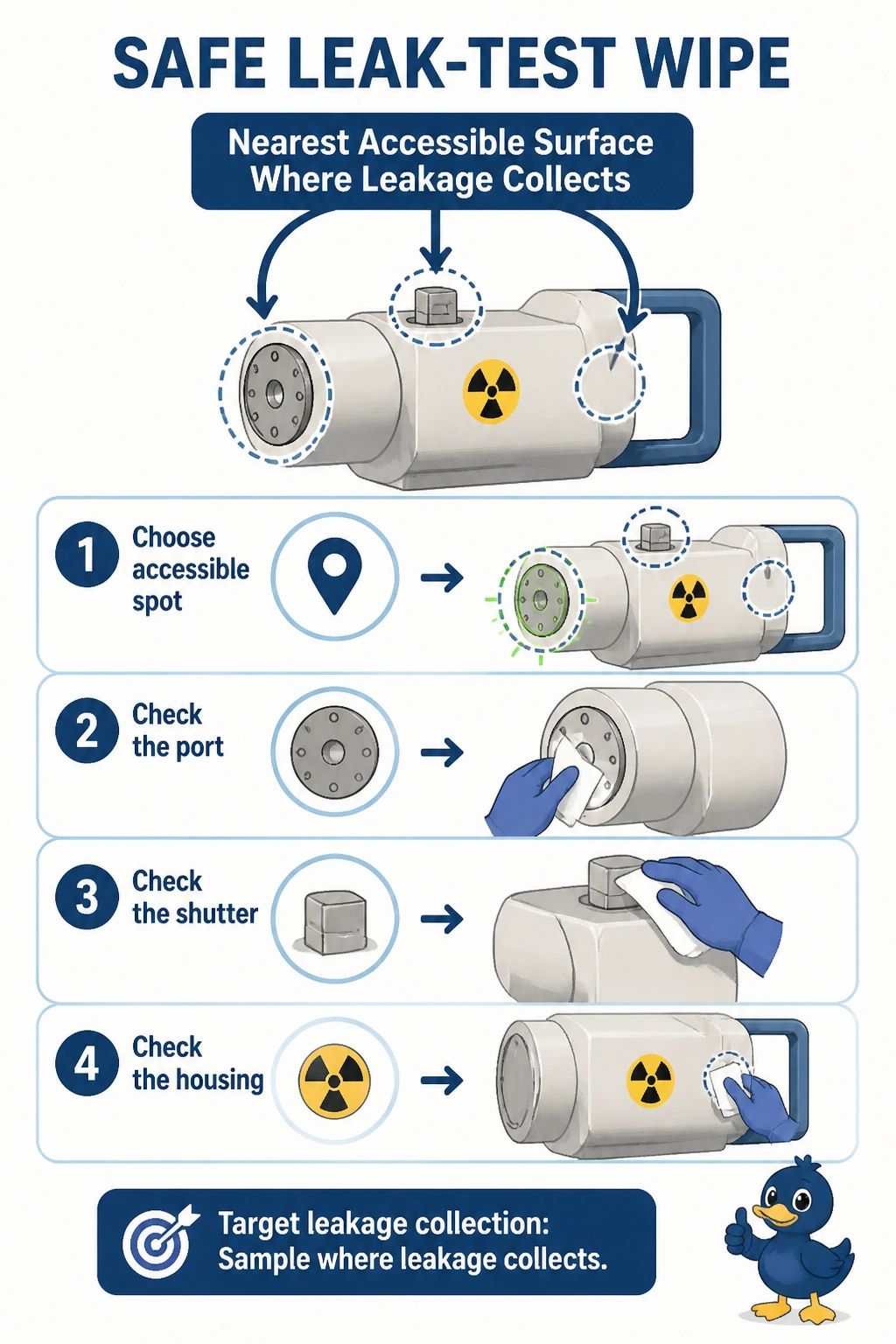
A routine leak test checks whether a sealed radioactive capsule has lost integrity without exposing the technician to the unshielded primary beam. Taking the wipe On the nearest accessible port, shutter, or housing surface where leakage collects captures any loose activity that escapes the capsule and migrates along internal pathways to accessible exterior surfaces. Wiping Directly on the bare source capsule after removing it from the shield creates an unnecessary high-dose hazard and defeats the safety purpose of indirect leak testing. Swabbing On the outer shipping crate used to transport the source to the site only tests packaging that may have been replaced or stored separately, missing contamination trapped inside the device housing. Sweeping Across the room floor directly beneath the storage cabinet is far too remote and diluted to detect a small capsule breach at the 0.005 microcurie threshold. As a caveat, if the wipe is moistened with a solvent, let it dry before counting in an alpha or low-energy beta counter to avoid self-absorption. As an operational check, perform a pre-wipe radiation survey around the shutter and housing to confirm the source is fully shielded before touching the device.
Prefer to study offline? Printable PDF study book + test engine ($7.50, unofficial). These questions stay free here.