
A laboratory unpacks a Type A cardboard shipping box that held a sealed vial of radiopharmaceuticals, and a follow-up survey confirms no removable contamination or residual radiation above background. What must the technician do before placing the empty box into general recycling?
Select an answer to reveal the explanation.
Short Explanation
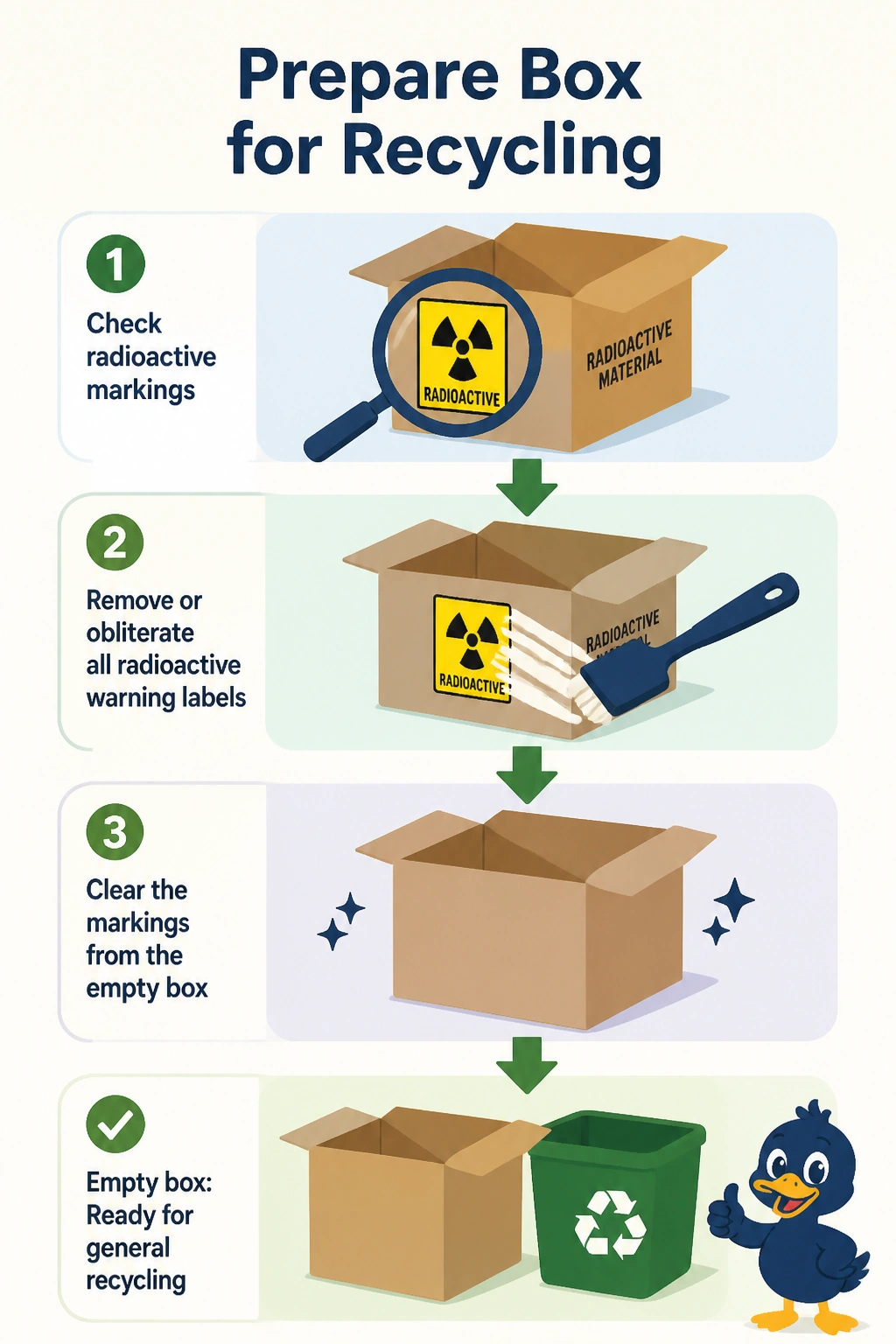
Even an empty cardboard box can trigger a highway emergency if you toss it out with a bright radioactive trefoil still taped to the side. Once your survey proves it is clean, make sure you strip or black out every radioactive label before recycling.
Full Explanation
Under NRC 10 CFR 20.1904 and DOT packaging rules, once an empty radioactive material container has been surveyed and confirmed free of contamination and residual radiation above background, the technician must Remove or obliterate all radioactive warning labels and markings before releasing it to general recycling or trash. Leaving radiation trefoils or Class 7 labels on clean waste causes false alarms at landfills, recycling centers, and scrap yards. Seal the empty box in a plastic bag and hold it for ten half-lives in storage is unnecessary because the box itself is uncontaminated and contains no licensed material. Apply a Radioactive White-I label to indicate background-level contents is improper because DOT Radioactive labels apply only to packages containing regulated radioactive material, never clean empty trash. Transfer the empty box to a licensed low-level radioactive waste broker wastes scarce disposal volume and funds on clean material. As a release caveat, always survey both the interior liner and exterior surfaces, including tape seams, before defacing labels. Operationally, document the release survey result, peel off or completely mark out all trefoil labels and UN numbers, and then place the clean box in recycling.
Prefer to study offline? Printable PDF study book + test engine ($7.50, unofficial). These questions stay free here.