
A radiation protection technologist is comparing thermoluminescent dosimeters (TLDs) and optically stimulated luminescence dosimeters (OSLDs) for routine external monitoring. What is a primary operational advantage of an OSLD over a traditional TLD?
Select an answer to reveal the explanation.
Short Explanation
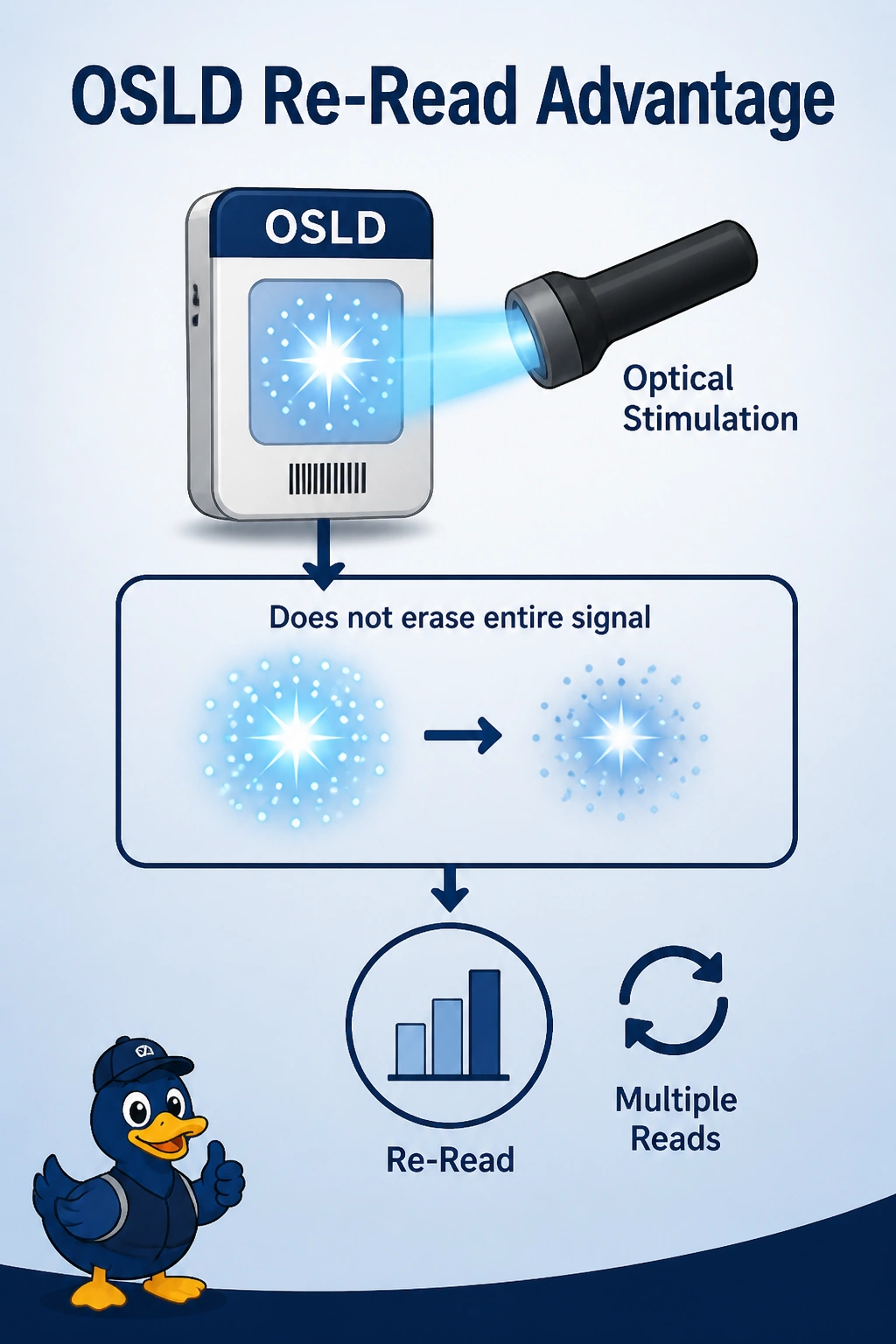
Reading a traditional TLD is like melting an ice sculpture to measure how much water it held—once you read it, the record is gone. With an OSLD, light stimulation releases only a small fraction of trapped charges, so you can re-read the badge if a dose needs verification. The trap is confusing passive OSLDs with active electronic dosimeters that alarm or show real-time displays.
Full Explanation
Optically stimulated luminescence dosimeters (OSLDs) store radiation energy in crystal lattice traps and are read by illuminating the element with a controlled light source. Because only a small portion of the trapped charge is released during readout, An OSLD can be re-read because optical stimulation does not erase the entire signal, allowing independent verification of an unexpected or elevated dose. Choosing An OSLD provides an instantaneous audible alarm whenever a preset dose rate threshold is exceeded describes an active electronic personal dosimeter, not a passive luminescence badge. Selecting An OSLD measures real-time accumulated dose directly on a built-in digital liquid crystal display also describes an electronic dosimeter, as OSLDs require a reader to determine dose. Picking An OSLD requires high-temperature thermal annealing during each readout to release trapped charges describes the thermal readout process of a TLD, which destroys the stored signal during measurement. As a dosimetry caveat, both TLDs and OSLDs are passive integrating devices that must be sent to a processor and do not warn workers of changing fields during entry. As an operational check, pair passive legal dosimeters with an alarming electronic dosimeter when entering high-radiation areas.
Prefer to study offline? Printable PDF study book + test engine ($7.50, unofficial). These questions stay free here.