
A laboratory technician receives a minor, non-life-threatening paper cut on a finger while handling a dilute beta-gamma solution, and a frisker detects localized contamination at the wound. After controlling the minor bleeding, what is the most appropriate immediate decontamination step?
Select an answer to reveal the explanation.
Short Explanation
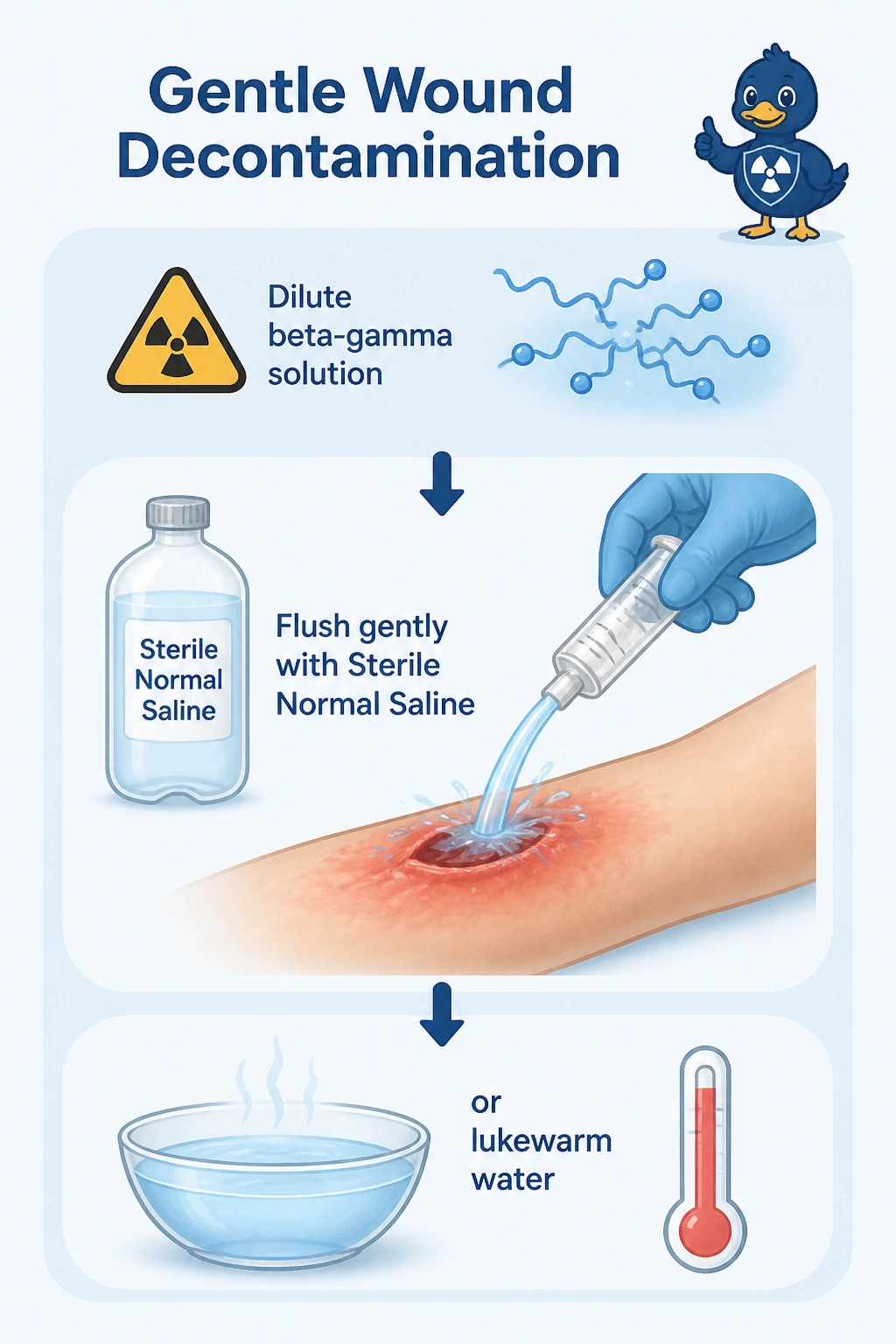
When a minor cut is contaminated, your first job is to wash the material out, not grind it in. Gentle flushing with sterile saline or lukewarm water clears loose activity without driving radionuclides deeper into tissue.
Full Explanation
For a minor, non-life-threatening cut with localized radioactive contamination, the proper immediate action is to Flush the wound gently with sterile normal saline or lukewarm water. Gentle irrigation mechanically removes soluble and particulate radionuclides from the wound bed while minimizing tissue trauma and systemic uptake. Scrub the cut vigorously with a stiff brush and industrial hand cleaner abrades damaged tissue and increases absorption into the bloodstream. Apply a chemical strippable coating directly over the open skin wound introduces industrial polymers into broken skin and traps contamination inside the cut. Soak the finger in a dilute bleach solution to oxidize the radiotracer causes chemical irritation and tissue injury on open wounds, which can enhance internal uptake. As a medical caveat, if contamination persists in the wound after gentle irrigation, stop further aggressive cleaning, cover the wound with a sterile waterproof dressing, and refer the worker to occupational medical staff for evaluation. Operationally, collect any irrigation runoff or swabs for bioassay assessment and survey the surrounding intact skin once the wound is protected.
Prefer to study offline? Printable PDF study book + test engine ($7.50, unofficial). These questions stay free here.