
After a small liquid beta-gamma spill on an epoxy laboratory floor has been absorbed, a technician prepares to damp-wipe the residual surface contamination. Which wiping pattern best prevents spreading contamination to clean areas?
Select an answer to reveal the explanation.
Short Explanation
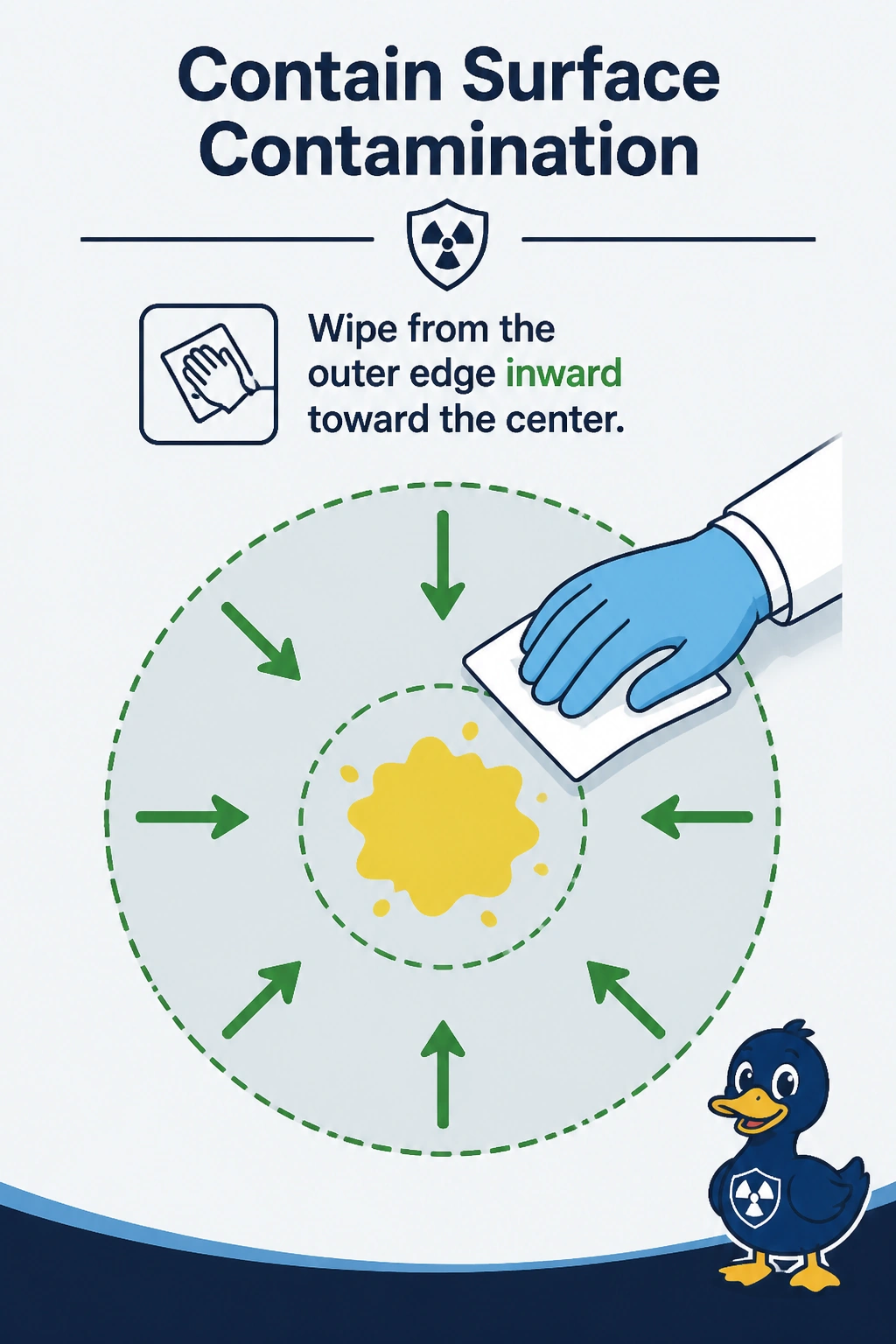
Cleaning a radioactive spill is just like corraling wet paint—you push it toward the middle, never out toward your clean boots. The classic trap is starting in the dirtiest spot and dragging that contamination across the clean border.
Full Explanation
Surface decontamination should always progress from areas of lower contamination to areas of higher contamination, so technicians Wipe from the outer edge inward toward the center of the spill using single-pass strokes and folding or replacing wipes frequently. Working from the clean boundary inward keeps the clean zone intact and concentrates residual material into a shrinking footprint. Choosing to Wipe from the center of the spill outward toward the clean perimeter picks up the highest concentration first and smears it into previously uncontaminated floor space. Using a method to Scrub the entire floor section in wide overlapping circular motions redistributes activity back and forth across both clean and dirty zones without removing it cleanly. Attempting to Apply high-pressure water spray across the spill toward the floor drain generates airborne droplets, increases liquid waste volume, and can release uncontrolled activity into the sanitary or drain system. As a caveat, always wear double gloves and check wipes frequently so saturated cloths do not re-deposit activity. For an operational check, perform a post-decontamination direct frisk and 100 cm² smear survey across the spill footprint and surrounding buffer zone to verify levels are below release limits.
Prefer to study offline? Printable PDF study book + test engine ($7.50, unofficial). These questions stay free here.