
A technician needs to remove loose and lightly fixed beta-gamma contamination from a precision-machined stainless steel valve assembly slated for reuse. Which decontamination strategy should the technician follow?
Select an answer to reveal the explanation.
Short Explanation
You would not sandblast a wristwatch just to wipe off dust, and equipment decontamination works the same way—always start gentle and escalate only if needed. The trap is jumping straight to acids or grinding, which ruins precision parts and creates airborne or mixed waste.
Full Explanation
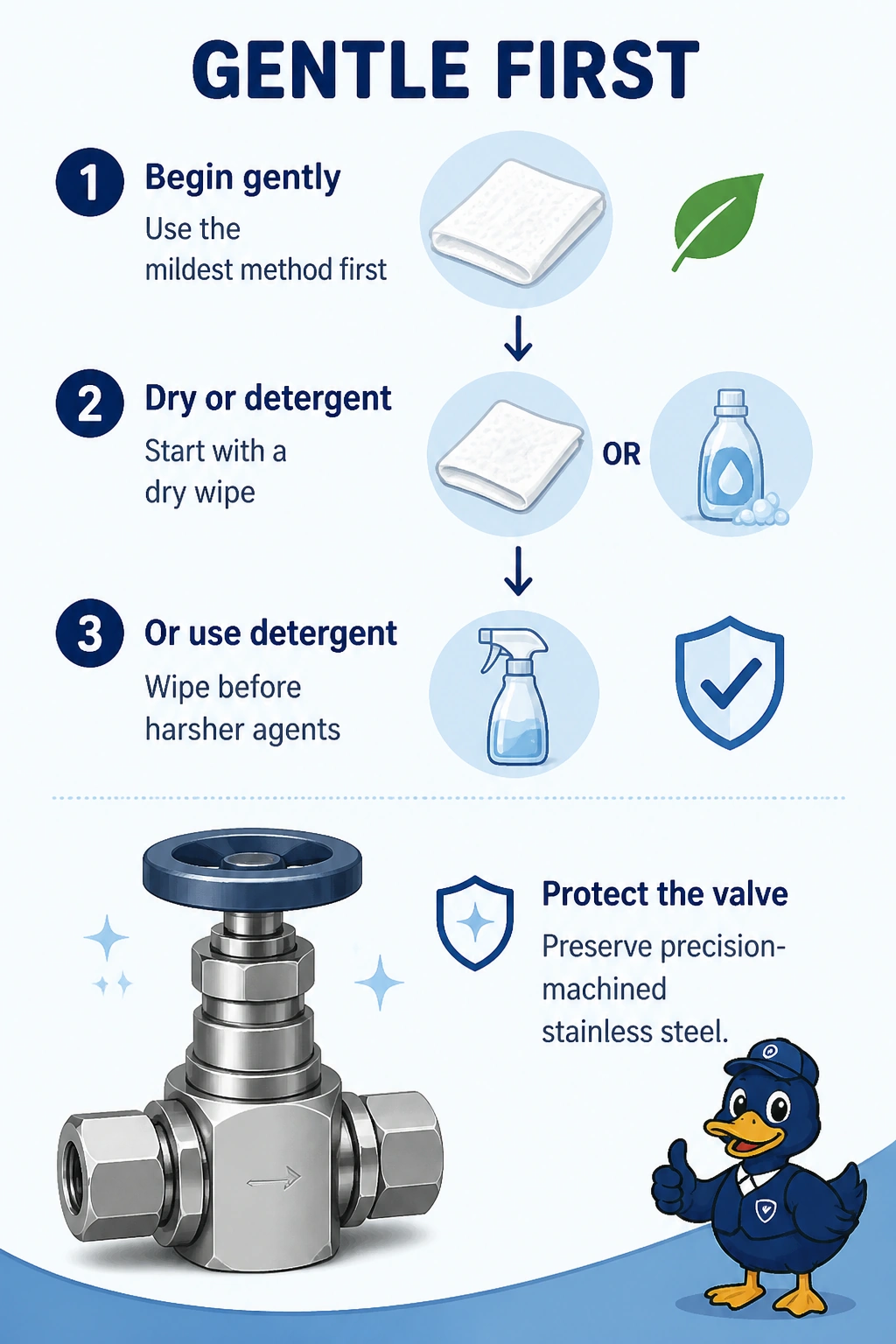
Effective equipment decontamination follows a graded approach that removes loose activity while preserving component integrity and minimizing radioactive waste. Technicians should Start with the mildest dry or detergent wipe before using harsher agents because gentle cleaning often removes surface-bound radionuclides without damaging seals, coatings, or precision tolerances. Choosing to Use high-pressure abrasive blasting first to strip away the surface coating can embed contamination into softer substrates, aerosolize radioactivity, and generate large volumes of mixed grit waste. Deciding to Soak the assembly in concentrated nitric acid to dissolve all metal oxides risks severe corrosion, hazardous chemical fumes, and liquid mixed-waste generation when simple wiping might suffice. Attempting to Grind the contaminated metal surface flat with a dry flapper wheel indoors creates a severe airborne inhalation hazard and spreads metallic dust across the shop. As a caveat, any liquid detergent used must be compatible with the facility waste-processing system to avoid foaming or chelating interference. As an operational check, perform a direct survey and smear check after each gentle cleaning pass so decontamination stops as soon as release criteria are met.
Prefer to study offline? Printable PDF study book + test engine ($7.50, unofficial). These questions stay free here.