
A decontamination technician is assigned to wet-wipe loose beta-gamma contamination from a tall stainless steel pump housing inside a radiological work tent. In which direction should the technician clean the vertical surfaces?
Select an answer to reveal the explanation.
Short Explanation
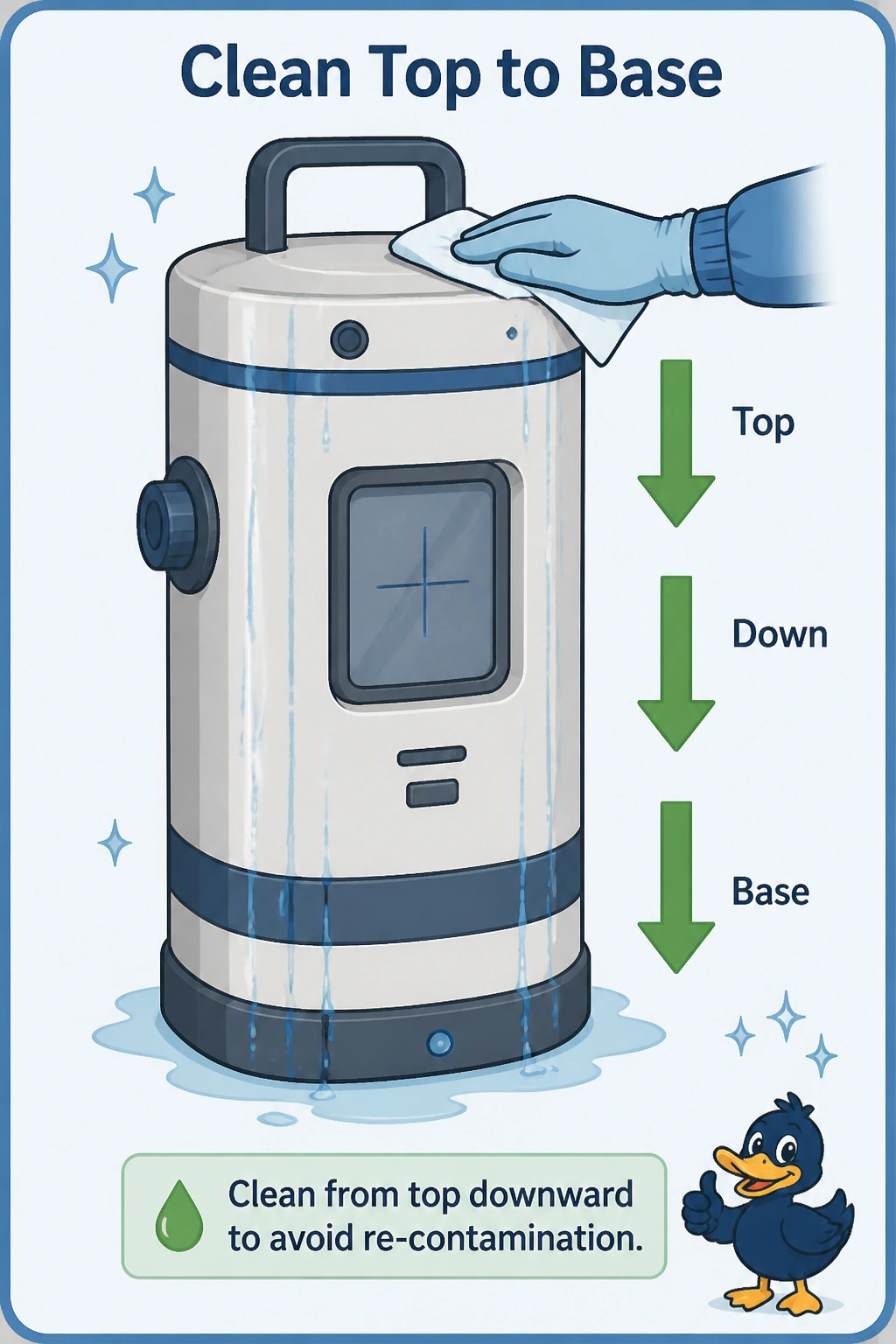
Gravity always wins when you are washing a tall wall or piece of gear, so you never want dirty rinse water dripping onto a spot you already scrubbed. Working top to bottom keeps cleaned metal clean, and the trap is wiping upward or blasting with pressure that spreads contamination.
Full Explanation
Vertical decontamination should always proceed From the top of the housing downward toward the base so runoff does not re-contaminate cleaned surfaces. As damp wipes or cleaning solutions loosen radioactive particles, gravity pulls excess moisture downward; starting at the top ensures any drips fall onto uncleaned lower sections that will be wiped next. Cleaning From the bottom of the housing upward toward the top to push airborne dust away from the breathing zone causes contaminated moisture from upper surfaces to streak back down across freshly cleaned lower areas, doubling the work. Wiping In rapid circular motions across the entire height at once to blend hot spots into a uniform background smears concentrated radioactivity over a larger surface area without systematically removing it. Using a high-pressure water jet aimed horizontally at the base to lift contamination into the air stream is hazardous because high-pressure spray generates contaminated aerosols and splashes droplets onto tent walls and workers. As a caveat, change wipes frequently and fold them inward so removed activity is not smeared back onto the metal. Once the pump housing is dry, perform a smear survey across both upper and lower sections to confirm contamination is below release limits.
Prefer to study offline? Printable PDF study book + test engine ($7.50, unofficial). These questions stay free here.