
A technologist finds loose, dry radioactive dust on a concrete floor in a radiologically controlled area after a powder transfer. Which initial removal method best collects the material without resuspending it into the air?
Select an answer to reveal the explanation.
Short Explanation
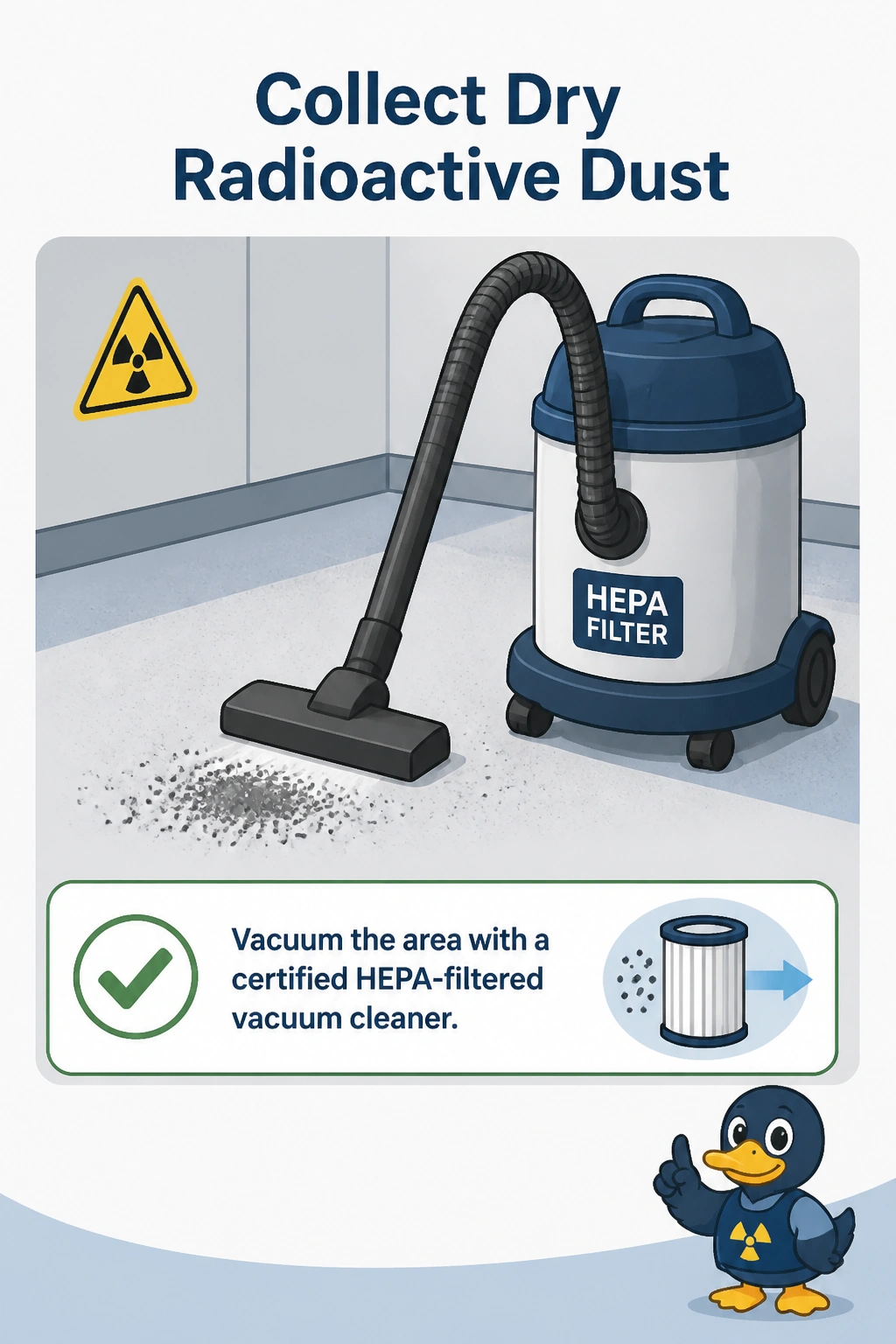
Think of dry radioactive dust like fine flour on a kitchen floor: a gust of air can send it into your breathing zone. You want capture with a certified HEPA-filtered vacuum cleaner, not sweeping, compressed air, or a water hose, which can spread or aerosolize contamination.
Full Explanation
Vacuuming the area with a certified HEPA-filtered vacuum cleaner is the correct initial method because its filtration traps fine radioactive particles in a sealed collection system while minimizing mechanical agitation. This helps prevent loose powder from becoming an airborne inhalation hazard or migrating to clean surfaces. Sweeping the dust gently into a dustpan with a fine-bristle broom still disturbs the settled layer and can kick fine particles into the air. Blowing the dust toward a floor drain with low-pressure compressed air resuspends contamination in the room atmosphere and can push radioactive material into uncontrolled drain lines. Spraying the floor with a high-pressure water hose can create contaminated mist and spread liquid waste over a wider area. A key caveat is that a vacuum should be tested and approved for radiological service; ordinary shop vacuums may not provide adequate filtration or seal integrity. As a practical check, inspect the vacuum’s filter certification tag and verify that continuous air monitor readings remain stable before and during cleanup.
Prefer to study offline? Printable PDF study book + test engine ($7.50, unofficial). These questions stay free here.