
A radiation worker exits a radiologically controlled area and a frisker detects a single 2 cm spot of removable beta-gamma contamination on the back of the right hand, with no other contamination found. Which decontamination approach best prevents spreading the activity?
Select an answer to reveal the explanation.
Short Explanation
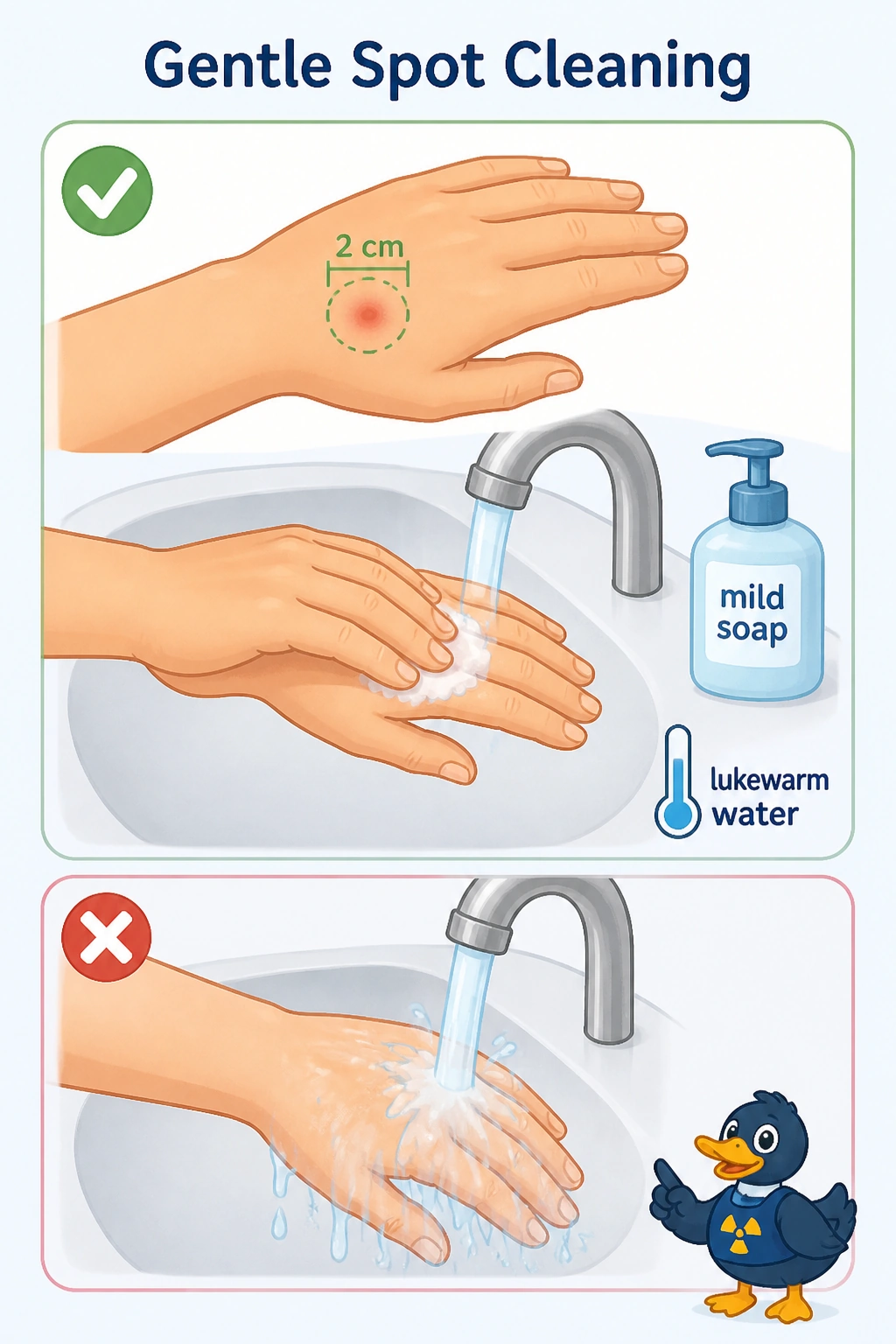
When you find one small spot of contamination on a hand, a full-body shower is like using a fire hose on a candle. You can keep it contained by washing only the affected spot gently at a sink; vigorous scrubbing or solvent can spread activity or damage your skin.
Full Explanation
For a small, well-defined spot of removable contamination on intact skin, your goal is to remove the activity without enlarging the contaminated area or breaching the skin barrier. Washing only the localized spot gently with mild soap and lukewarm water at a sink keeps contamination confined while safely lifting particulates and soluble salts. Sending the worker to an emergency shower to flush the entire body with warm water can wash localized activity onto the face, eyes, mouth, or body creases, where internal uptake is more likely. Scrubbing the hand vigorously with a stiff-bristle brush and hot water to abrade the outer skin damages the protective stratum corneum and opens pores, increasing percutaneous absorption. Applying an organic solvent such as acetone directly to the skin to dissolve the contamination strips natural skin oils and can carry radionuclides into the bloodstream. As a caveat, if gentle washing fails after two or three attempts, stop before the skin turns red or raw and consult health physics about covered-skin or chelating protocols. As a practical check, pat the hand dry with disposable paper towels, discard them as radioactive waste, and resurvey the spot with a pancake GM probe.
Prefer to study offline? Printable PDF study book + test engine ($7.50, unofficial). These questions stay free here.