
An internal organ receives an absorbed dose of 10 mGy (1 rad) from alpha particles compared with 10 mGy (1 rad) from gamma rays. Why do the alpha particles cause substantially greater biological damage per unit of absorbed dose?
Select an answer to reveal the explanation.
Short Explanation
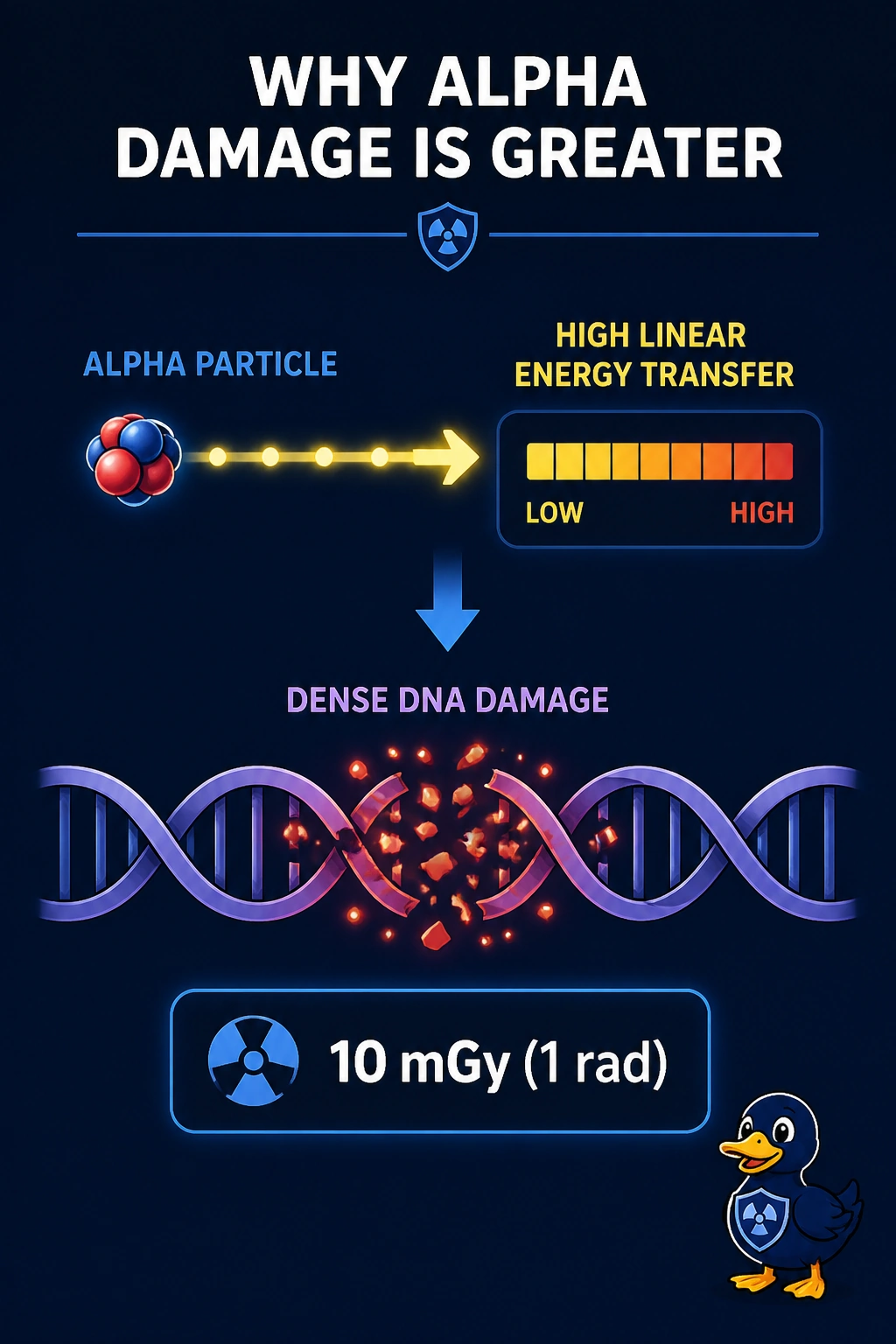
Equal absorbed dose only means equal total energy deposited, not equal harm—think of the difference between a gentle rain and a focused hailstone hitting your roof. The trap is assuming alpha particles travel farther, when their short, brutal tracks pack clustered DNA breaks.
Full Explanation
Alpha particles have a high linear energy transfer that creates dense DNA damage is correct because heavy, doubly charged alpha particles deposit their kinetic energy over micrometer-scale tracks, producing clustered double-strand DNA breaks that cellular repair enzymes struggle to fix. Alpha particles penetrate deeper into tissue and expose a larger organ volume is backwards because alpha particles have an extremely short range in tissue compared with penetrating gamma rays. Alpha particles have a lower linear energy transfer and produce sparser ionizations describes low-LET radiations such as gamma rays and beta particles rather than high-LET alpha particles. Gamma rays have a radiation weighting factor of 20 while alpha particles have 1 reverses the standard radiation weighting factors, which assign 1 to photons and 20 to alpha particles to reflect their higher relative biological effectiveness. One caveat is that external alpha radiation poses negligible hazard to intact skin because the dead outer epidermal layer blocks it, so this high biological effectiveness matters primarily after internal deposition. As an operational check, always multiply absorbed dose by the appropriate radiation weighting factor when evaluating internal dose equivalent from alpha-emitting intakes.
Prefer to study offline? Printable PDF study book + test engine ($7.50, unofficial). These questions stay free here.