
Why does a facility ALARA program establish administrative dose investigation levels well below the annual regulatory limits in 10 CFR 20.1201?
Select an answer to reveal the explanation.
Short Explanation
Think of a dashboard fuel warning light coming on well before the tank hits empty so you can plan a stop. When you run an ALARA program, the trap is mistaking an administrative investigation level for a legal limit instead of an early warning trigger.
Full Explanation
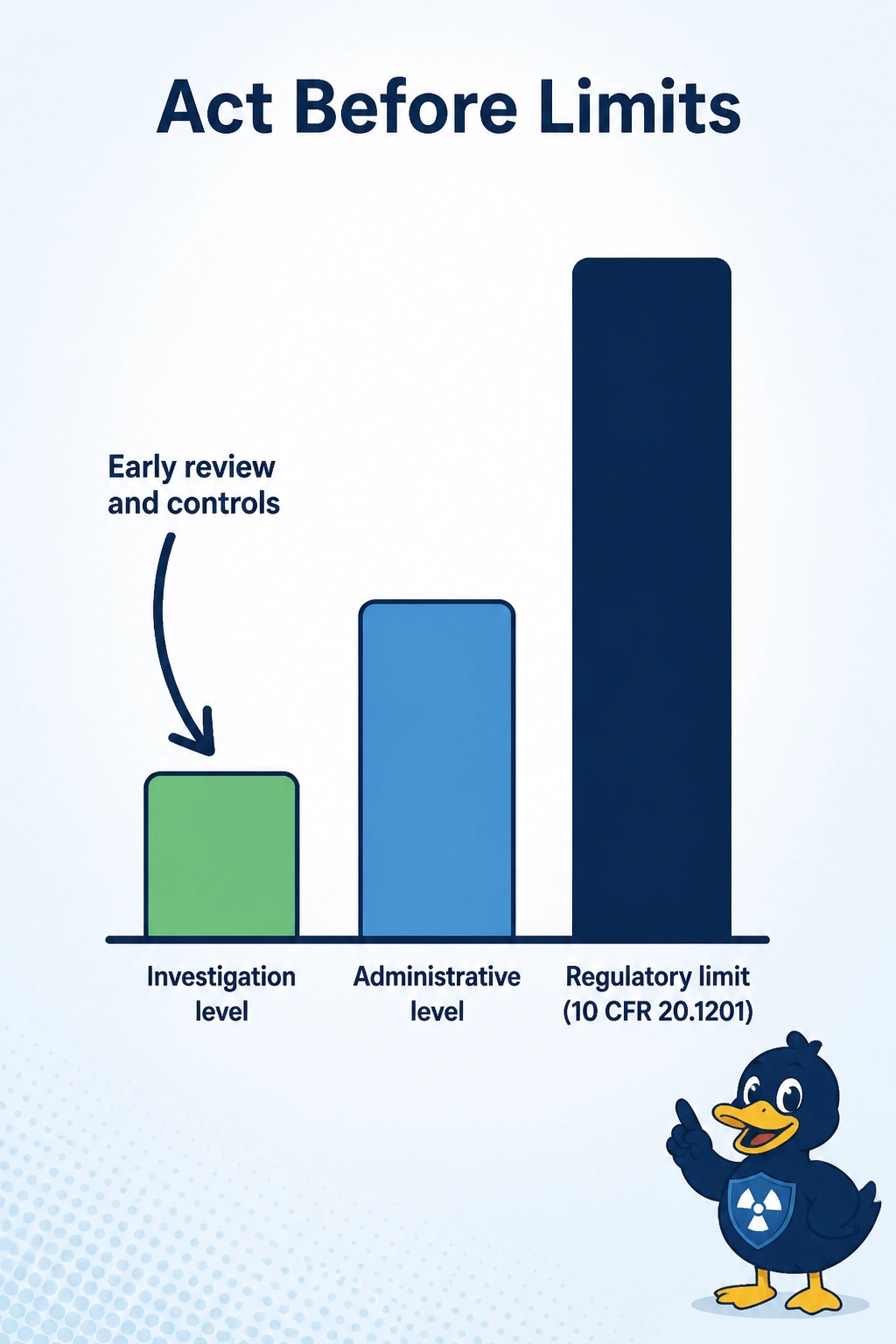
Administrative ALARA investigation levels serve as proactive management checkpoints set well below 10 CFR 20.1201 occupational limits, designed To trigger early reviews and controls before workers approach dose limits. When a worker's cumulative dose reaches an investigation threshold, health physics staff evaluate work practices, shielding, and job planning to identify unnecessary exposure trends while corrective options are still flexible. To replace statutory NRC dose limits with stricter legally binding facility limits is incorrect because administrative levels are internal management tools rather than statutory substitutes for federal regulations. To eliminate the requirement for issuing personnel dosimeters in posted areas fails because monitoring requirements under 10 CFR 20.1502 depend on expected dose relative to regulatory limits, not the presence of administrative goals. To allow workers to exceed 5 rem annually without filing a regulatory report is wrong because no facility administrative policy can waive federal dose limits or reporting rules. As a caveat, crossing an administrative investigation level is not a regulatory violation, though it requires documented review. Track cumulative dosimetry trends weekly against quarterly ALARA goals to keep worker doses as low as reasonably achievable.
Prefer to study offline? Printable PDF study book + test engine ($7.50, unofficial). These questions stay free here.