
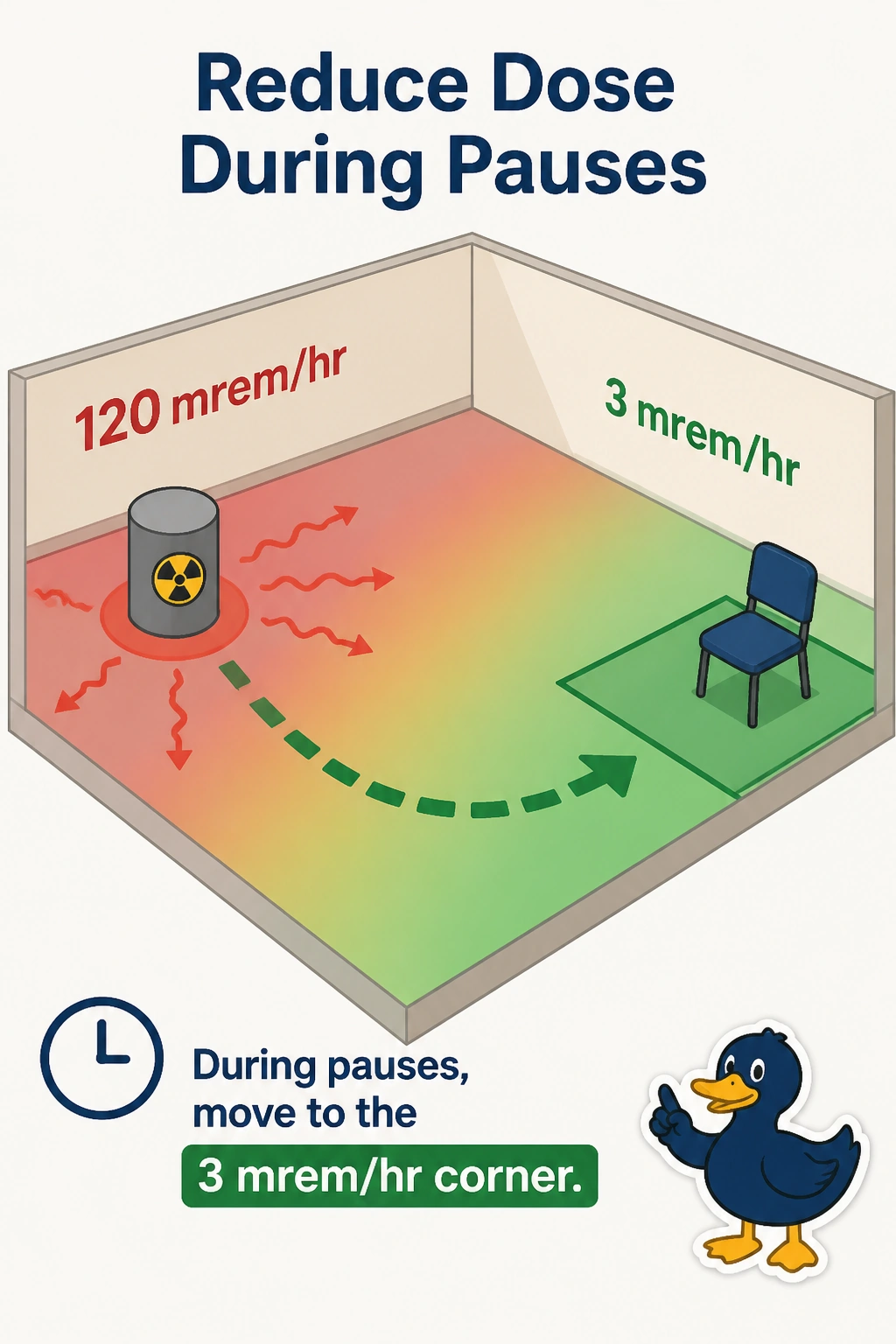
A two-person crew must perform a multi-step repair in a pump room where a localized hot spot produces 120 mrem/hr, while an adjacent shielded corner reads 3 mrem/hr. While one worker waits for tools or instructions during brief pauses, what ALARA practice best minimizes collective dose?
Select an answer to reveal the explanation.
Short Explanation
Standing idle in a 120 mrem/hr field burns dose budget for zero productive work. The trap is thinking a quick pause isn't worth stepping away, or hoping protective clothing will stop gamma rays. Moving your waiting worker to the 3 mrem/hr corner cuts idle dose by fortyfold without slowing the job.
Full Explanation
Using designated low-dose waiting areas is a core ALARA time-and-distance control, so Move the waiting worker to the 3 mrem/hr corner during pauses in active work slashes non-productive exposure by a factor of forty. Every minute spent in the 3 mrem/hr corner instead of the 120 mrem/hr hot spot saves nearly 2 mrem per worker with no penalty to repair quality. Keep the waiting worker beside the pump so tool handoffs finish a few seconds faster accumulates unnecessary exposure during idle intervals that easily exceeds any minor time saved. Issue extra anti-contamination coveralls to shield the waiting worker from gamma rays relies on a common misconception: cloth or plastic coveralls stop alpha and beta contamination on skin, not penetrating gamma radiation, and extra layers can slow work and add heat stress. Turn off the electronic personal dosimeter alarm so pauses do not interrupt the repair disables a critical safety barrier and violates Radiation Work Permit controls. As a caveat, confirm that the path to and from the low-dose waiting area is free of higher-rate traps or loose contamination. For an operational check, mark the low-dose waiting area clearly on the RWP survey map and brief the crew on stepping back during holds.
Prefer to study offline? Printable PDF study book + test engine ($7.50, unofficial). These questions stay free here.