
A maintenance crew must perform an intricate valve repair inside a high-radiation cubicle where space is tight and protective gear restricts dexterity. Which pre-job ALARA action most effectively reduces worker stay time during the actual entry?
Select an answer to reveal the explanation.
Short Explanation
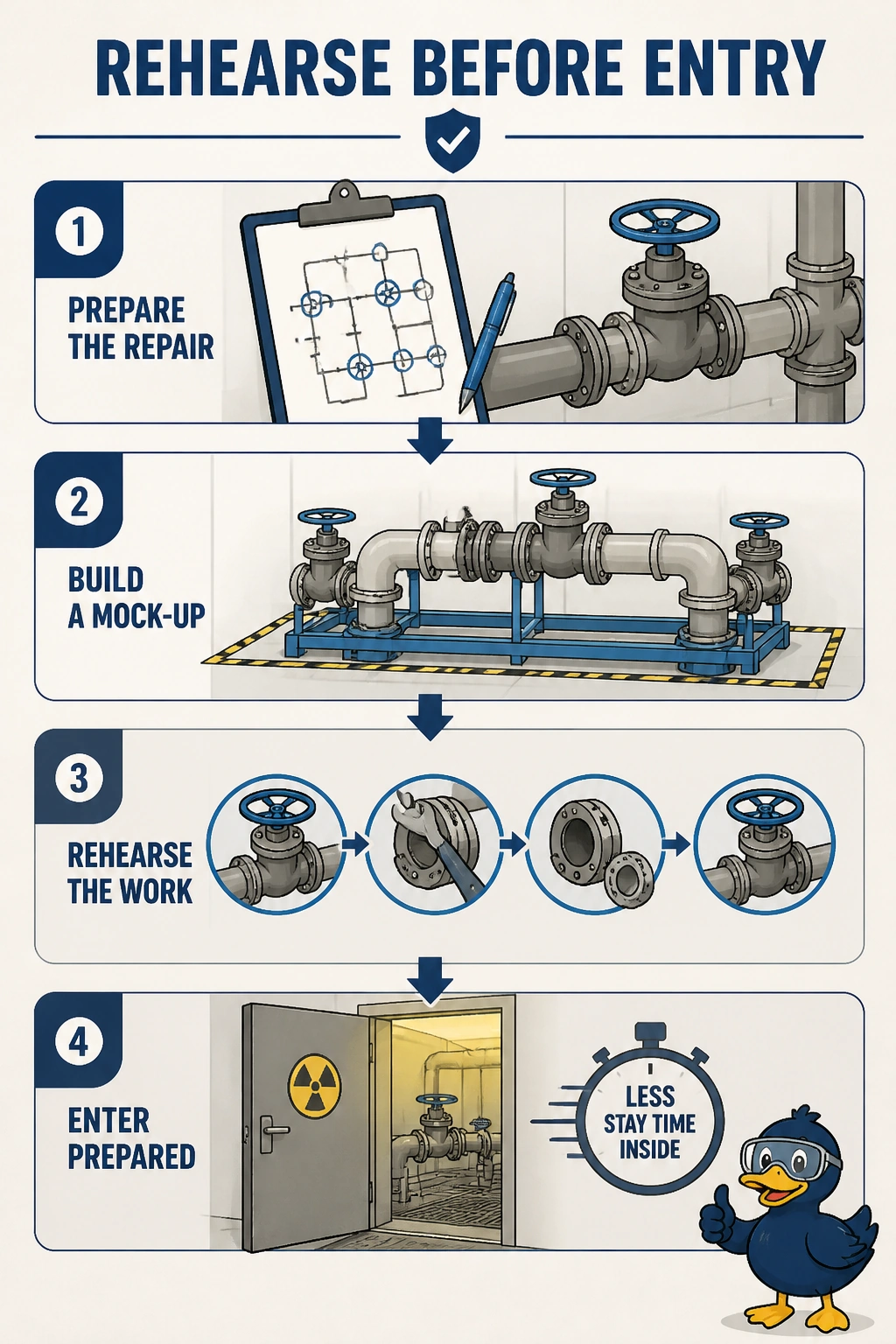
You would never practice a complicated pit stop for the first time in the middle of a live race. Conducting a full-scale mock-up rehearsal in a clean area first lets the crew iron out tool snags and bulky gear issues at zero dose. The trap is thinking you can fix a slow job just by rotating more people through, which only spreads the dose around without cutting total person-rem.
Full Explanation
Conducting a full-scale mock-up rehearsal in a clean area first directly minimizes collective and individual dose by allowing technicians to practice tool handling, body positioning, and communication while wearing full protective clothing in a zero-dose environment. Identifying interference points during cold practice eliminates troubleshooting delays inside the high-radiation cubicle. Assigning extra workers to rotate through without changing the procedure may cap individual doses, but it typically increases total person-rem because each new crew member spends extra time orienting to the task. Reviewing final TLD results after the repair work is already complete is a retrospective accounting step that cannot reduce exposure during the entry itself. Omitting the pre-entry radiological survey to begin the repair sooner violates basic radiation work control and leaves workers blind to unexpected hot spots or changing dose-rate gradients. As a caveat, mock-up training only delivers its full ALARA benefit when the training rig accurately matches the real spatial constraints, lighting, and tooling. As an operational check, time the rehearsal crews with a stopwatch and verify all specialized wrenches and spare parts are staged before issuing the Radiation Work Permit.
Prefer to study offline? Printable PDF study book + test engine ($7.50, unofficial). These questions stay free here.