
During hourly rounding a PCT faces three needs at once: a high fall-risk patient ringing for the toilet, a stat lab specimen waiting for transport to the lab, and a stable patient asking for extra water. Which rounding priority order best balances fall prevention and time-sensitive lab transport?
Select an answer to reveal the explanation.
Short Explanation
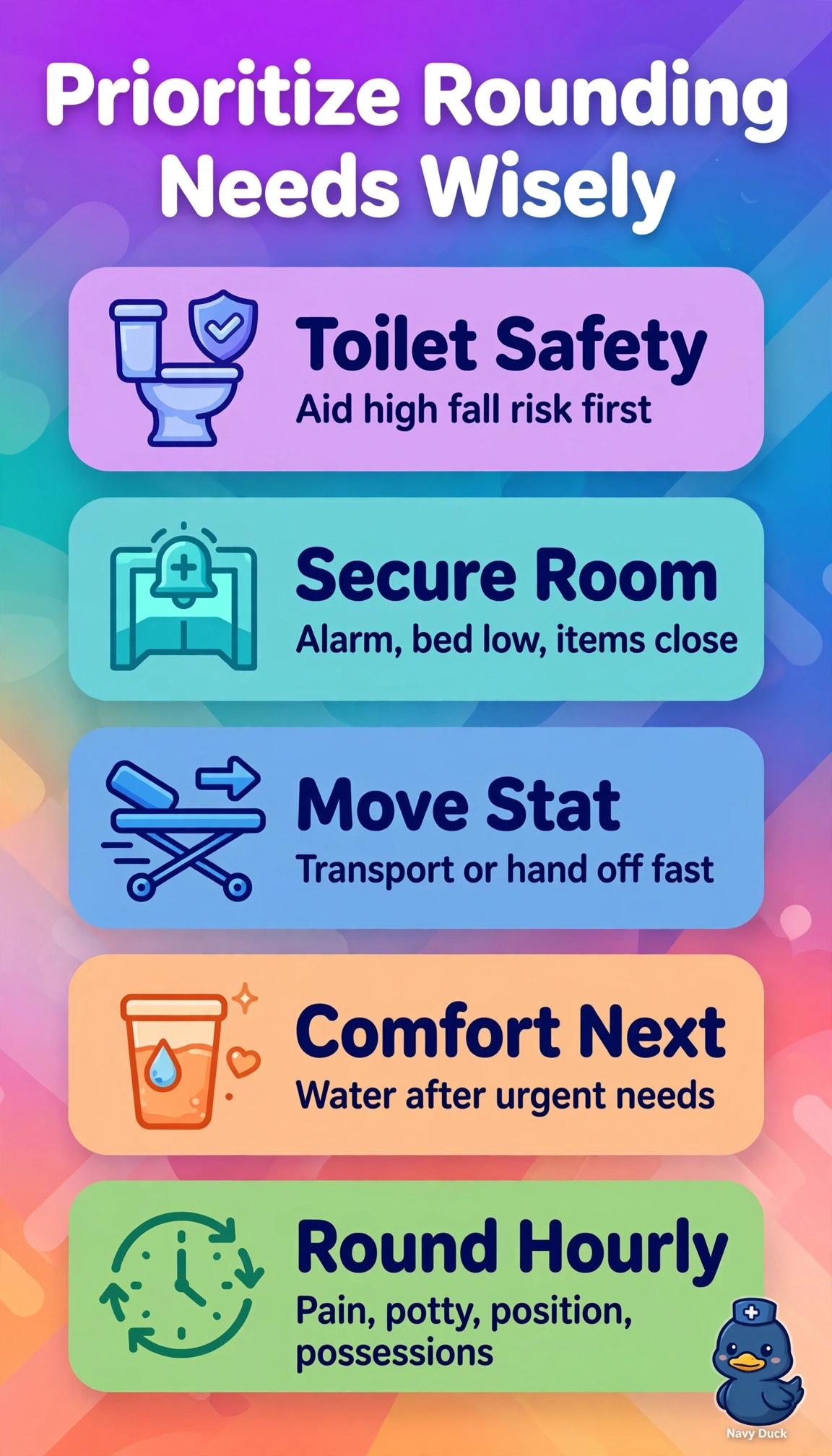
You’re balancing a real safety risk with a time-sensitive task, so first make sure your fall-risk patient is safe on the toilet or has help. Then hand off the stat specimen according to policy before bringing water to the stable patient—safety leads, while comfort can wait briefly.
Full Explanation
The best sequence addresses imminent safety, then the time-sensitive clinical need, then routine comfort. A high fall-risk patient asking to toilet may try to get up alone, so make sure the patient is safe on the toilet or has appropriate aid before turning to other tasks. Next, hand off the stat specimen for transport according to policy; prompt transport supports timely results and care decisions, while a policy-based handoff helps preserve patient supervision. The stable patient’s request for extra water can wait briefly. Securing the fall-risk patient and then delivering water before arranging stat transport protects against a fall but delays a time-sensitive specimen for routine comfort. Handing off the stat specimen before assisting the fall-risk patient recognizes laboratory urgency but leaves an immediate fall risk unaddressed. Securing the patient and then transporting the specimen yourself follows the task order but may leave the patient unattended; the listed approach calls for a handoff per policy rather than personally taking the specimen. As an exam caveat, “stat” signals urgency, but does not automatically take priority over imminent patient harm. As a practical check, confirm the patient has safe support and a call light, use a closed-loop handoff for the specimen, then bring water and document.