
On a surgical unit, a stable adult with a clean dry postoperative dressing has a provider order to change the dressing using aseptic technique and to discontinue a saline-locked peripheral IV, the site shows no redness or drainage, and supplies are ready at bedside. Which combined dressing and IV removal approach stays within PCT scope and aseptic principles?
Select an answer to reveal the explanation.
Short Explanation
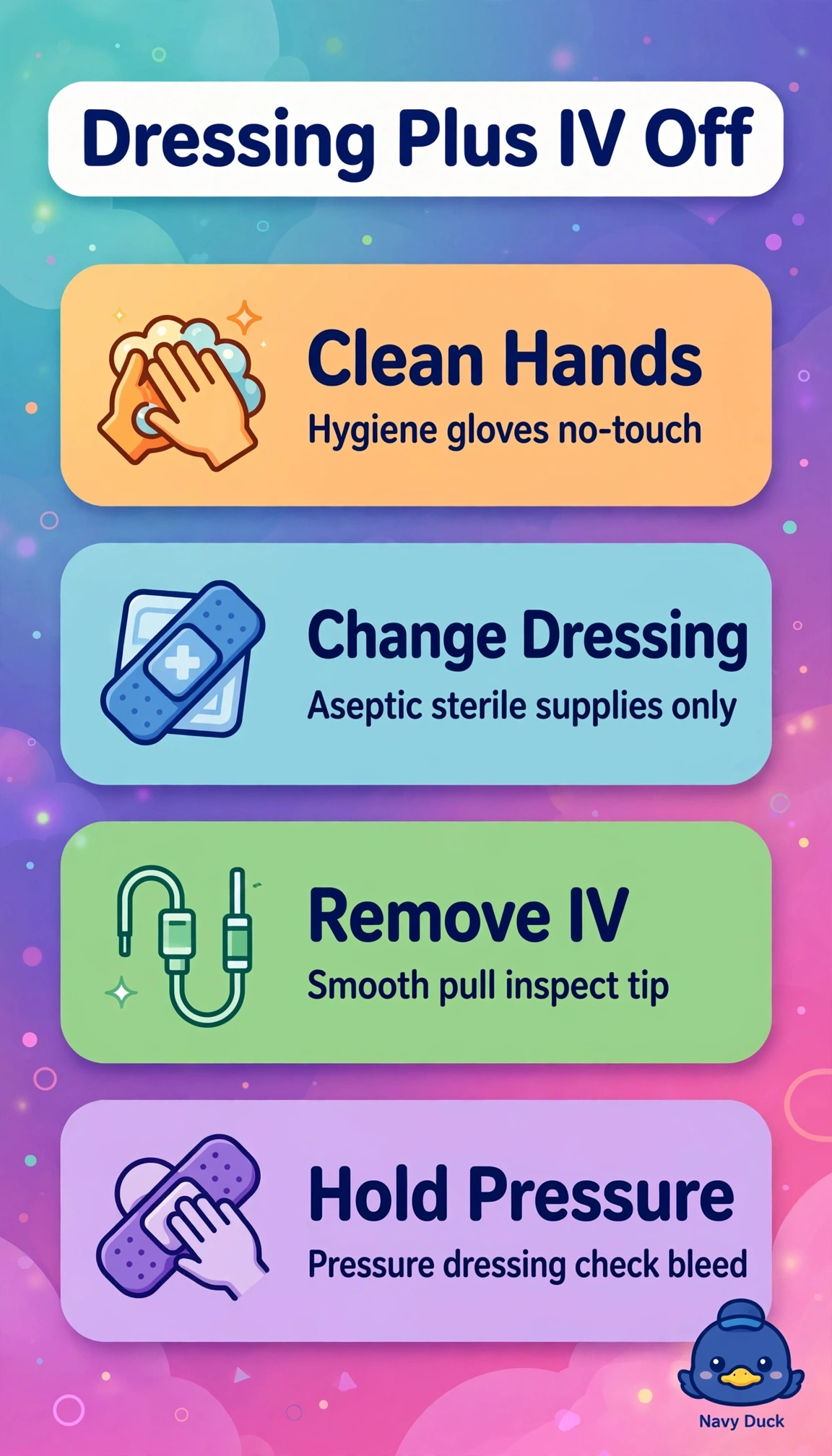
Clean hands and clean boundaries let healing happen without hitchhikers. No-touch technique keeps your fingers off the sterile healing surface.
Full Explanation
The correct approach aligns with the provider order and PCT scope because hand hygiene before patient contact reduces transmission, aseptic no-touch technique protects the clean dry postoperative incision as ordered rather than clean technique, and discontinuing the saline-locked peripheral catheter with direct pressure achieves hemostasis without flushing or manipulating the line. Flushing the lock to maintain patency fails by order-following concept because it preserves a device the provider ordered discontinued, which even when done aseptically exceeds delegated authority and leaves an order unexecuted. Changing the dressing with clean rather than aseptic technique fails by technique-selection concept because clean technique is appropriate for chronic or long-term wounds but the scenario explicitly requires aseptic technique for a postoperative wound, so the infection-prevention standard is not met despite correct hand hygiene and IV removal. Proceeding with aseptic technique and glove change but without initial hand hygiene fails by infection-prevention sequencing concept because gloves do not replace hand hygiene and organisms can contaminate gloves and supplies during donning. Exam caveat: do not upgrade or downgrade ordered technique or disposition based on a benign appearance, as absence of redness or drainage does not justify clean technique or retaining the line. Practical check: at bedside verify the order, perform hand hygiene, maintain no-touch of sterile surfaces, then perform hand hygiene with fresh gloves before IV removal and hold pressure until bleeding stops while observing for hematoma.