
A PCT/A is asked to assist the nurse with a sterile surgical wound dressing change and then remove a peripheral IV from a stable adult, with clean gloves, sterile kit, and disposal available. Which combined approach best follows sterile and aseptic practice for dressing and IV removal?
Select an answer to reveal the explanation.
Short Explanation
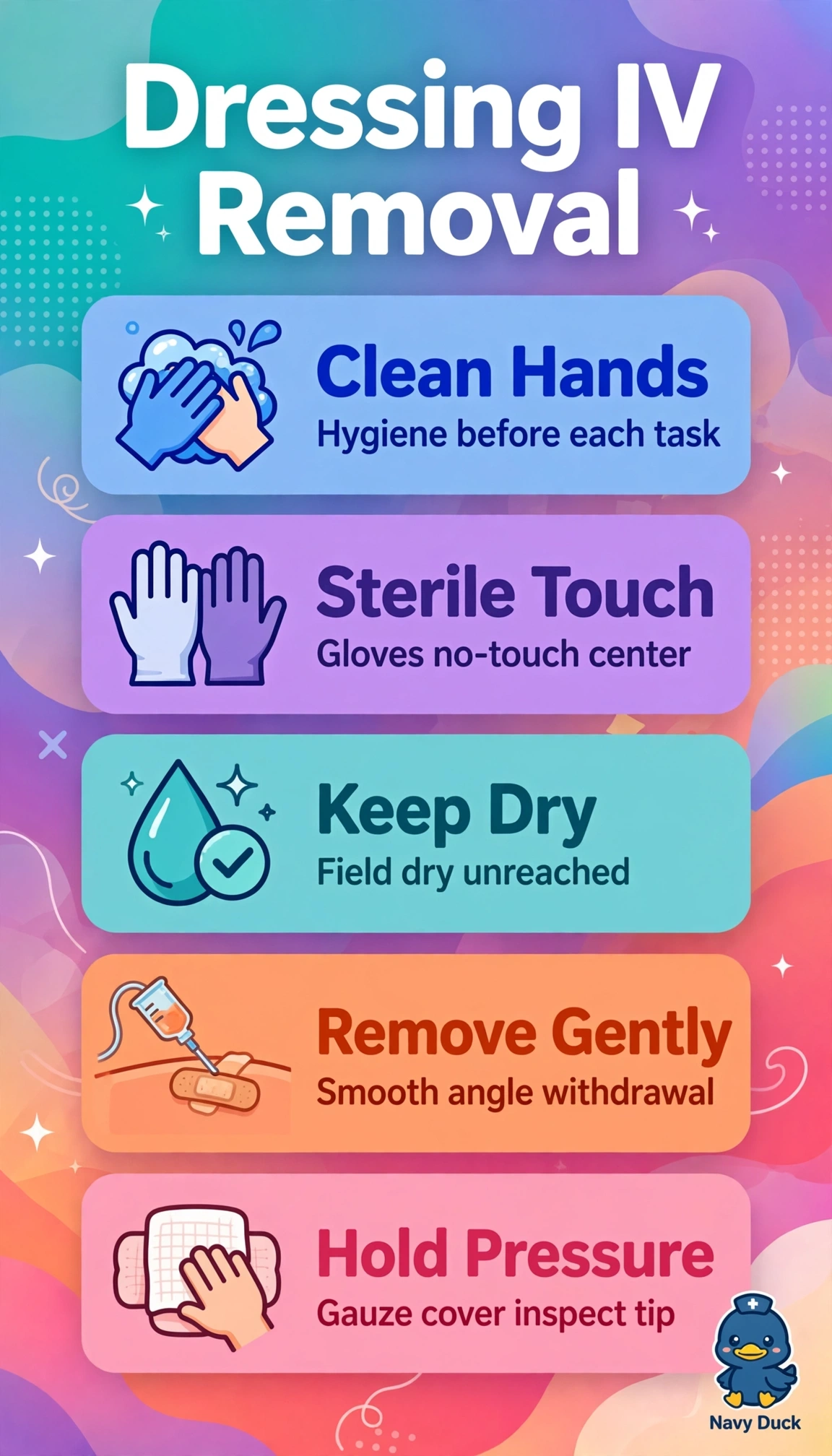
You’re protecting the healing wound and keeping the IV removal gentle. Use sterile no-touch technique for the dressing, then remove the catheter smoothly and hold pressure to finish safely.
Full Explanation
For the dressing, hand hygiene, sterile gloves, and no-touch technique keep the wound-contact surfaces sterile; touch only outer packaging and edges, and keep the field dry and free from contamination. With a delegated IV removal within PCT/A scope, use hand hygiene and clean gloves, gently remove the dressing and tape, withdraw the catheter smoothly at its insertion angle, apply gauze pressure for hemostasis, inspect catheter integrity, cover the site, and monitor for bleeding or hematoma. Using the same clean gloves for both tasks risks cross-contamination, touching the sterile gauze center contaminates the wound-contact surface, and pulling the IV quickly can tear veins. Reaching over the open kit, coughing without a mask, and applying a tight tourniquet introduce contamination or risk injury; a tourniquet is not a way to pull an IV. Wetting the sterile field can cause microbial strike-through, bare fingers can seed infection, and massaging the site can dislodge clots and cause bruising. An exam caveat is that no-touch technique protects sterile surfaces, while pressure—not massage—helps stop bleeding. As a practical check, verify the catheter tip is intact and promptly report redness, drainage, swelling, or continued bleeding.