
On an orthopedic unit, a nurse delegates hourly vital signs for a stable postoperative adult to you while managing an unstable patient next door. You are trained in vital signs, have time, the task is routine, and the nurse gives clear parameters and check-ins. Which acceptance best applies the Five Rights of Delegation for this situation?
Select an answer to reveal the explanation.
Short Explanation
Good delegation feels like a clear handoff, not a guessing game, and you’ve got all five pieces. Five Rights click when the task, person, direction, and supervision line up and you close the loop.
Full Explanation
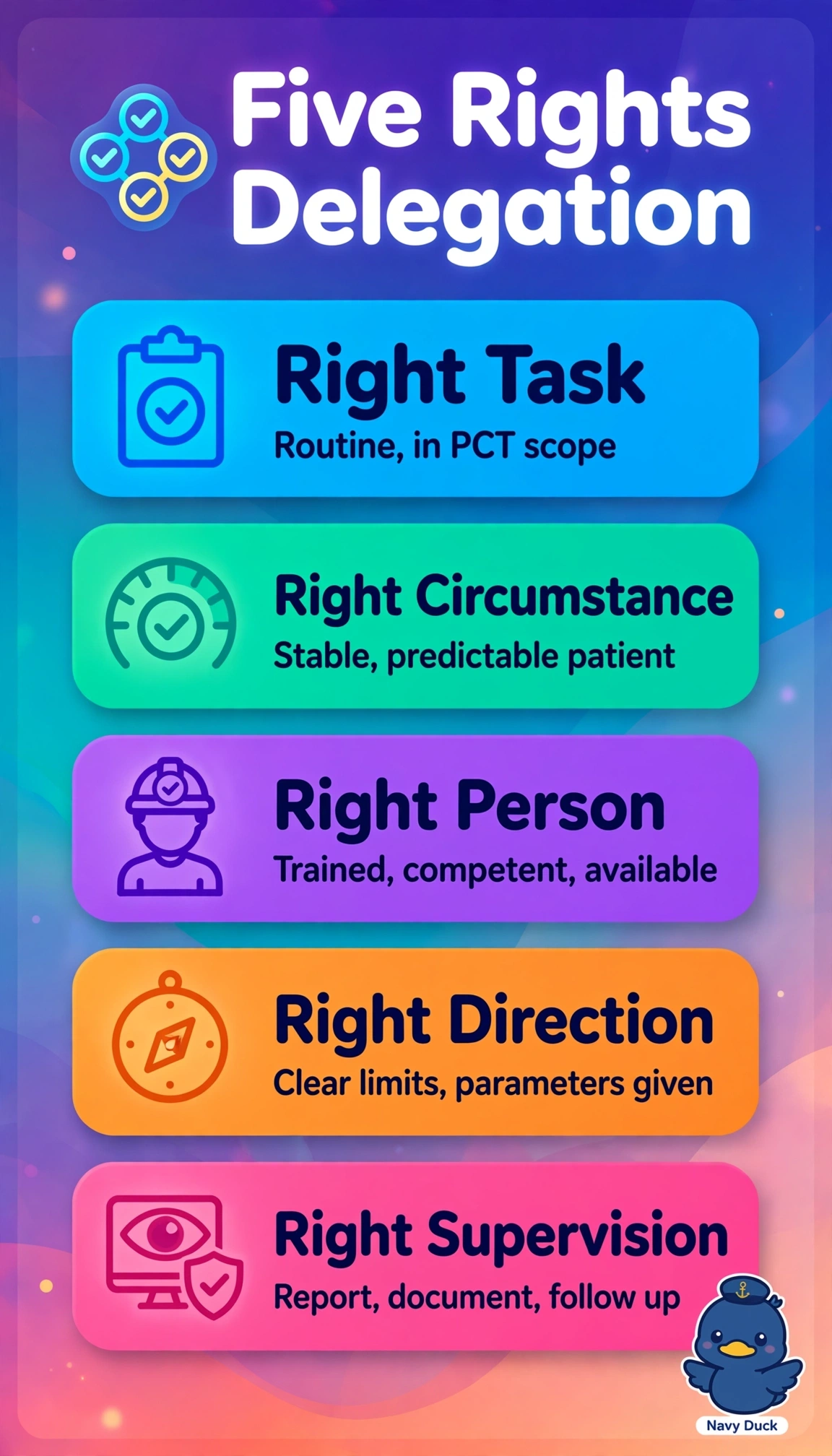
The correct acceptance reflects all Five Rights applied together with right task because hourly vital signs for a stable postoperative adult are routine and delegable, right circumstance because the patient and situation are stable and predictable, right person because you are trained and have time, right direction through clear parameters, and right supervision through performing as directed with prompt reporting and escalation of concerns. One plausible but incorrect approach describes performing vitals on schedule but deferring review until later in the shift, which satisfies task, person, and circumstance but fails supervision and evaluation because hourly postoperative trends require timely reporting and check-ins rather than batched review. Another plausible approach describes volunteering to monitor the unstable patient to help the team, which is cooperative in spirit but fails task and circumstance because an unstable patient requires nursing assessment, clinical judgment, and ongoing evaluation that cannot be delegated. A third plausible approach describes starting promptly with usual technique without confirming limits and check-in times, which captures willingness and competence but fails direction and communication because delegation still requires explicit thresholds, frequency, and expectations for reporting even when the skill feels routine. An exam caveat is that stability and clarity can make several answers feel safe, so focus on what is missing rather than what is done well, especially around communication and supervision. A practical check before accepting is to restate the task, limits, timing, and exactly what to report and when to seek help, then follow through and close the loop.