
After a bedside suture removal the technician must handle bloody forceps and scissors, a disposable drape soaked with blood, and a reusable kidney basin with clots for return to sterile processing. Which soiled-equipment preparation protects staff and preserves sterilization processing?
Select an answer to reveal the explanation.
Short Explanation
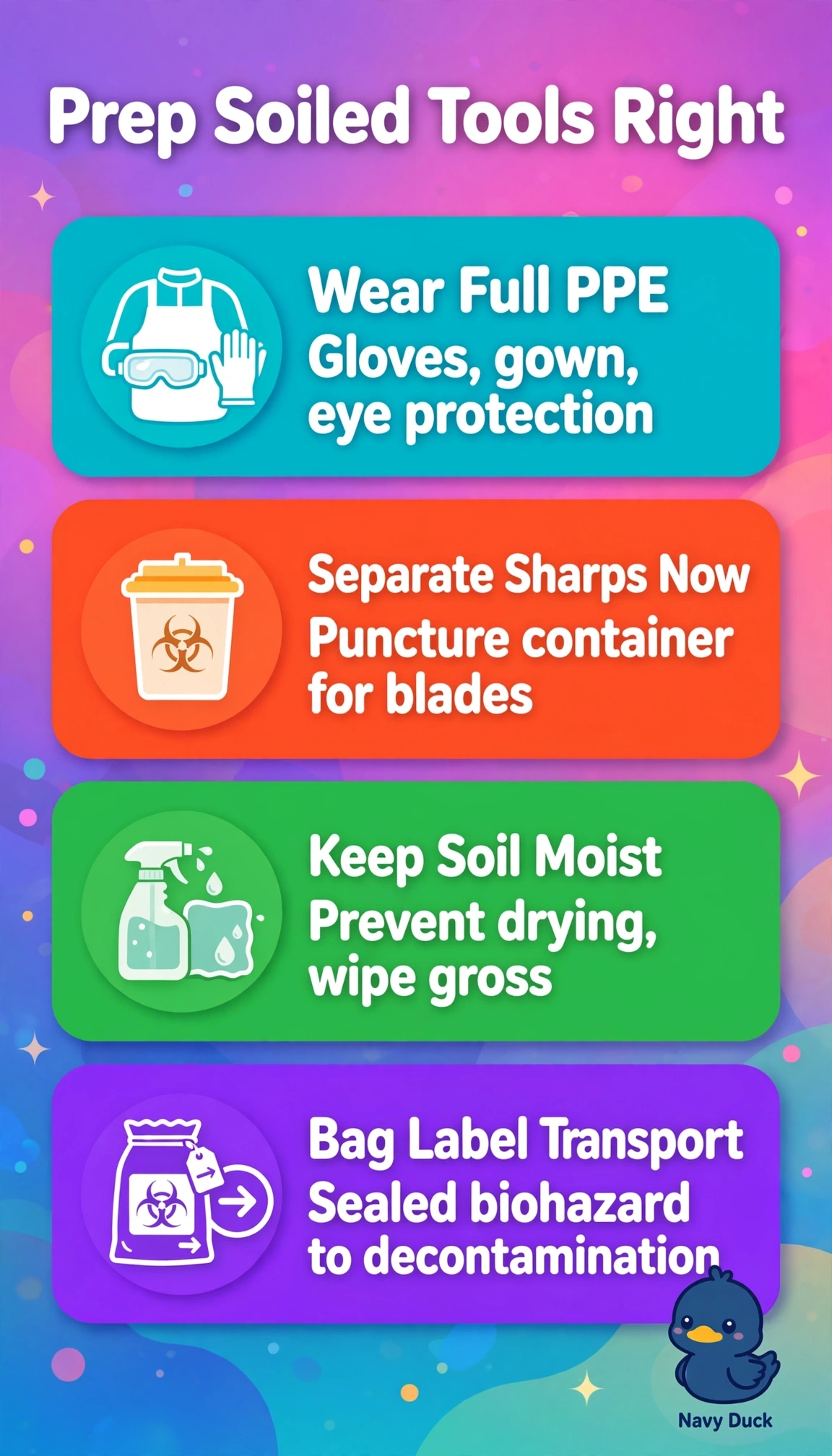
You've got to keep yourself safe while you keep those bloody tools ready for proper cleaning, so you'll suit up, toss sharps safely, wipe the worst soil, then bag everything damp and labeled. Like soaking your casserole dish before you scrub, that decontamination prep keeps germs contained and grime from baking on.
Full Explanation
The correct preparation follows decontamination transport principles: PPE prevents blood exposure, immediate sharps segregation to a puncture container prevents sticks and bag punctures, wiping gross soil lowers bioburden, keeping instruments and basin moist prevents blood and clots from drying onto joints and serrations so cleaning and sterilization remain effective, and leak-proof biohazard bagging with labeling ensures containment, hazard communication, and routing to decontamination. The air-drying approach fails on moisture preservation because allowing blood to dry fixes protein soil and makes decontamination much harder and less reliable despite good PPE, sharps control, and labeling. The combined bagging approach fails on waste segregation because a disposable blood-soaked drape is regulated medical waste for disposal, not an item for sterile processing, so including it with reusables misroutes waste and increases handling burden. The unlabeled drop-off approach fails on traceability because without a tag noting contents, source, and biohazard status, staff cannot prioritize, track, or safely route the package, risking delay or mishandling despite proper moist containment. An exam caveat is that moisture retention and labeling are tested as separate required steps, so a sealed bag is not credited as correct if items are dry or untagged. A practical check is to confirm damp soil, intact sharps container, leak-proof closure, correct label, and that only reusable instruments and basin go to decontamination while the drape goes to biohazard waste.