
During evening cleaning, a PCT/A spills a surface disinfectant, feels dizzy, and must quickly find first aid, PPE, spill cleanup, and storage rules before continuing work. Which use of Safety Data Sheets best resolves this chemical exposure?
Select an answer to reveal the explanation.
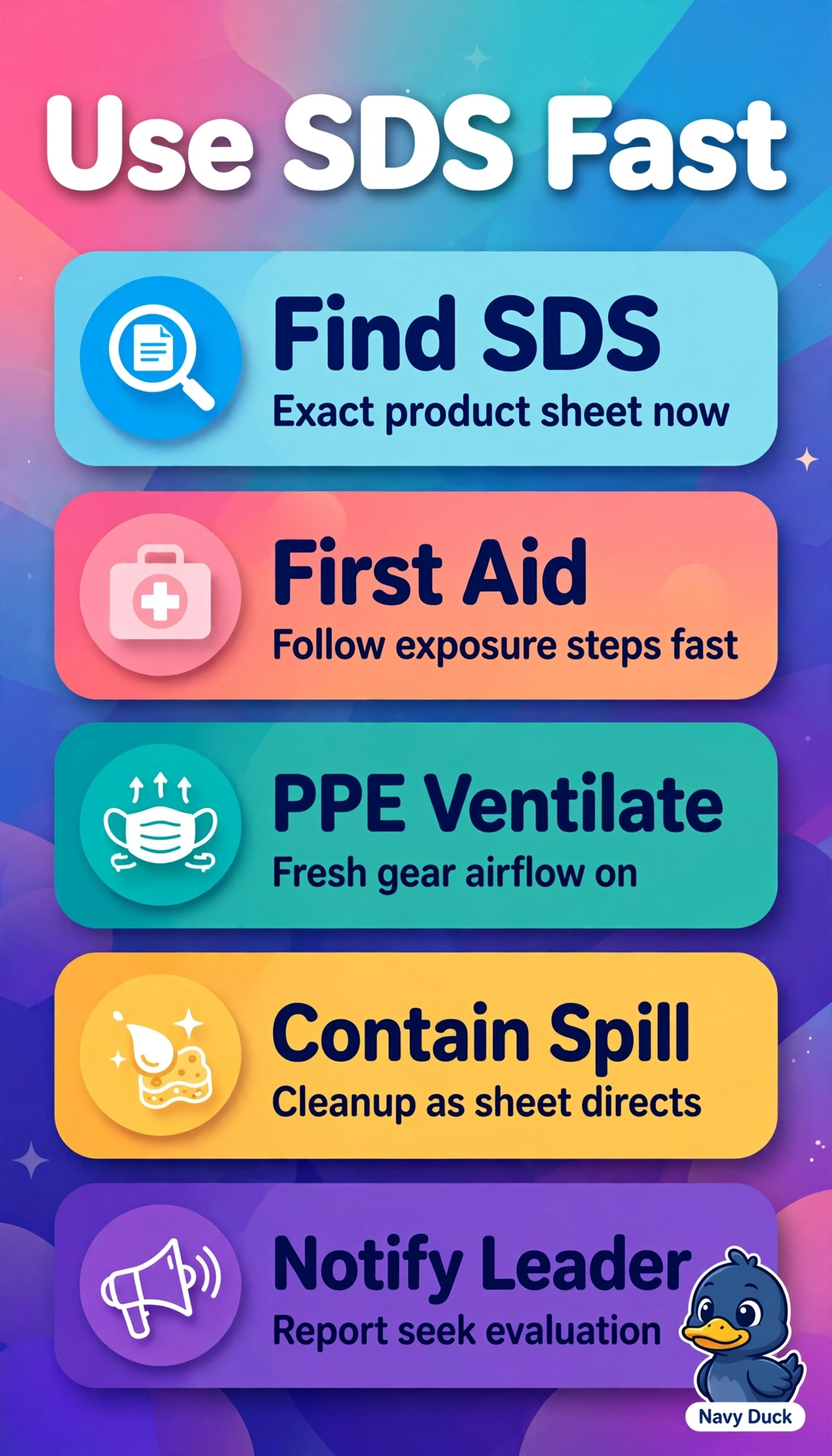
Short Explanation
You need the recipe card for that exact chemical right now. Grab its sheet and follow first aid and cleanup step by step. The right SDS beats guesses, memory, or labels alone.
Full Explanation
The correct response aligns with hazard communication practice because the product-specific SDS is the authoritative source for immediate first aid for dizziness, required PPE, ventilation, spill containment and cleanup, and storage rules, with supervisor notification ensuring assessment and documentation before resuming work. The approach using the SDS for first aid and cleanup but returning to duties without notification meets most needs yet fails accountability, since symptomatic inhalation exposure requires reporting, evaluation, and clearance rather than self-directed continuation. The approach following the hospital standard disinfectant protocol with first aid, PPE, ventilation, and notification looks thorough yet fails specificity, since formulations differ in active ingredients, exposure limits, incompatibilities, and cleanup methods that only the exact product SDS addresses. The approach checking the SDS for storage and cleanup while delaying first aid unless dizziness worsens correctly prioritizes containment yet fails triage, because active neurologic symptoms demand immediate removal to fresh air and SDS-directed first aid, not continued cleanup under observation. On exams, distinguish product-specific versus general chemical guidance and treat new dizziness as requiring immediate care plus escalation. In practice, confirm you can retrieve any in-use SDS within minutes and verify first aid, PPE, spill, and storage sections while notifying the nurse supervisor.