
A PCT sustains a needlestick while clearing an overfilled sharps box on a night shift, with blood on gloves, a busy assignment, and no supervisor yet notified. Which OSHA-aligned response addresses exposure and reporting obligation?
Select an answer to reveal the explanation.
Short Explanation
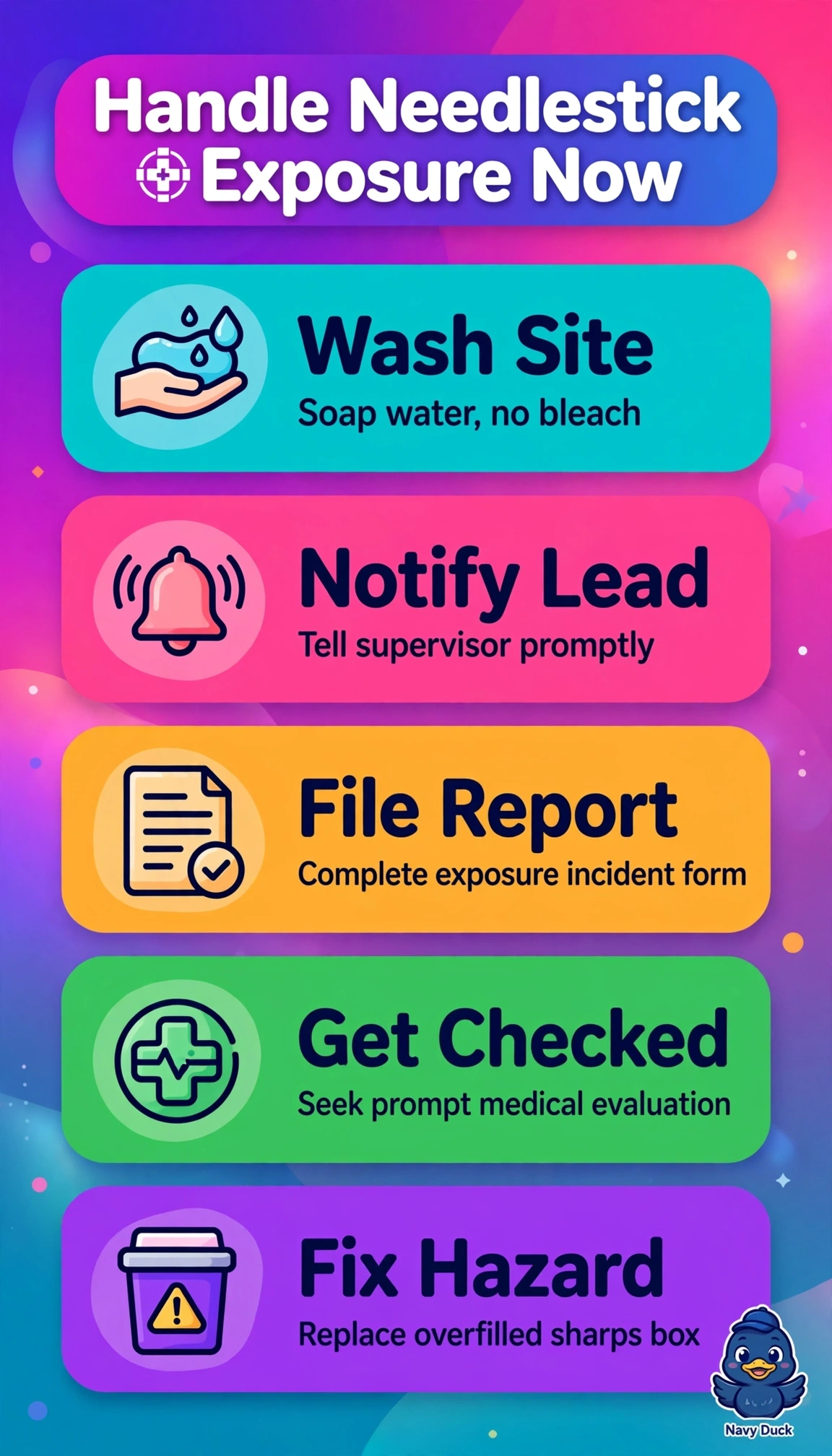
You've got a lot going on at night, but you don't tough out a stick — you'll wash the site, tell your supervisor, file the report, and get evaluated like you're pulling a fire alarm for your health. That quick follow-through gets you timely care and meets your reporting duty.
Full Explanation
The OSHA-aligned response requires immediate washing of the puncture with soap and water after removing contaminated gloves, prompt notification of the supervisor, completion of a formal incident report, and timely medical evaluation for post-exposure prophylaxis, testing, and counseling under the facility exposure control plan, which together address both infection risk and the legal reporting obligation despite a busy assignment and night-shift staffing. The response that substitutes personal notes for formal documentation fails by reporting concept because personal notes lack confidentiality protections, workers compensation linkage, and OSHA recordability and cannot trigger safety review of the overfilled sharps container. The response that delays supervisor notification until shift end fails by immediacy concept because prompt notification is needed to authorize evaluation, identify the source patient when possible, secure timely labs, and correct the sharps hazard rather than leaving risk unmitigated. The response that completes washing, notification, and paperwork but omits medical evaluation fails by follow-up concept because even a small puncture with blood exposure requires risk assessment for hepatitis B, hepatitis C, and HIV and possible prophylaxis that cannot be self-triaged. An exam caveat is that routine hand hygiene and wound washing do not replace evaluation, and documentation belongs in the confidential incident system rather than the patient record or informal notes. A practical check is to confirm site decontamination, supervisor name and time notified, incident report number, evaluation referral time and location, and that the overfilled box is secured and replaced per sharps policy.