
At a rural clinic draw station without onsite testing, you collect routine chemistry and light-sensitive bilirubin specimens on a hot afternoon, the courier pickup is delayed 45 minutes, and manufacturer inserts specify protection and prompt cooling for chemistry. How should you handle and transport blood specimens to meet CDC and temperature, light and time requirements?
Select an answer to reveal the explanation.
Short Explanation
You keep specimens reliable by protecting bilirubin from light and cooling chemistry as the manufacturer specifies. Timely protection helps preserve accurate results during the courier delay.
Full Explanation
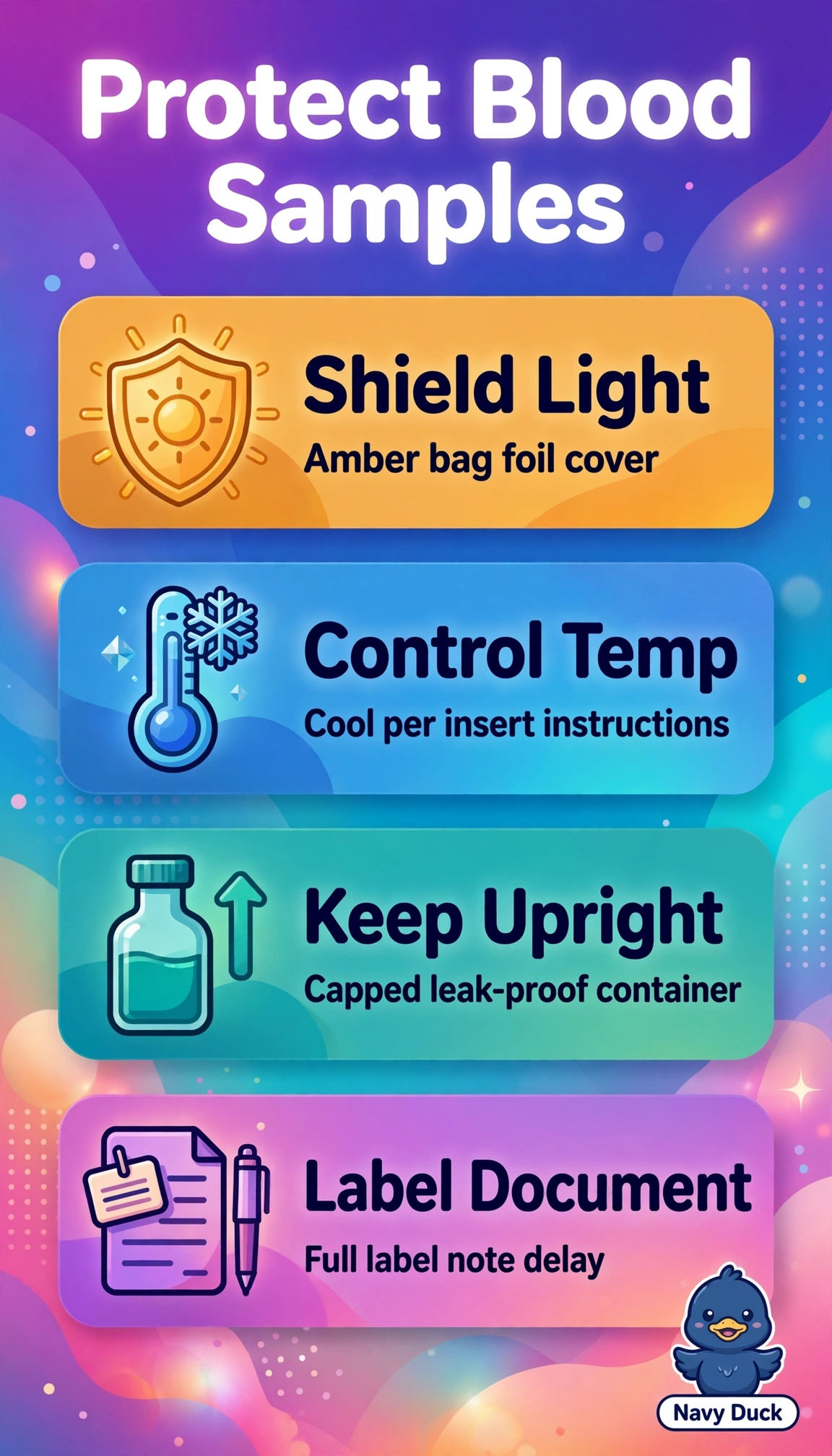
The handling that protects bilirubin from light, keeps chemistry cool as the manufacturer insert directs, labels specimens fully, and documents the delay integrates the needed preanalytical controls for offsite testing on a hot afternoon. Opaque covering prevents light-related bilirubin degradation and falsely decreased results; prompt insert-directed cooling preserves chemistry analyte stability that heat could compromise; complete labeling maintains identification through transport; and written documentation of the 45-minute delay lets the laboratory assess acceptability under CDC guidance. Holding chemistry at hot room temperature while protecting bilirubin, labeling fully, and recording the delay fails temperature control: heat can accelerate glycolysis and analyte deterioration even during a short wait. Keeping chemistry cool and documenting the delay but carrying bilirubin in a clear bag fails photoprotection, since daylight can degrade bilirubin and cooling alone does not block light. Protecting bilirubin, cooling chemistry, and labeling fully but reporting the delay only verbally fails time traceability because the laboratory cannot verify the collection-to-transport interval or apply stability limits from the specimen record. Exam caveat: verbal reporting does not substitute for written delay documentation, even when light, temperature, and labeling requirements are met. Practical check: confirm bilirubin is covered, chemistry is cooled per the insert, labels are complete, and the delay is recorded in writing before transport.