
A PCT monitoring telemetry sees a sudden wide-complex rapid rhythm at 180 beats per minute with no clear P waves in a patient who was talking but now is pale and reports chest pressure. Which rhythm recognition and monitoring action best addresses suspected ventricular tachycardia?
Select an answer to reveal the explanation.
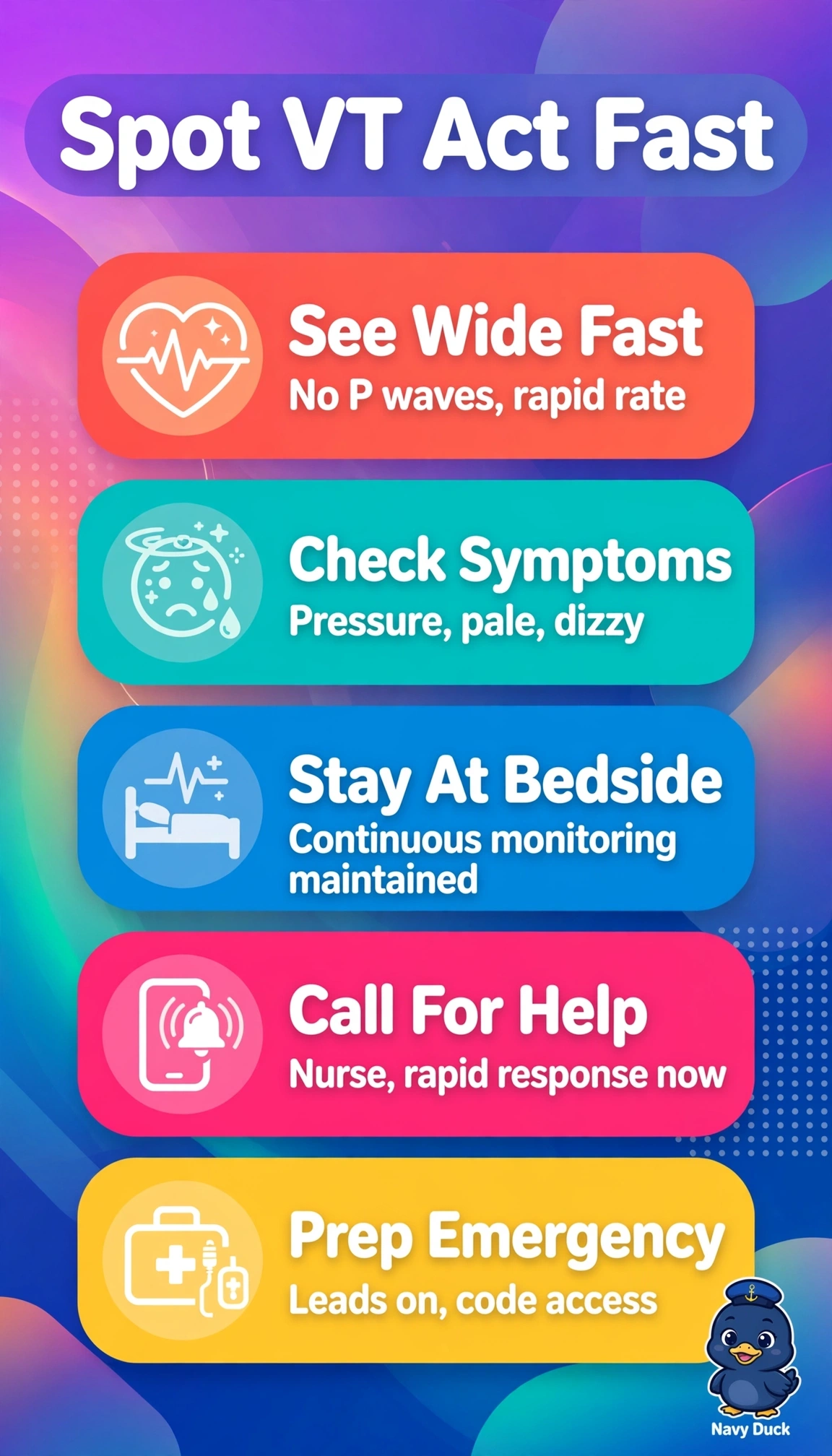
Short Explanation
When you're seeing that wide, super-fast rhythm with your patient turning pale, treat it like a fire alarm going off until proven otherwise. Keep them on continuous monitoring and don't wait — call the nurse and rapid response right away.
Full Explanation
The correct response prioritizes unstable wide-complex tachycardia management because sudden regular tachycardia at 180 with wide complexes and no clear P waves plus new pallor and chest pressure suggests ventricular tachycardia with compromised perfusion, requiring uninterrupted continuous telemetry to detect deterioration into pulseless ventricular tachycardia or fibrillation while immediately summoning the nurse and rapid response since definitive diagnosis and treatment are beyond technician scope. The orthostatics-and-full-history-first approach fails on urgency because unstable symptoms prohibit delayed escalation for routine assessment and the patient may collapse during prolonged interviewing. The supraventricular-tachycardia-with-aberrancy-for-vagal-maneuvers-and-adenosine approach fails on rhythm differentiation because regular wide-complex tachycardia of unknown origin must be presumed ventricular tachycardia until proven otherwise, delaying defibrillation readiness and cardiology input. The disconnect-telemetry-for-resting-12-lead-and-escort-to-treatment-room approach fails on monitoring continuity because symptomatic tachyarrhythmia demands continuous surveillance, active alarms, and bedside presence rather than unmonitored transport. An exam caveat is that being awake and talking does not equal stability when pallor and chest pressure emerge near 180, testing immediate escalation versus completing assessment first. A practical check is to keep the patient supine and monitored, stay at bedside, call for help, note onset time, rate, QRS width and symptoms, and prepare for oxygen, intravenous access, 12-lead and resuscitation equipment as directed.