
During morning rounds on a telemetry unit with hourly leadership rounding, a confused older adult is scheduled for venipuncture and ECG, has a similar name to the neighboring patient, and rates pain 6 of 10 while family asks about responsiveness to call lights. Which integrated Joint Commission, CLSI and experience practice best prevents error and supports safe care?
Select an answer to reveal the explanation.
Short Explanation
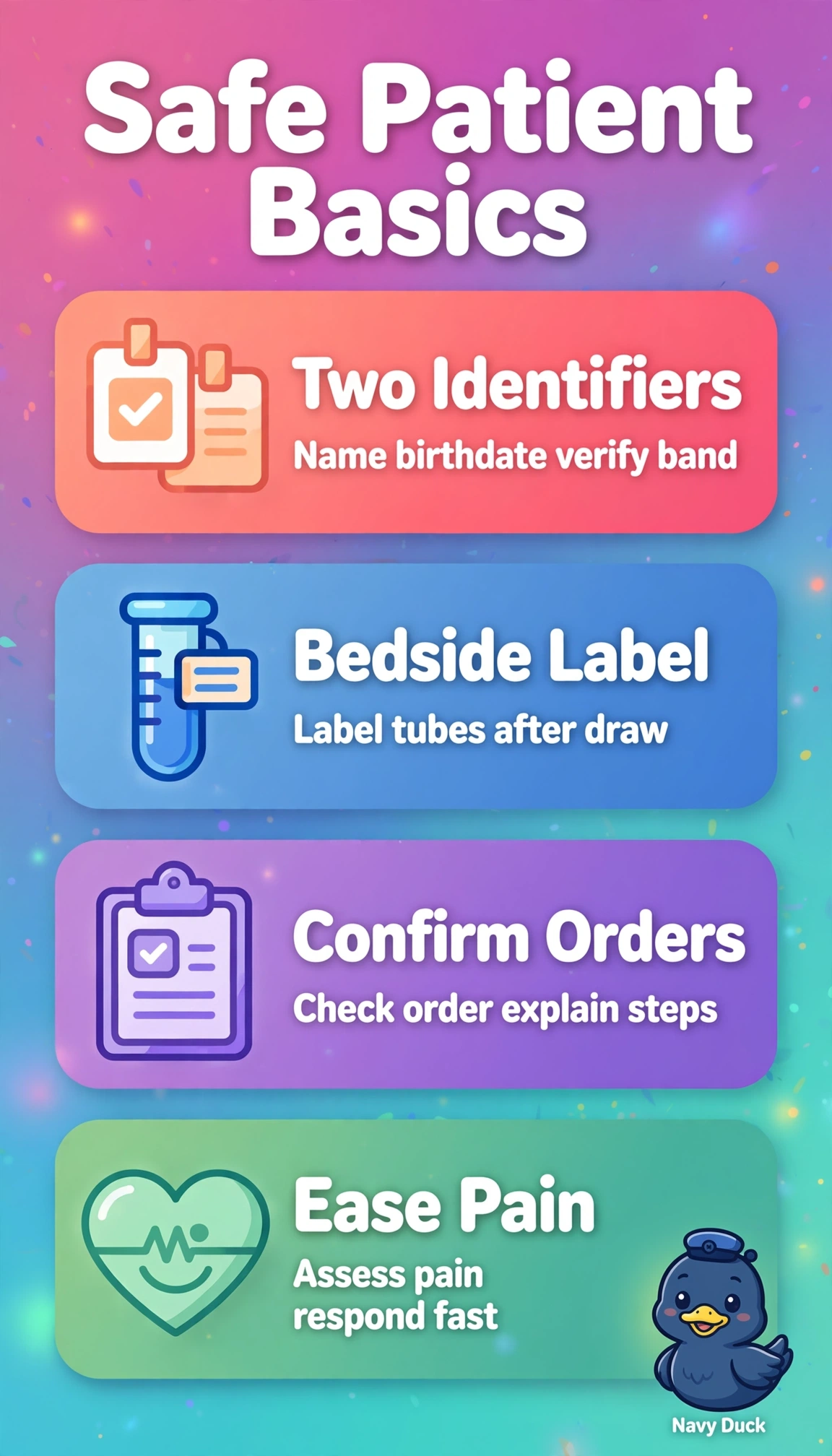
You can protect this patient by confirming identity and orders, labeling specimens at the bedside, and responding to pain and call lights. Two identifiers help prevent mix-ups, while prompt, individualized care supports safety and trust.
Full Explanation
Using two identifiers, labeling tubes at the bedside, confirming current orders, addressing pain, and responding promptly to needs brings the safeguards together. A confused older adult with a similar-name neighbor is at high risk for wrong-patient error, so Joint Commission practice calls for two person-specific identifiers with wristband verification—not room or color alone. CLSI venipuncture practice calls for verifying active orders and labeling tubes in the patient’s presence at the bedside immediately after collection, preserving the chain of custody. Pain rated 6 of 10 and family concern about call lights call for prompt assessment, relief, and communication; hourly leadership rounds support, but do not replace, that response. Labeling tubes later in the utility room may seem efficient when busy, but breaks bedside labeling practice and raises mislabeling risk. Proceeding on yesterday’s orders may seem efficient for routine ECG and venipuncture, but fails to confirm current valid orders and risks wrong, duplicate, or discontinued testing. Relying on hourly rounds alone is a useful satisfaction and safety strategy, but does not provide the immediate individualized response to pain and call lights needed for safe care and a good experience. Exam caveat: choose the workflow that meets every cue, since plausible plans may omit one critical safeguard. Practical check: state two identifiers aloud, confirm today’s orders, label tubes before leaving the bedside, reassess pain, and tell the patient and family how to get help and when you will return.