
In a large urban medical unit, you care for an adult patient who avoids direct eye contact, keeps family at the bedside for decisions, and eats only familiar foods brought from home. The patient answers quietly and seems uneasy with close physical proximity. Which communication action best applies therapeutic communication and culturally competent care?
Select an answer to reveal the explanation.
Short Explanation
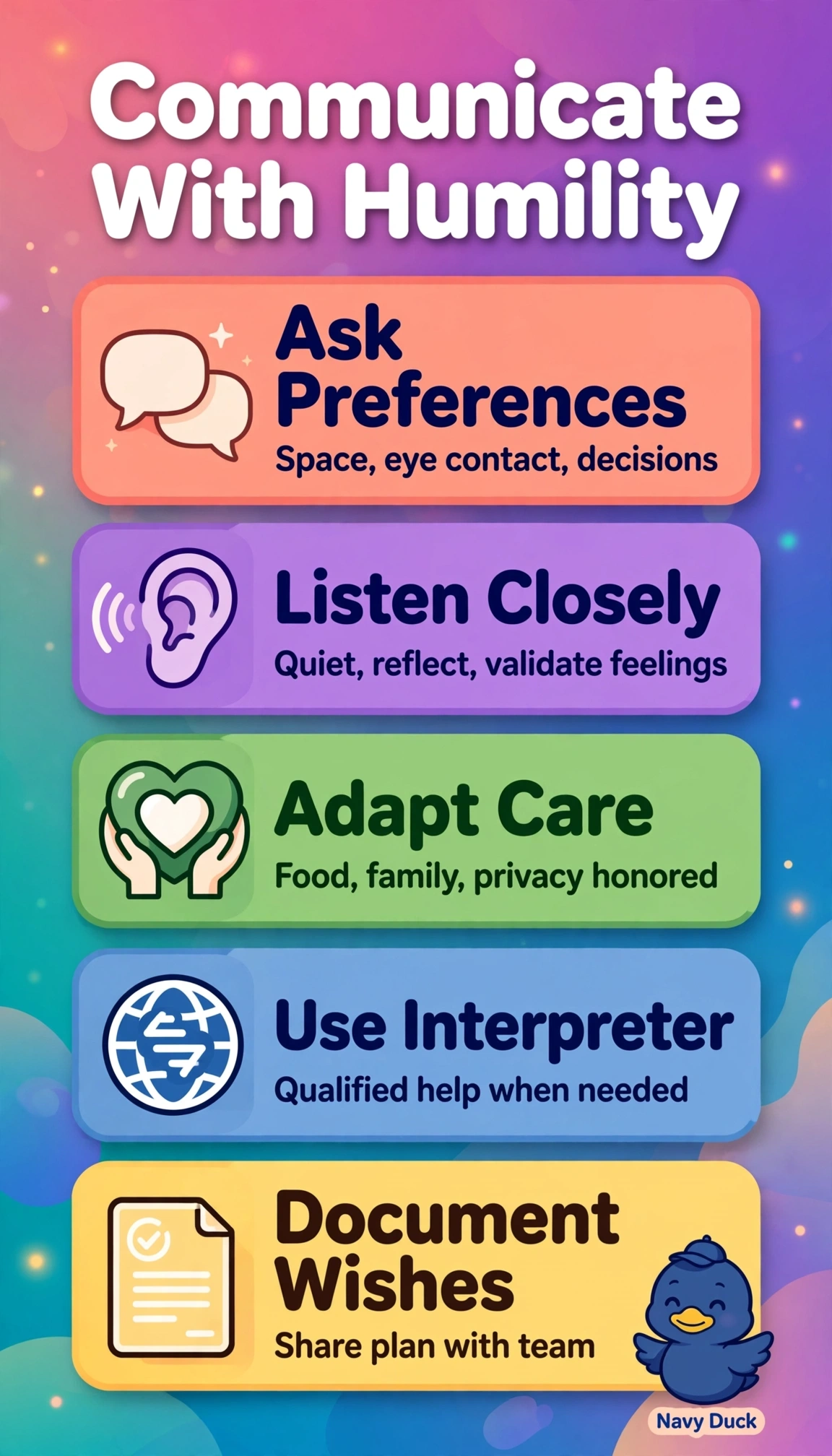
Curiosity beats assumptions when cultures meet at the bedside, so you can ask kindly rather than guess. Cultural humility means exploring preferences for space, food, eye contact, and family involvement, then adapting care and listening without judgment.
Full Explanation
Asking about eye contact, space, food, and decision preferences, then adapting care and listening without judgment, is culturally competent therapeutic communication because you assess each cue before acting. Clarifying preferences for gaze, interpersonal distance, familiar foods, and family involvement helps you build safety and trust without assuming what the patient wants. Including family and allowing home foods are respectful, but insisting on eye contact and close proximity ignores the patient’s discomfort; direct gaze may be taught as attentiveness yet can feel disrespectful or increase anxiety. You can show attention through tone, posture, and verbal encouragers after asking permission. Asking about gaze and space while requiring family to leave for teaching also fails to honor the patient’s stated wish to include family. Respect for autonomy includes the choice to make decisions together; imposing an individualist approach can undermine trust. Clear speech, teach-back, and inviting questions support understanding, but alone they do not assess or address the patient’s preferences about food, space, gaze, or family. An exam caveat: when a stem gives several cultural cues, a choice that addresses most but violates one with a familiar rule may still be inappropriate. A practical check is to ask open-ended permission questions, document preferences for gaze, distance, decision-making, and food, then reassess comfort and intake.