
After a dressing change, a PCT must handle bloody forceps and scissors for central processing while the next admission waits and the utility room is shared. Which preparation of soiled reusable equipment best protects staff and preserves instruments for sterile processing?
Select an answer to reveal the explanation.
Short Explanation
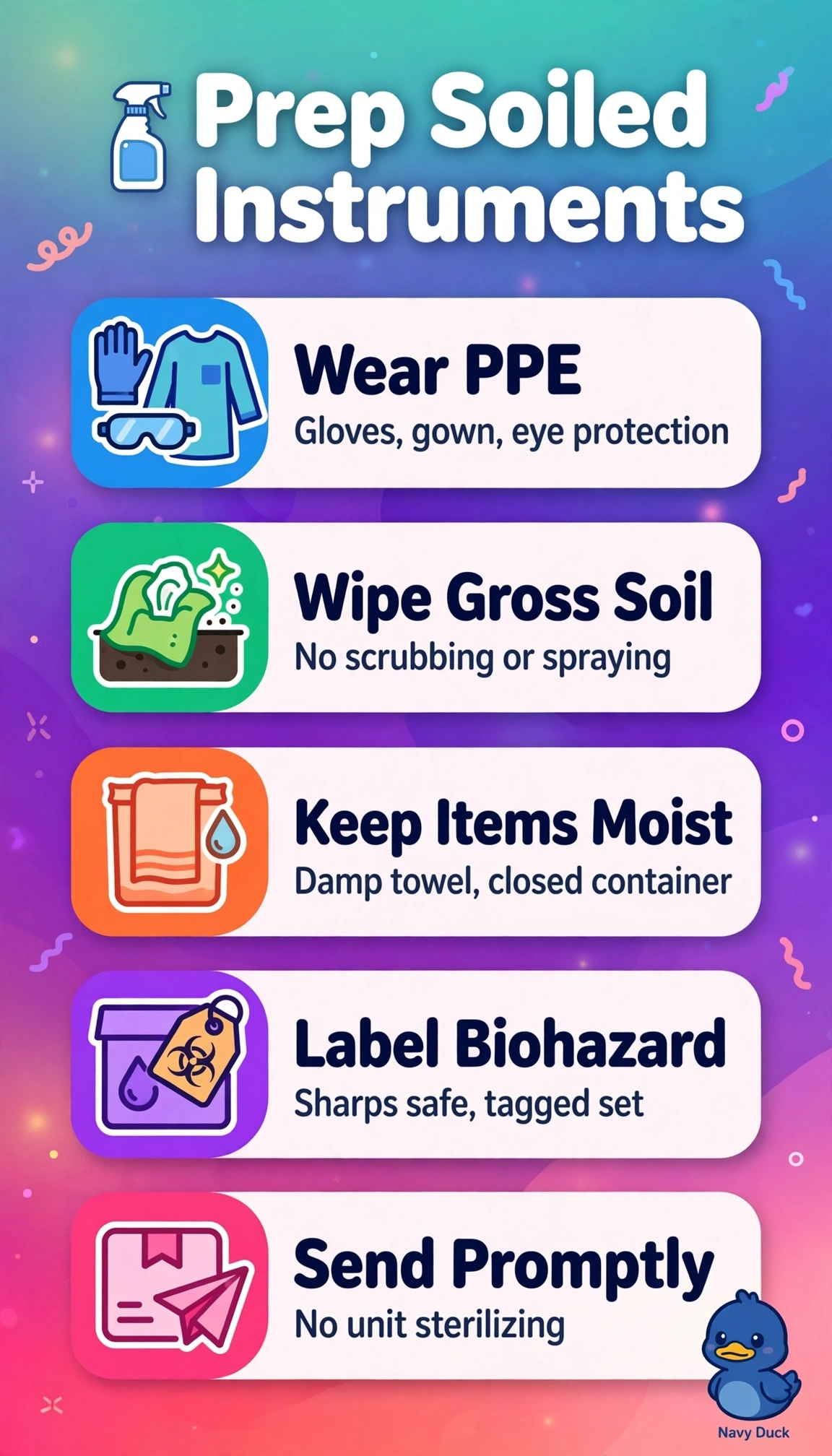
Your job is safe handoff, not sterilization at the bedside. Moist and contained transport keeps blood from baking on while keeping everyone else clean.
Full Explanation
The correct preparation balances staff safety and instrument preservation by combining PPE and point-of-use pre-cleaning without aggressive mechanical action, moisture retention and closed containment, and timely labeled handoff to central processing. Wearing gloves, gown, mask and eye protection with gentle removal of blood and tissue at the bedside prevents splatter exposure in shared spaces while avoiding dried bioburden that corrodes joints and box locks and makes later cleaning ineffective, and keeping items damp in a covered, leak-proof container with a biohazard label ensures handlers recognize risk and reprocessing can begin efficiently. Holding properly contained instruments on the unit until end of shift to accommodate admissions fails the timeliness concept because delay allows blood to dry and increases biofilm risk despite good containment and moisture control. Thoroughly scrubbing and spraying at the bedside sink fails the designated decontamination-area concept because vigorous brushing and high-pressure rinsing belong in central processing with engineering controls, and doing them on the unit creates aerosols and sharps-injury risk in a shared utility room. Allowing instruments to air-dry fully before closed, labeled transport fails the moisture-retention concept because drying bakes proteinaceous soil onto surfaces and hinges, compromising cleaning and sterilization even when PPE, gentle bedside wiping, containment and promptness are correct. On exams, distinguish point-of-use preparation from high-level disinfection or sterilization and do not confuse prompt contained transport with definitive cleaning. In practice, verify PPE, gentle wipe, damp towel or enzymatic foam in a latched container, intact biohazard label, and immediate handoff or pickup per policy.