
After a wound care procedure on an isolation unit, a PCT/A gathers bloody forceps, scissors, and a kidney basin with dried blood, needing transport to sterile processing with limited water access. Which preparation best readies soiled equipment for sterile processing?
Select an answer to reveal the explanation.
Short Explanation
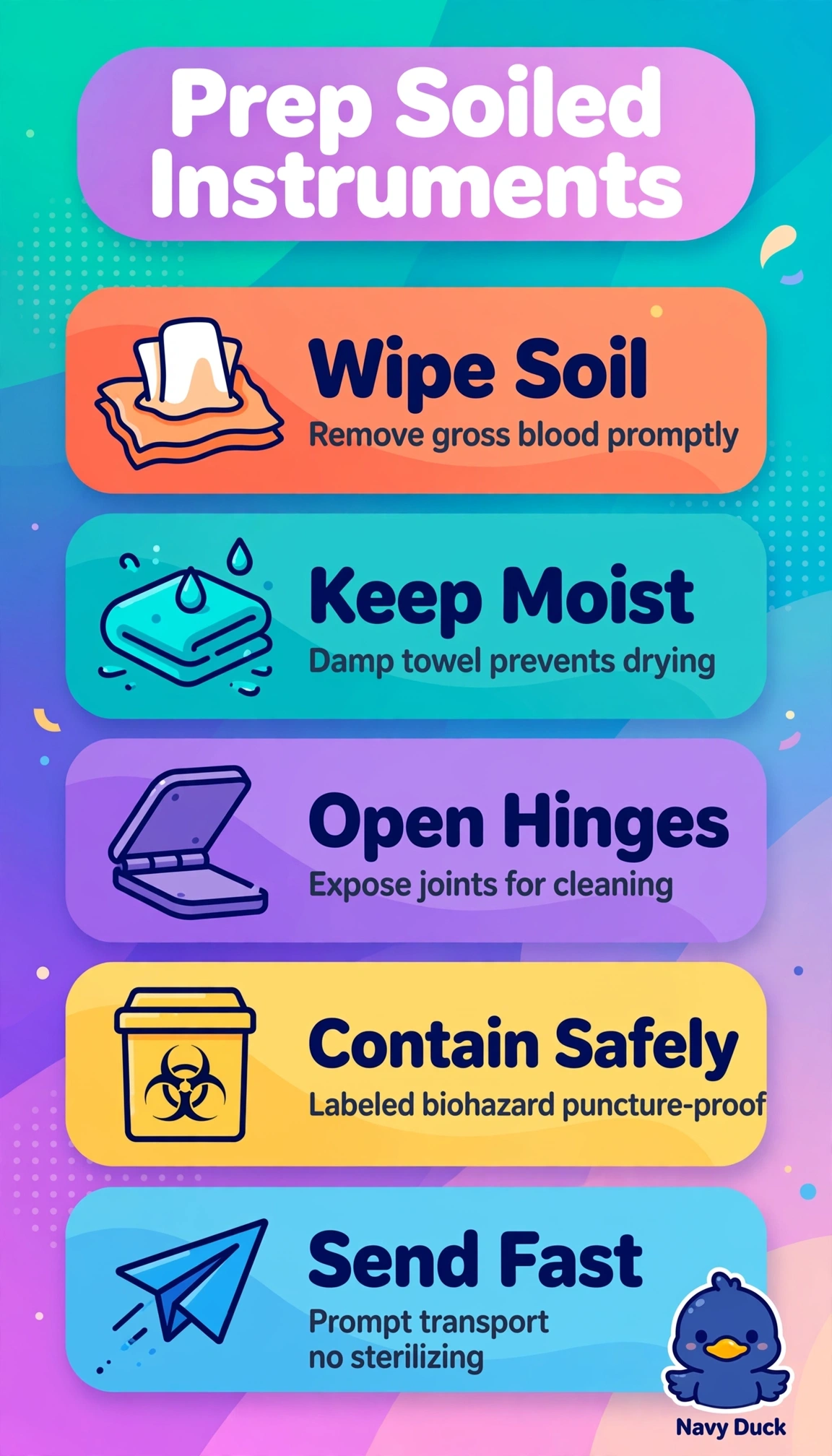
You’re keeping soil from drying onto the instruments. Remove gross soil, keep items moist, contain them in a labeled biohazard container, and send them promptly so sterile processing can clean them effectively.
Full Explanation
The preparation that removes gross soil at the point of use, keeps items moist, places them in a labeled biohazard container, and sends them promptly combines the steps needed when water is limited: moisture helps prevent blood from drying and hardening on forceps, scissors, and the basin, while labeling and prompt transport support safe handling and timely cleaning. Wiping gross soil and then allowing items to air dry to prevent corrosion fails to retain moisture; dried protein soil can be harder to remove, even when equipment is labeled and sent promptly. Keeping instruments moist with wet towels in a closed tray and delivering them promptly does not specify a labeled biohazard container, so handlers may not be alerted to the isolation-related risk. Keeping items moist and sealed in a labeled biohazard container but waiting until the next shift fails the prompt-transport requirement; prolonged holding can allow microbial growth and biofilm development and delay processing. An exam caveat is that point-of-use soil removal and moist containment prepare equipment for transport but do not themselves disinfect or sterilize it. A practical check is to verify that gross soil has been removed, items remain moist, the container is labeled for biohazard precautions, and the handoff to sterile processing happens promptly.