
A confused older adult with a high fall score needs to move from bed to wheelchair for breakfast, the bed is high, the wheelchair brakes are off, footrests are up, and a soft wrist restraint order is being considered. Which fall, bed, wheelchair, and restraint safety sequence should the technician follow?
Select an answer to reveal the explanation.
Short Explanation
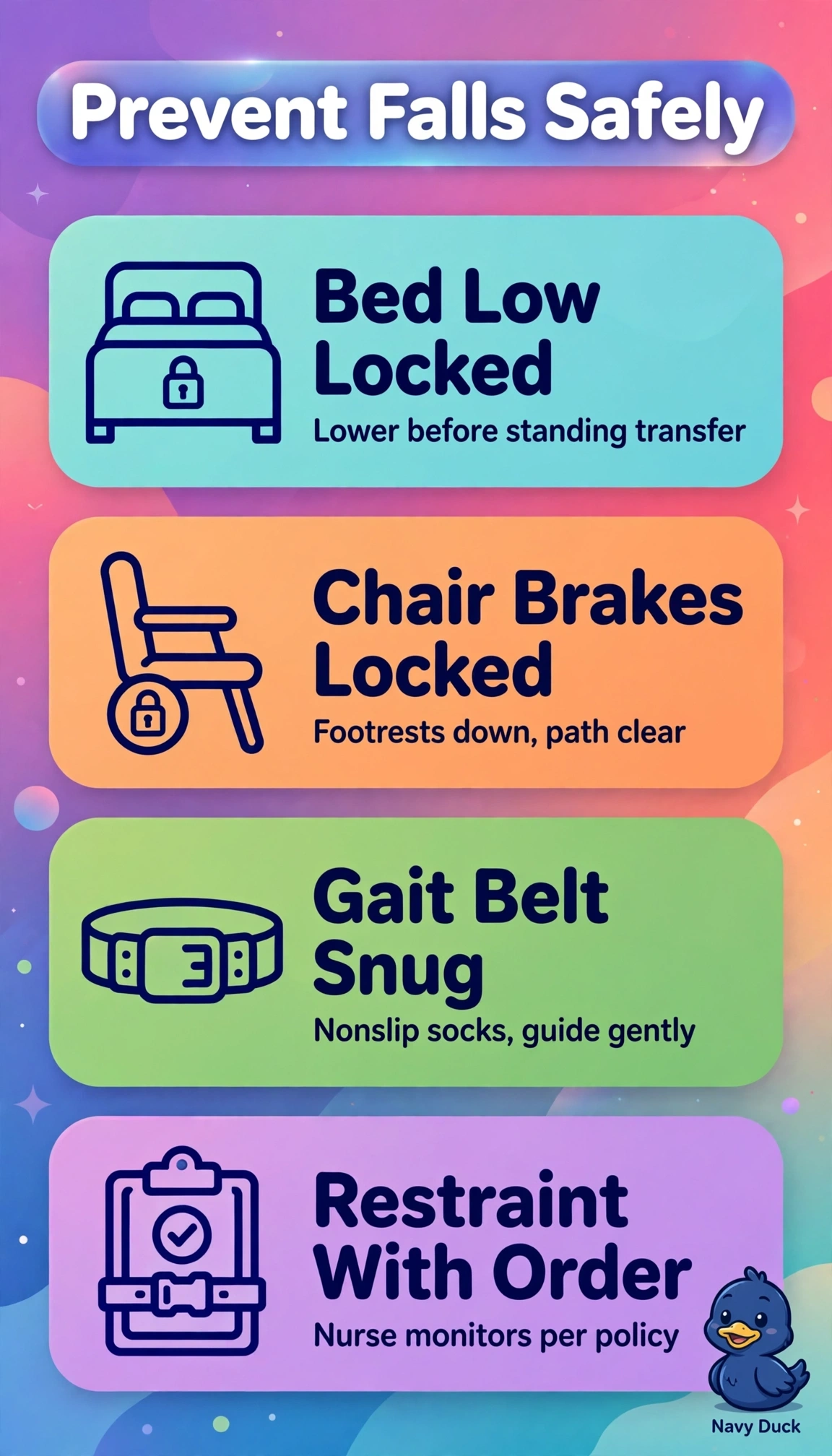
You'll keep your patient much safer when you lower the bed, set the footrests, and keep that chair still with locked brakes, plus nonslip socks and a gait belt for the assist. You're loading passengers on a steady bus, not a moving one, so don't forget to loop in your nurse before any restraint goes on.
Full Explanation
The correct sequence protects a confused high-fall patient by lowering the bed to reduce fall height and allow secure footing, locking both wheelchair brakes to prevent rolling during stand-pivot, positioning footrests after seating to support feet and prevent dragging or catching, using nonslip socks for traction and a gait belt for close trunk control without axillary lifting, providing direct assist with cueing, and implementing soft wrist restraint only with current order, least-restrictive assessment, and nurse collaboration with monitoring. The hip-height bed approach prioritizes caregiver ergonomics and back protection but violates fall-prevention principles by increasing fall distance and impairing safe footing. The standing-order restraint approach performs transfer mechanics correctly but violates restraint-safety and delegation principles by omitting individualized indication, order verification, circulation, skin, and reassessment for removal. The foot-propulsion approach applies a valid rehabilitation strategy for independent patients but violates wheelchair-transport safety because unsupported feet risk dragging, catching, and forward falls in a confused high-risk rider. Exam caveat: distinguish transfer phase when footrests are swung away to avoid tripping from transport phase when they must be replaced, and never select restraints for convenience. Practical check: lower and lock bed, tug-test brakes, confirm nonslip soles and snug gait belt, replace footrests after seating, ensure two-finger restraint fit secured to bed frame, and keep call light within reach.