
A PCT in a medical-surgical unit must collect ordered blood cultures from a postoperative older adult with new spiking fever whose IV antibiotics are scheduled within the hour, using a closed safety needle system and aerobic and anaerobic bottles for two separate venipunctures. Which blood culture collection technique should the PCT use to prevent contamination and preserve accuracy?
Select an answer to reveal the explanation.
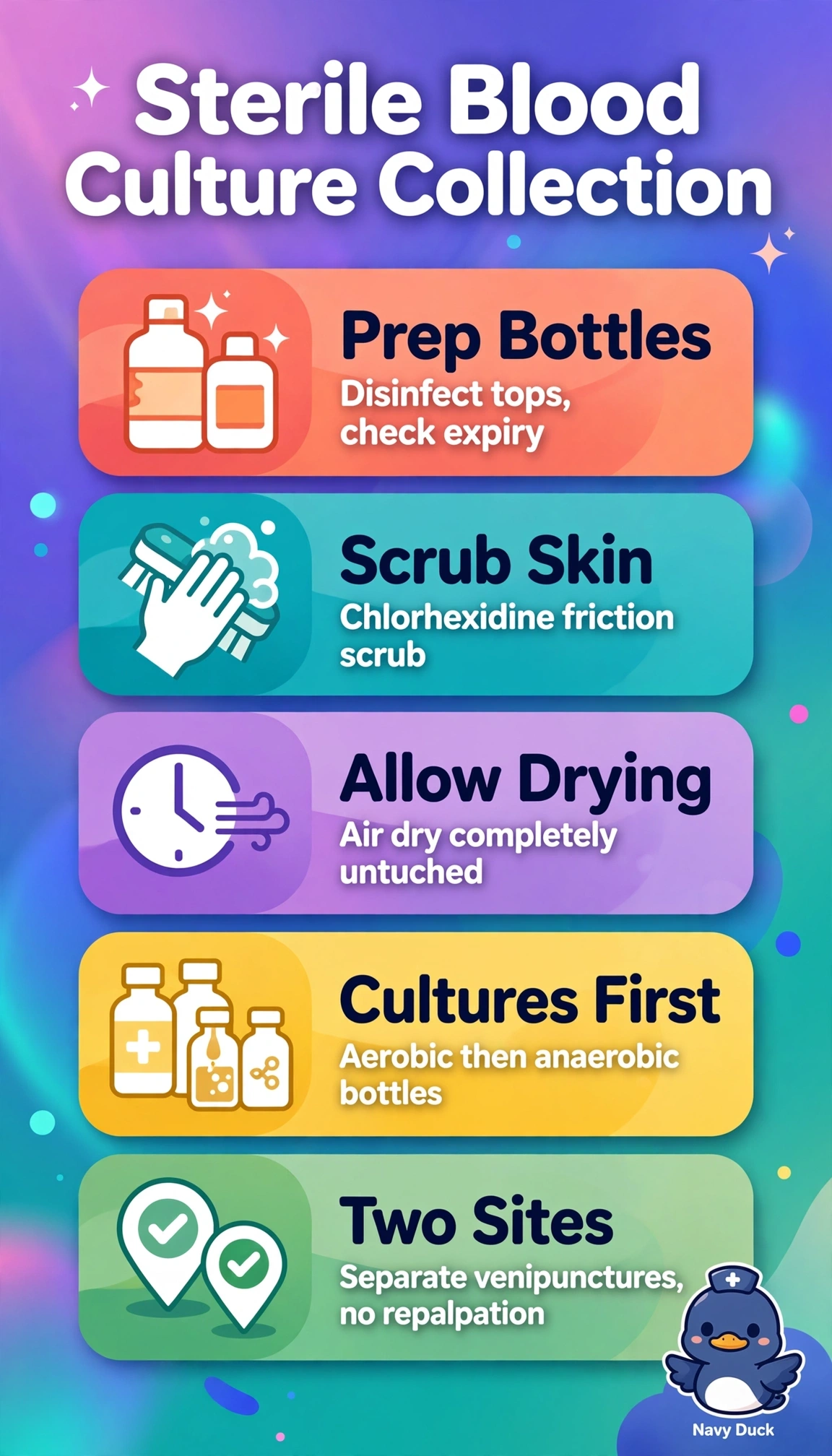
Short Explanation
You are protecting those bottles like a sterile kitchen before canning. Scrubbing well and letting it dry fully keeps skin germs out, and that hands-off asepsis is what keeps cultures true.
Full Explanation
Blood cultures require maximal asepsis because skin flora readily contaminate bottles and cause false positives, so friction scrub with appropriate antiseptic, complete air drying for full antimicrobial effect, sterile handling of bottle tops, and no palpation after preparation preserve sterility, while collecting cultures before other tubes and before antibiotics prevents antimicrobial suppression and additive carryover. Drawing chemistry first violates order of draw for cultures and risks contamination and reduced recovery by prioritizing nonsterile tubes and delaying the most time-sensitive specimens. Cleaning tops after filling reverses the required sequence because disinfection must occur before inoculation and gentle inversion applies to additive tubes, not culture bottles which need no mixing. Collecting both sets from one puncture defeats the purpose of two separate sites, which helps distinguish true bacteremia from contamination and increases detection, so a single draw saves sticks at the cost of diagnostic value. For the exam, remember cultures first, two sites, dry time, and no touch, and in practice check antibiotic timing, label aerobic then anaerobic, and document sites and times.