
A PCT/A must move a stable postoperative adult with an IV pole and urinary catheter from a hospital bed to a stretcher, then transport by stretcher to radiology down a busy corridor with elevators. Which transport sequence best protects the patient, lines, and safety?
Select an answer to reveal the explanation.
Short Explanation
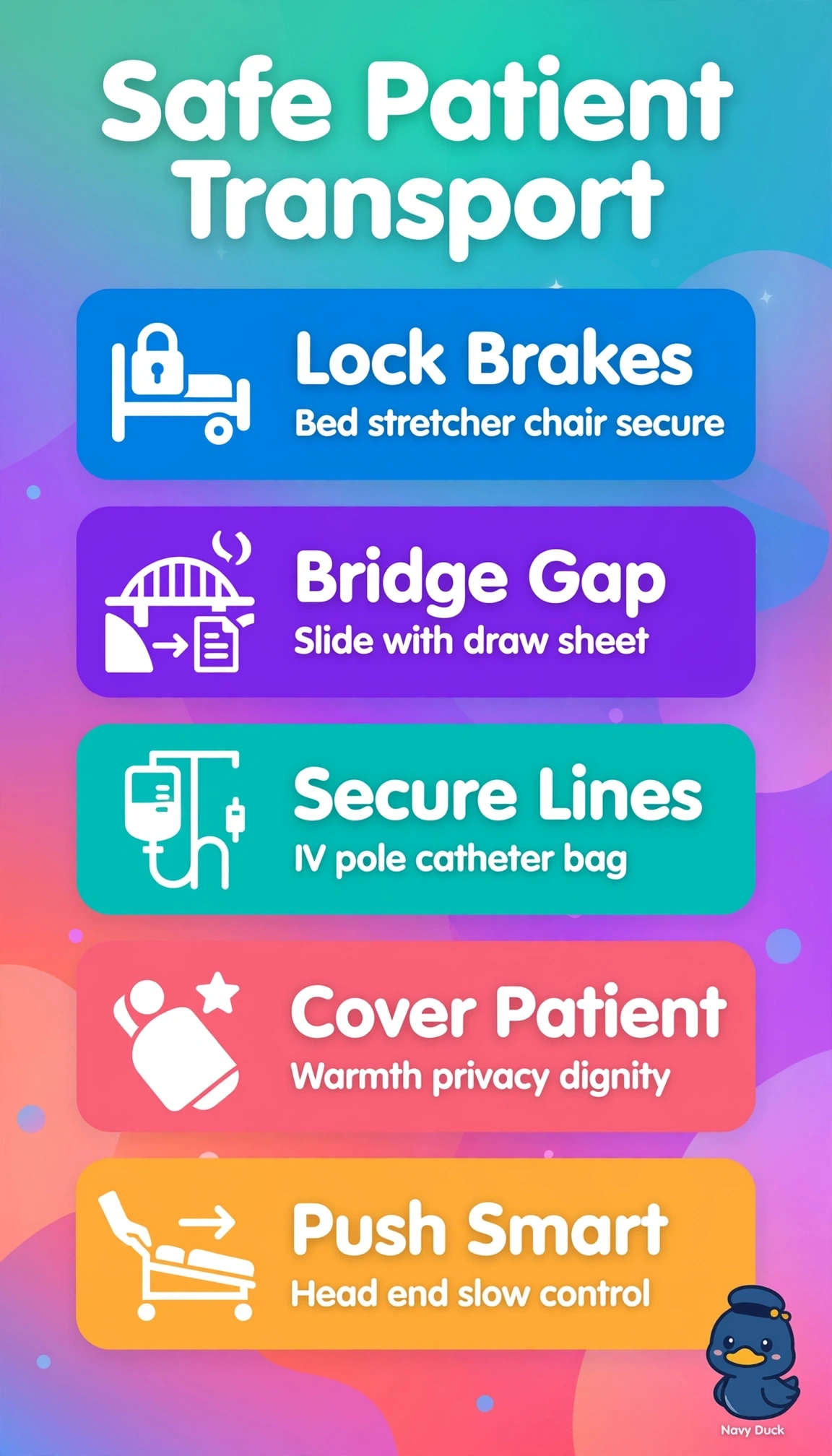
You’re moving a person with lines attached through a busy space, so take time to protect each connection. Lock, bridge, slide, and secure everything before pushing from the head end, with the patient covered and the route clear.
Full Explanation
Locking the bed and stretcher and bridging the gap prevent rolling and entrapment during the lateral transfer; sliding with a draw sheet reduces friction and shear compared with lifting. Secure slack IV tubing and keep the catheter bag below the bladder, off the floor, and free of kinks to maintain flow and prevent dislodgement, reflux, and contamination. Covering preserves dignity and warmth. Pushing from the head end lets you observe the patient’s face, breathing, color, and lines, and improves control through corridors and elevators. A sequence that pushes from the foot end includes sound transfer precautions but limits observation and control around corners. A wheelchair transfer with the catheter bag on the lap may place it at bladder level or higher, promoting reflux, bacteriuria risk, and measurement error. A wheelchair transfer with the IV bag at waist level may place it below the insertion site, slowing gravity flow, causing backflow, or risking occlusion. Exam caveat: when both an IV and catheter are present, assess bag height relative to the bladder and IV height relative to the heart—not just whether a transfer aid is used. Practical check: confirm brakes, close the gap, free the sheet, check the drip, secure slack, hang the bag without kinks or floor contact, cover the patient, and announce head-end movement after clearing the route.